And I Thought Haiti was a Scary Place: a Tale of Forensic Failure in Kentucky


Why is it that I ALWAYS seem to have the weirdest of weird experiences—the wackiest—the most ridiculous?  Tell me.  How is this possible! 

I know what follows may be hard to believe—but really—how could I make this stuff up?

Here’s how it all went down:

Two nights ago Sara and I had just returned home from a crazed day of shopping—what we always need to do just before returning to Haiti, where we often can’t buy the kinds of items pampered and “all-too-accustomed-to-comfort” Americans require to maintain sanity and goodwill.

It was around 7 o’clock in the evening.  I was in the bathroom—brushing my teeth, if you really must know.  I was minding my own floss-focused, dental-hygiene-driven business, when suddenly a loud crash interrupted my serious teeth-cleaning efforts.

Holy Sh_t! What in the name of battling tooth decay had just happened?

I grab my black boots, head out the front door and around the house to find—

A brand new black Cadillac had just plowed into the side of our house—back bumper smashed against the foundation of my none-too-sturdy, 100-year-old jewel in the crown of Victorian architecture.

I wasn’t pleased by this development—

But not wanting to create enemies of neighbors who had seemed to move in during our last 3 month stint in Haiti and would likely still be there during our next three-month stay abroad, I tried not to over-react.  It seems the driver of the black Cadillac was visiting these neighbors when he/she accelerated in reverse off the snow-covered driveway, getting up-close and personal with my foundation. (I say “he/she” because neither the man nor woman seemingly associated with the vehicle was willing to take responsibility for being behind the wheel.)

But—living in a country where people burn tires is the streets for sport, I took this all in stride—got what information I could, which was very little but ultimately included a name and phone number—not likely as it all turned out the real name or real number. 

The house did not seem seriously damaged, so I didn’t bother to call the police when these folks refused to share information regarding their auto insurance—

Late the following afternoon, however, when Sara and I had again returned from a day of home-from-Haiti errand-running—

Another crash—

Same vehicle—

This time a rear end collision with our fence—

I kid you not!

In less than 12 hours—10 and a half to be exact—these owners of the black Cadillac had managed to careen into our property, not once, but twice. 

I wondered how this could all be real.  Had I entered some kind of Cadillac-crazed twilight zone?  Had I found myself on a really bad episode of Candid Camera in which Allen Funt runs cars into the houses of home-for-the-holidays-Haiti-aid-workers—all in the name of good laughs and family fun?

No—this was real and I have the fuzzy photos to prove it—

Thank God I had the presence of mind to run outside, not only screaming, “What is wrong with you people?!”—but also carrying a camera to document, a paper and pen to take down license plate numbers, and a mobile phone to call police.

I may have been borderline hysterical, but I, sure as hell, wasn’t stupid—though the police when they FINALLY arrived an hour later—were indeed the most idiotic this side of sanity one could ever imagine.

Not only did I have to dial 911 three times to get these crime-fighters to respond—I had to explain to dispatchers why this was, indeed, an emergency.

“These people have run their vehicle into my house twice in less than eleven hours.  Something is very wrong here.  Far be it from me to suggest there might be drugs involved—but, at the very least, I don’t think you want these folks back out on the streets.  If they do this from the relative safety of a driveway, imagine what damage they might do on the open road.”

And the two officers who finally arrived on the scene were equally clueless.  The man asked me—

“So your fence was always like that?”—though it leaned at a 120 degree angle with a car rammed up against it.

“You’ve got to be joking—that can’t be a serious question.”

“Calm down, lady.  Was your fence always that way?”  OMG—he was serious!

To say that these folks from our local police department weren’t firing on all 6 cylinders would be an understatement of epic proportion. They didn’t seem to appreciate the urgency of the situation or wonder why in the name of all things crazy that can happen on the road, one would drive a brand new 40 thousand dollar vehicle with NO auto insurance, if to protect themselves from all of the other crazy drivers on the road, if nothing else? 

They told the woman who seemed to be the owner of the car that they weren’t there to take sides or “get anyone into trouble.”  They were simply there “to file a report.”

Ultimately, the police did issue a citation for “not carrying proof of insurance”—an issue they assured the car owner “could be cleared up if they took proof of coverage to City Hall tomorrow.”

No sobriety testing—only a flimsy assertion that the officer “hoped” the driver had not been “drinking and driving.”

Okay then—if this blundering comedy of errors was detective work at its best, I’d hate to see second best—or god forbid—out and out forensic failure.

And it’s with this forensic failure that the story ends.

Anti-climactic—I know—but really that’s the crazy-making reality of how it all played out.  The police did nothing to deter or, god forbid, prevent these Cadillac-driving, fence-toppling Kentuckians from heading back out onto the road to wreak havoc on the highways of our state.

And I thought Haiti was a scary place!
Haiti’s Greatest Gift: notes on the nature of giving


It amazes me how often Haiti is a study in extremes, not only between the most obvious of oppositions: rich/poor, white/black, have’s/have-not’s—but also between the more subtle and insidious of extremes—the ones I notice once I’ve returned to the US and realized all over again just how much we as Americans have and just how much the people of Haiti don’t.

I understood this even more clearly yesterday when I thought about how well “we-with-the-leisure-to-read-blogs” have it, that one of our biggest anxieties during the Holiday Season is the worry over whether we’ve gotten Uncle Joe or Cousin Rita just the right gift—from perfect stocking stuffer to the most ideal of electronics—iPhone, iPad, iPod.  It’s i-ronic just how much “I” is in our gift-giving, how many “me’s.”

I realized that the leisure and disposable income gift-giving presumes suggest profound things about these two countries I now call home.  Namely, if we have the time and energy, not to mention the funds, to spend on gifts, then we obviously aren’t worrying about keeping our children safe from cholera, aren’t worrying where our next meal might come from, aren’t worrying how we’ll keep our babies dry during the rain at night, the torrential downpours that turn the floors of our tents into pools of liquid, dripping mud.

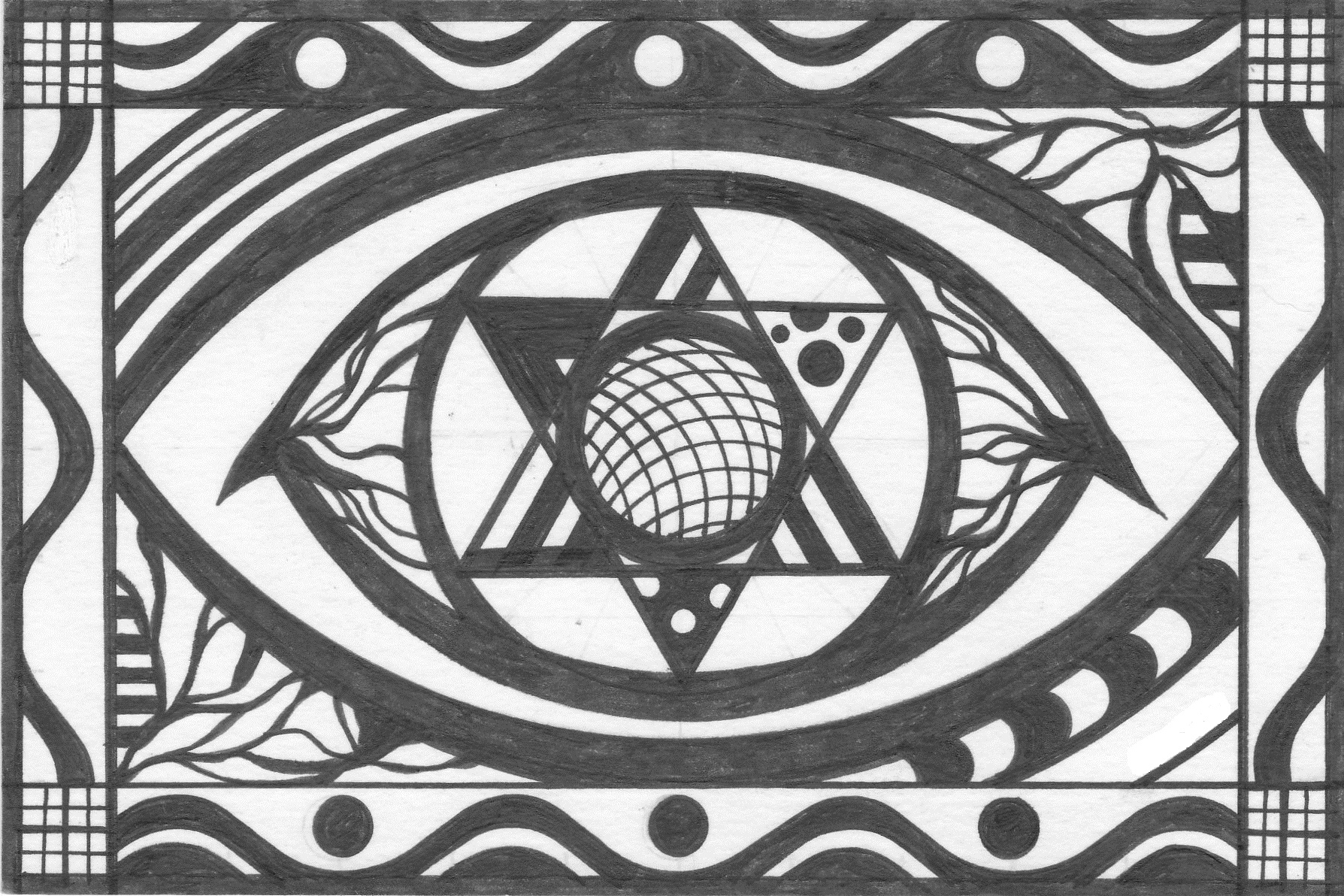
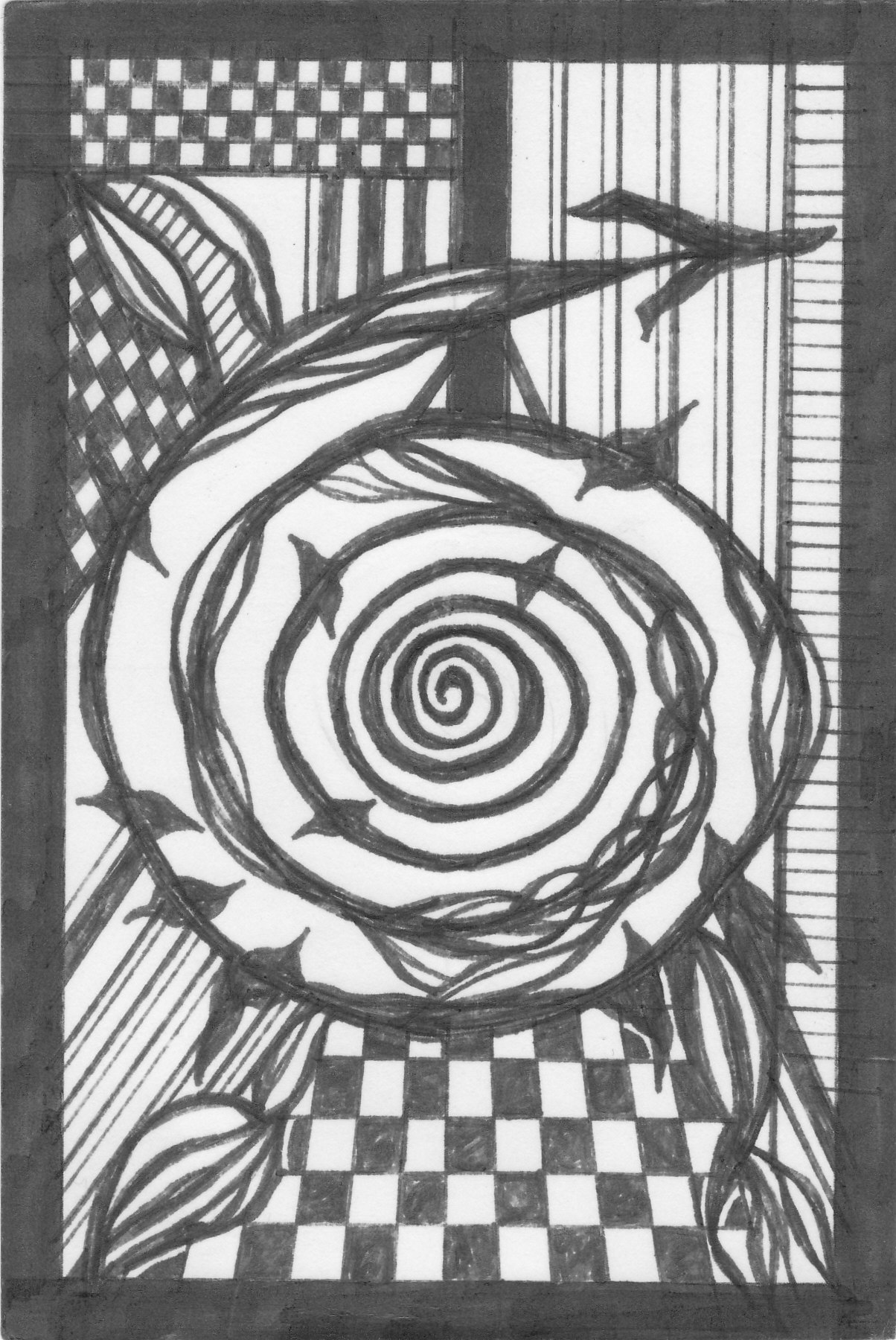
However, sometimes I think that my graphic, black and white drawings, even my poems, express something about the extremes of Haiti that these well-chosen words of explanation fail to communicate.  So in closing, I offer some recent, some not-so-recent drawings that try to articulate in ways these words do not—the kinds of graphic contrasts that keep me awake at night—not only in Haiti—but in other places, as well.  Below the images are used to punctuate a poem I wrote some years ago, one written in the voice of someone displaced, alienated, alone—someone struggling to climb up out of endlessly hopeless circumstances, someone not unlike the poorest of the poor in Haiti.

On Rattlesnake Mountain

At dusk we lock

                the iron gate 

                                                collecting bones

                bleached in tufts of matted grass

                scaffolding the bluff

I insist on picking them

                a carcassed bouquet

                                                of cow bone

                picketting our path

                back up the crooked slope

Eye sockets shape

                a separate ascent

                                                dead leaves

                thicken the air

                like smoke

The moths are tongueless

                it’s simple to blame

                                                the mothers

                their beaks vacant as stairs

                I climb a thicket ofdry sticks

(For a more light-hearted and truly hysterical look at the holiday, I suggest you read today’s post on “The Ramblings.”  Tori’s comment  helped me gain some of the insights I share here.)

Haiti’s Feast or Famine: the good, the bad, and an etiquette of greed


I got out of the house Saturday, in fact made it all the way to the grocery store, where I saw people—an assortment of real, honest-to-goodness, up-right-walking, human beings.  They were people on a mission—a singular mission, I might add—the search for sustenance.  Members of this group—more hunter than gatherer—were out for the kill—the thrill of stalking and slaying.  They were ruthless.

Blood was shed.

But, before I proceed with these graphic details of gut and gore, let me remind you how I got myself into this mess, in the first place.  To make a long story short, I came to Haiti with my partner Sara, who directs earthquake recovery efforts for a major, international, NGO.  I am an artist/writer/former-academic.  Since our arrival in Port-au-Prince, our two dogs in tow, we have survived a number of dangers that have included Hurricane Tomas, a cholera epidemic, and the ongoing threat of kid-napping.  In the past week things have worsened considerably, however, as in the aftermath of fraudulent presidential elections the country, Port-au-Prince especially, has been paralyzed by protesters rioting in the streets against a myriad of misdeeds on the part of the ruling political party, crimes that included blatant stuffing of ballot boxes and intimidation of voters at the polls.  It is this rioting that kept us house-bound for much of last week—housebound as all around us the city descended into chaos—buildings burned, people killed.   And it is this confinement that made us more than just a little merry to be out this weekend—even as far as the supermarket on Saturday—

—Where, indeed, blood was shed—

—Almost—

Okay, there may not have been literal blood in the aisles—but it was bloody in every metaphoric sense imaginable.  It was desperate.  It was deadly.  There should have been medical intervention, at the very least.

These human beings were hungry, as only housebound-for-days-with-pantries-depleted aid workers can be—a singularly ravenous group—I now know.

So here’s how it all went down:

Sara and I, wisely arrive at the super market early. Giant, as it’s called, opens at 8.  But we arrive around 7:50 with a strategy mapped out—divide and conquer.  By this time a small group has already gathered.  By 8 our number has grown.  By 8:10 we’re a small crowd.  By 8:15 we’re a ravenous herd thronging the gates of super market heaven, as Giant’s own Peter, raises the barrier.

This, I would argue, is what happens to humans accustomed to the food surplus that is America, Canada, Denmark, Kuwait—suddenly threatened—where anything short of feast is experienced as famine. Ironically, many of these aid workers feed the hungry by day, have degrees in food security, advanced degrees in hunger studies These food-spoiled-food-specialists have been housebound for days and know now that more isolation is inevitable, maybe even imminent.  These are the real survivalist, the professionally-programmed to gather, to stock pile, to horde.

Unfortunately, I participate in this parody.

Willingly—

Isles clog with carts— the meat department is particularly intense—shoppers grabbing chickens to roast, t-bones to grill, pork chops to fry.  These are carnivores galore, consuming the store.

I am no different—but I crave the carbs, have been on a diet for weeks.  And even during good times diets increase my cravings.  So when the few foods I’ve been eating for more than a month aren’t stocked by the store, I start to stress.  My anxiety soars—is still soaring two days later. 

On Saturday I do finally find a few favorite foods—pretzels, almonds, raisins, dates—the carbs I crave even on a diet.  This stockpile, however, doesn’t satisfy.  Sara and I still argue.  I know I’m over-reacting.

There’s too much uncertainty.  The airport has finally reopened, though American Airlines won’t resume flights before Wednesday—the very afternoon I’m scheduled to fly home for the holidays.  Almost daily for the past week American has promised to start flying again on a given day, only to announce the following morning the need to prolong their Port-au-Prince closure.  The only way I’ll get out with my dog Lucy on Wednesday, is if the airline does not delay again.

On top of this uncertainty, we’re not at all confident Sara will be able to leave Haiti on the 23rd—the date of her scheduled holiday departure.  The airports are expected to close again after the final results in the presidential election are announced on December 20th.  Many believe the country will slip into a chaos even more intense.

I know I should be mourning these facts on behalf of Haiti, when, actually, my grief is grounded in fear that neither Sara nor I will get home for the holiday, or even worse—that I will, but Sara won’t, and we’ll be apart on December 25th

It’s an ugly, selfish sadness. 

In fact, I am what I find most deplorable in citizens of rich countries.

Driven.

Greedy.

Vain.

I come from ugly America, a Mecca of meals with an etiquette of greed.   Am I an ugly American, ashamed but not changed?

Or maybe Alexander from Judith Viorst childrens’ book got it right after all.  Maybe it’s just

                “a terrible, horrible, no good, very bad day.”

Re-naming America?


(I know I’m supposed to be blogging about Haiti and I promised a post today about the Port-au-Prince airport—but, I swear, the issue I address below is an “event horizon,” of sorts.)

In case you missed it, yesterday, BabyCenter.com posted its list of top 100 names for 2010—an annual event that’s more than making a name for itself!

So—I hate to ask a seemingly indelicate question.  But—What’s up with baby names these days?

Why are the first names of most newly-born kids in the US names that merely decades ago would have been nothing other than good, old-fashioned last names?

Why are we so obsessed with family names, we’ve nearly abandoned the sacred tradition—centuries, rather millennia in the making—of assigning “Christian names” to our newly hatched Madison’s and Mackenzie’s?

I know the American “family” is in decline.  I know many now say America a “post-Christian” nation—(which is itself a misnomer, I might add).  Does this underlie the confusion? 

Seriously!  What’s up?

Why is every Tom, Dick, and Harry now named Taylor, Devon, or Yale? 

And what about these names with oblique, more often than not overt, allusions to the aristocrats of academia? 

My own nephew, born last month, is named “Rhodes”—God bless his little, “high-IQ-ed” heart.  I know his grandfather is a professor, and his aunt, yours truly, spent WAY too many years not making NEARLY enough money in academia—(thus, the high dollar move to blogging)—but that’s a lot of pressure on a little guy!  How’s that for a “you-better-make-the-grade-or-else” kick-in-the-ass?

Now, I know I should keep my family out of this.  I know my brother could and probably should kill me. (But he has a really great sense of humor; his name is “Tyce,” by the way, if that tells you anything about the DNA of naming in my family.)

I know, as well as you do, that a rose by any other name should smell as sweet, but what about poor “Baby Rose?”

Why has she morphed into little “Reagan?”  Yes, I kid you not; she’s number 66 on this year’s list of most popular girls’ names in the US.  I love the old Gipper as much as the next left-leaning, non-Bible-toting, “doesn’t-give-a-hoot-about-Hollywood,” Democrat in America.

But—PLEASE!

Enough is enough!

My mother called me “Kathryn” for a reason.  I was named after my grandmother, her first name, I might add.  And there were a total of three “Kathy’s” in my kindergarten class—I was born in an era, now sadly past, when “normal” naming still happened in America—was right up there with good breeding!

Speaking of breeding—does it say anything about all that’s vogue in naming that my dogs are “Ralph” and “Lucy?”

What’s next?

BabyCenter.com has itself used a “top-secret algorithm” to determine what names will climb in popularity next year, and according to the “online parenting and pregnancy destination” the boy’s name “Max” is predicted to “gain momentum in 2011”—climbing from its current spot at number 46.  Are the sons (and daughters) of America already being named after their canine companions?

Or am I barking up the wrong tree?

(And tomorrow—I’ll yap about the Port-au-Prince airport—I promise!)

Watering Change


No water has flowed from the faucets at my house here in Haiti for 2 days, and I’ve decided not having water is way worse than not having electricity.

Bottom line:  I’m not a happy camper—or at least—not happy camping, as the case may be.

At the same rate, I must confess, to living a ridiculously comfortable life here in Port-au-Prince, certainly by Haitian standards.  So, I have no real reason to complain, especially when one considers the more pressing crisis of cholera contaminating the water supply, an epidemic that has killed nearly 1000 in the past few weeks, sickened nearly 20 times as many, and incited violence against UN peacekeepers in a number of towns across the country.

It’s mostly a matter of not having what I’ve come to expect after more than four decades of running water’s near perpetual availability.  To say I’m spoiled would be both true and minimizing of just how comfortable, on some level, I think I’m entitled to be—an ugly truth, I don’t totally know how to change about myself.  Perhaps, doing without is the only way to train myself otherwise.  And it seems it may indeed be a matter of training, relearning how to think about the resources in America we so casually take for granted, waste, complain about, and even don’t know how to survive without when shortages arise.

Frankly, I’m embarrassed, after living in Haiti for a number of months, to come from a country that plays survivor games on television (to the appeal of mass audiences), calling that “reality” TV.   But the sense of entitlement I’m uncovering in myself is exponentially more shameful.

After a chronic illness left me unable to work for a number of years, I’d come to consider myself fairly self-aware, someone who thought about poverty and hunger and wanted to do something to alleviate suffering.  But, too much thinking coupled with not-enough acting, can clearly translate into an hypocrisy I and too many Americans, both liberal and conservative alike, unknowingly live by.

Certainly, I don’t have the answers, not even for myself.  I only know that by the time this piece posts, it’s likely water will again be flowing in my house and complacency will become even easier, once more.  I can only pray that my attitude improves, that I learn to do with less, that I complain less about the little things and do as Ghandi said we should, “Be the change you want to see in the world.”

If only I knew how!