Turn Summer Trash into Christmas Cash (A Holiday Ecology)


The holidays cost big bucks, bigger bucks than some out-of-work elves and cash-strapped consumers can afford.

But if you want to pay for Christmas, Chanukah or Kwanzaa gifts this December, especially during difficult financial times, now is the time to plan ahead, now is the time to turn summer trash into Christmas cash.

I sometimes start as early as May or June, making quilted Christmas ornaments, sometimes to give as gifts, other times to sell, raising the funds to purchase presents for my partner, perhaps  iTunes for my nephews, a mirror for my mom.

These tree ornaments can be made from found fabric and repurposed paper—skirts to shirts, magazines to maps.
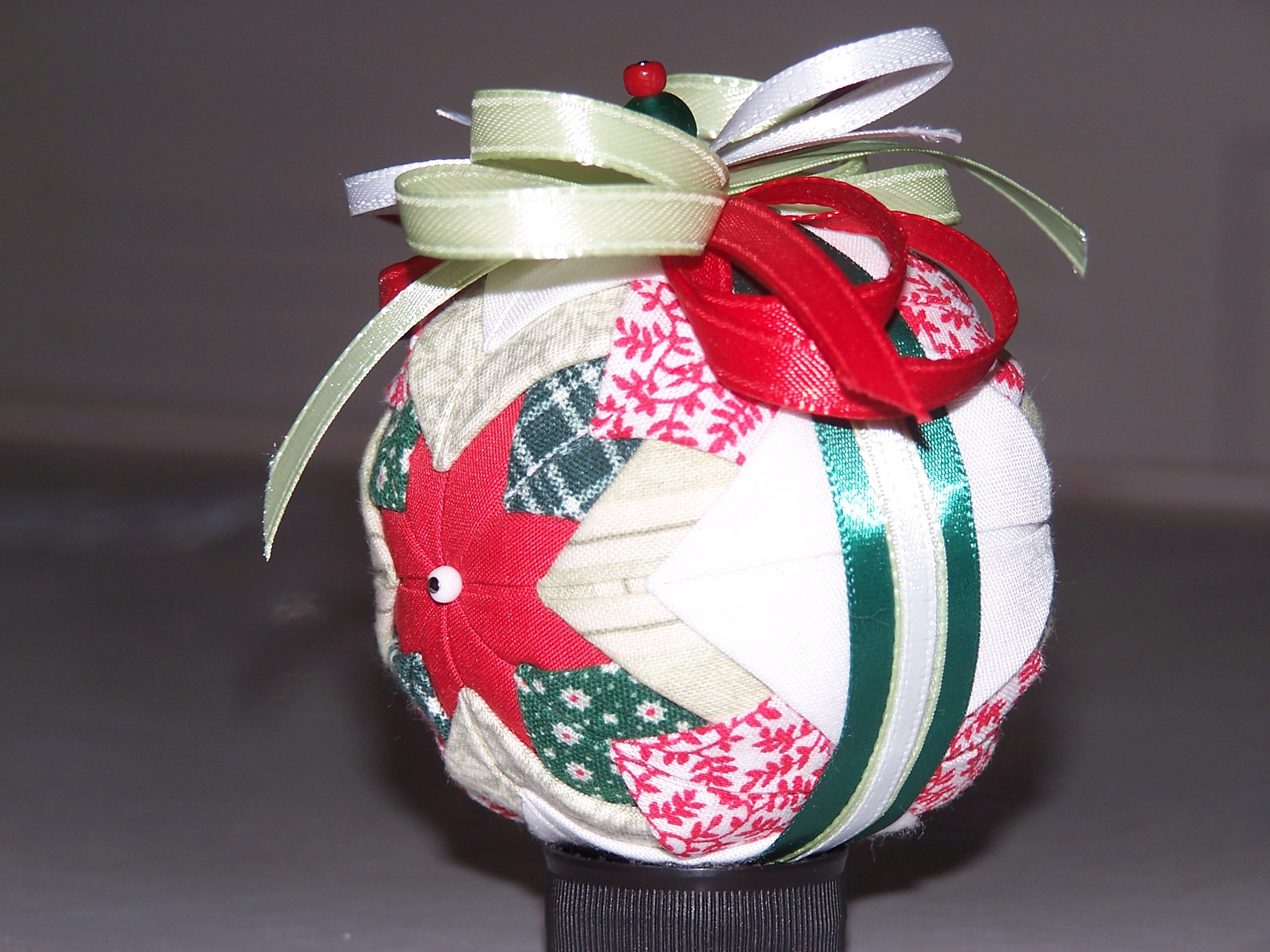
fabric version

another fabric ornament

paper version made from canned tomato labels

variation on the label ornament above (notice ingredient list)

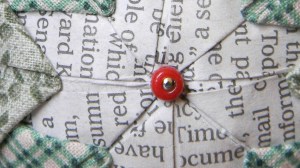
This mixed fabric and paper ornament uses recycled New York Times.
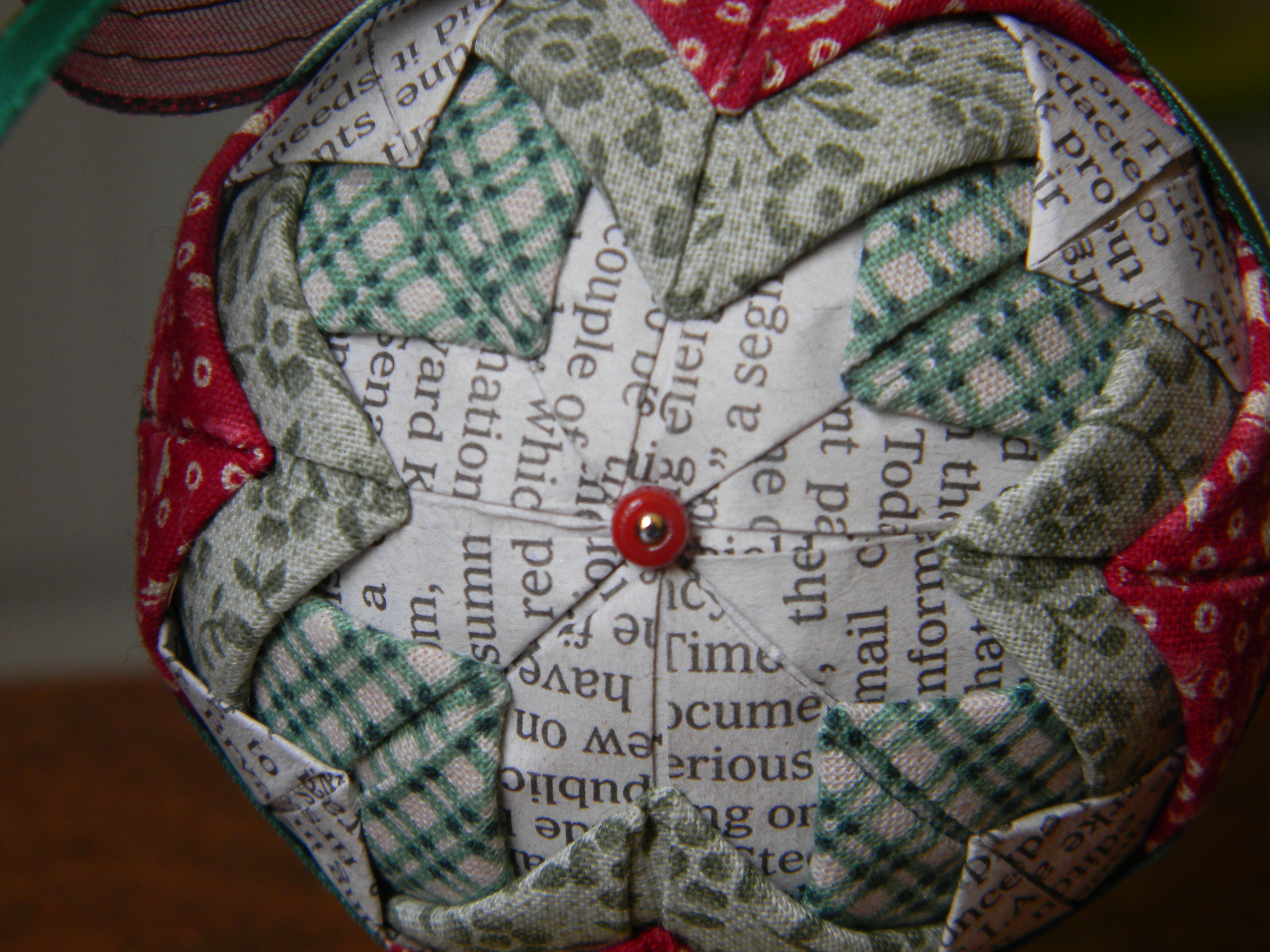
close-up of the same fabric and paper ornament

What you will need:
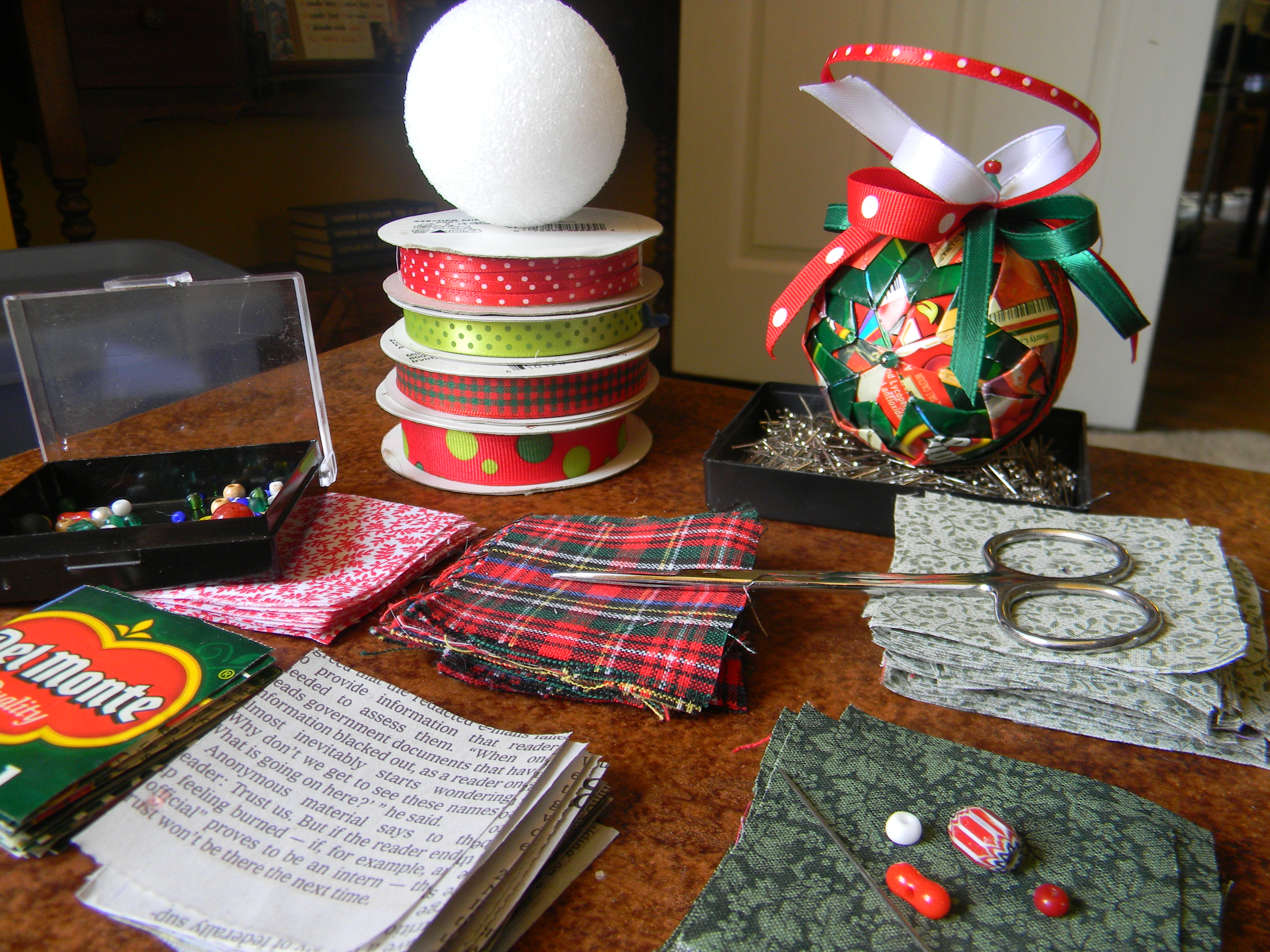
–found fabric (40 squares per ornament, 2 inches each) OR

–repurposed paper from books, maps, or newspapers (40 squares per ornament, 2 inches each)

–straight pins (approximately 200-210 per ornament)

–Styrofoam balls (2.5 inches each)

–ribbon (5/8 inch, ½ inch, and ¼ inch)

–beads

–scissors

–ruler

Follow these steps:

  1. Cut fabric and/or paper into 2 inch squares.  You will need 40 squares per ornament.

  1. Pierce center of first square with pin.
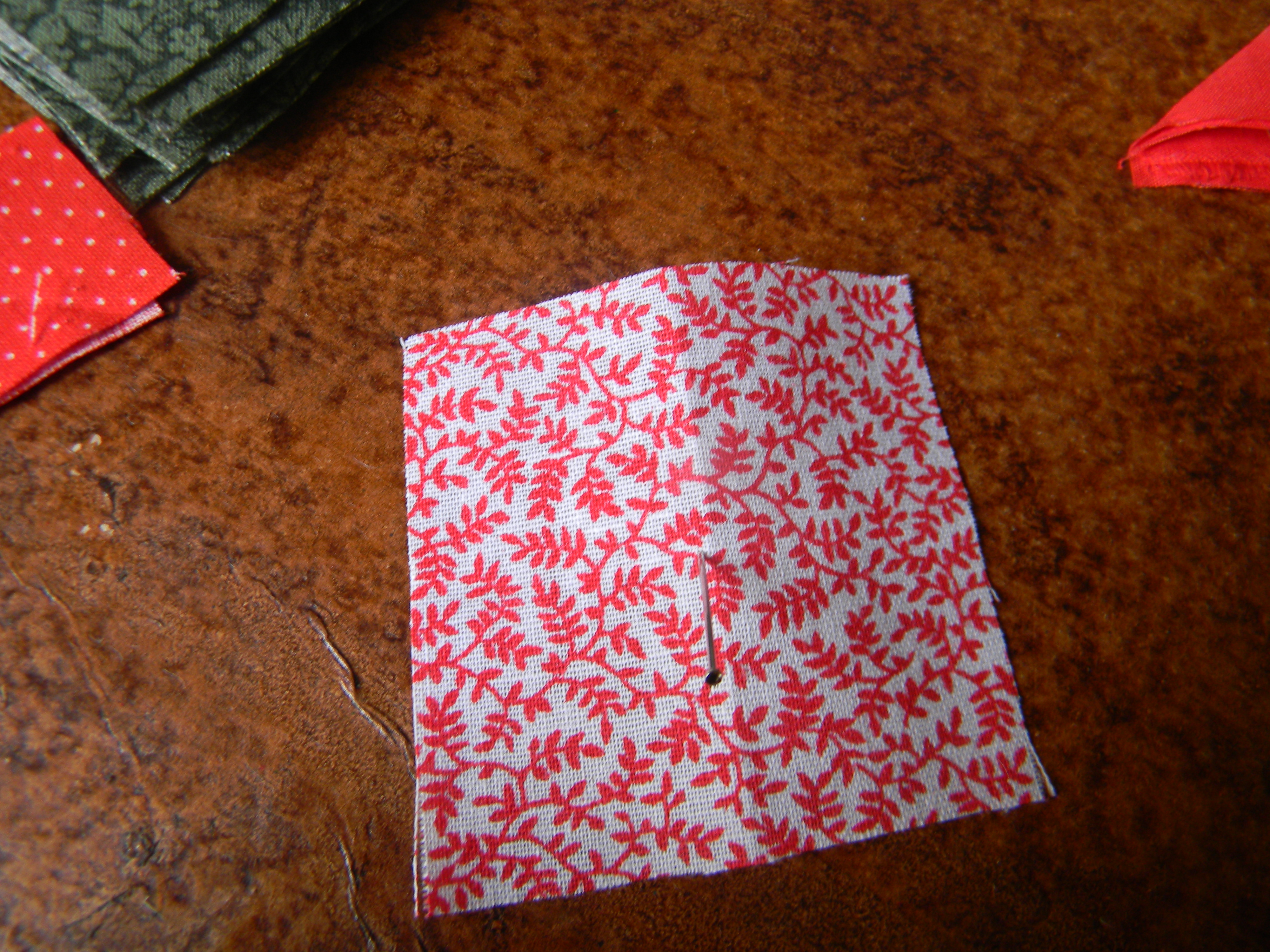
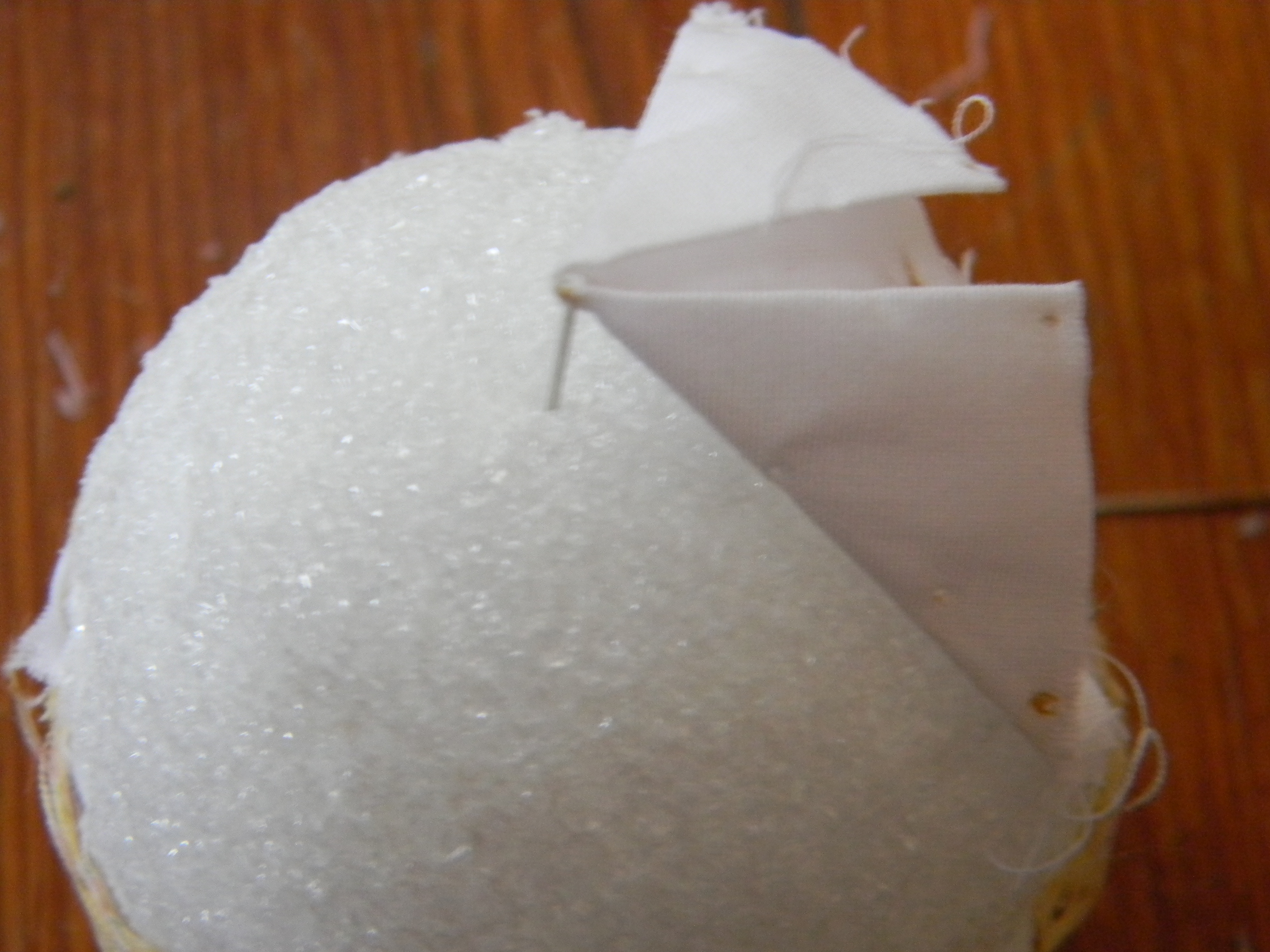
  1. Fold fabric/paper  as shown in photos below and attach to ball.
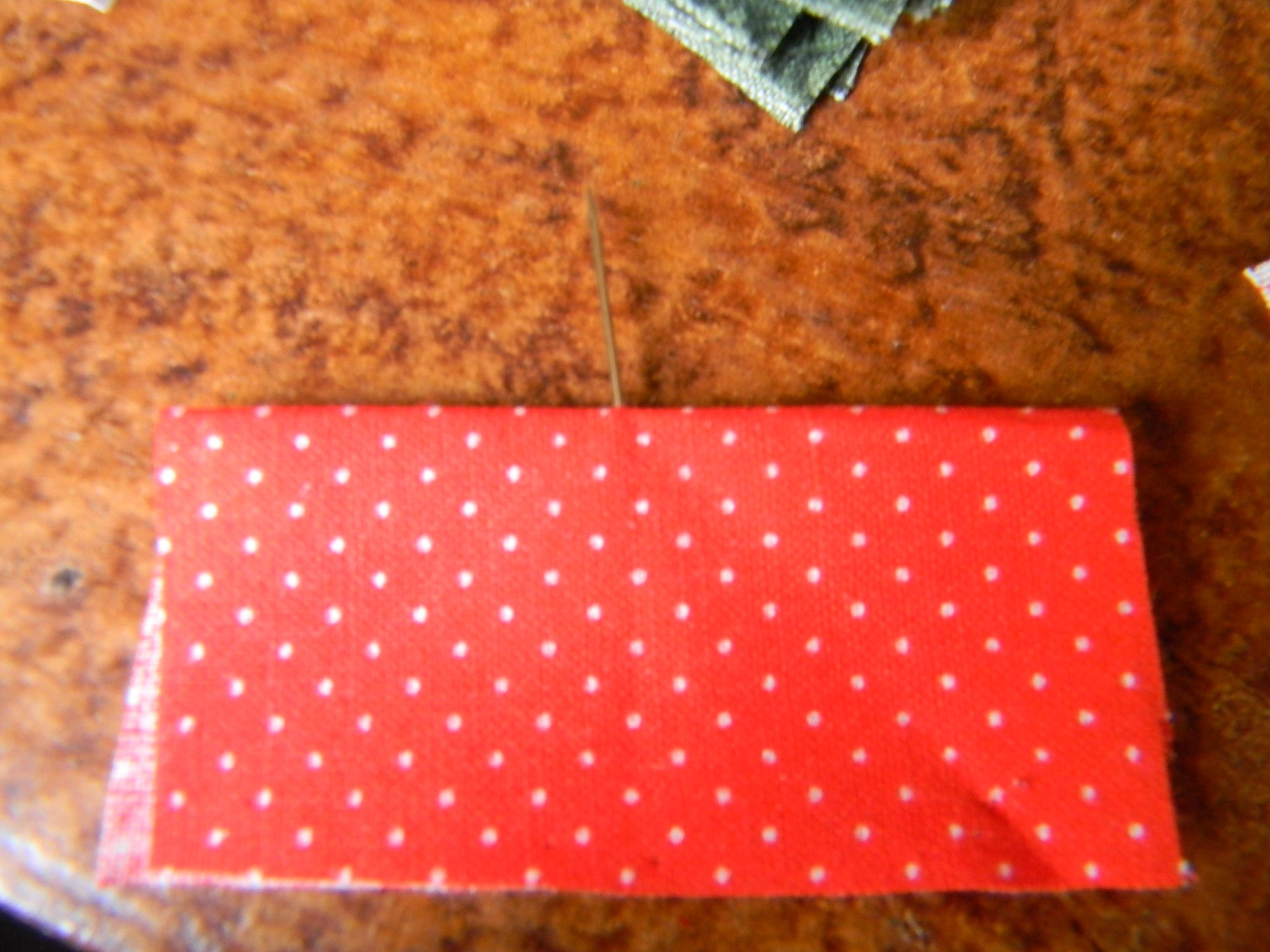
  1. Add fabric/paper squares until you have 4 in the first circle, 8 in the next, and 8 in the last.

secure with 4 pins across the bottom of the triangle

secure second folded triangle opposite the first

add the third triangle
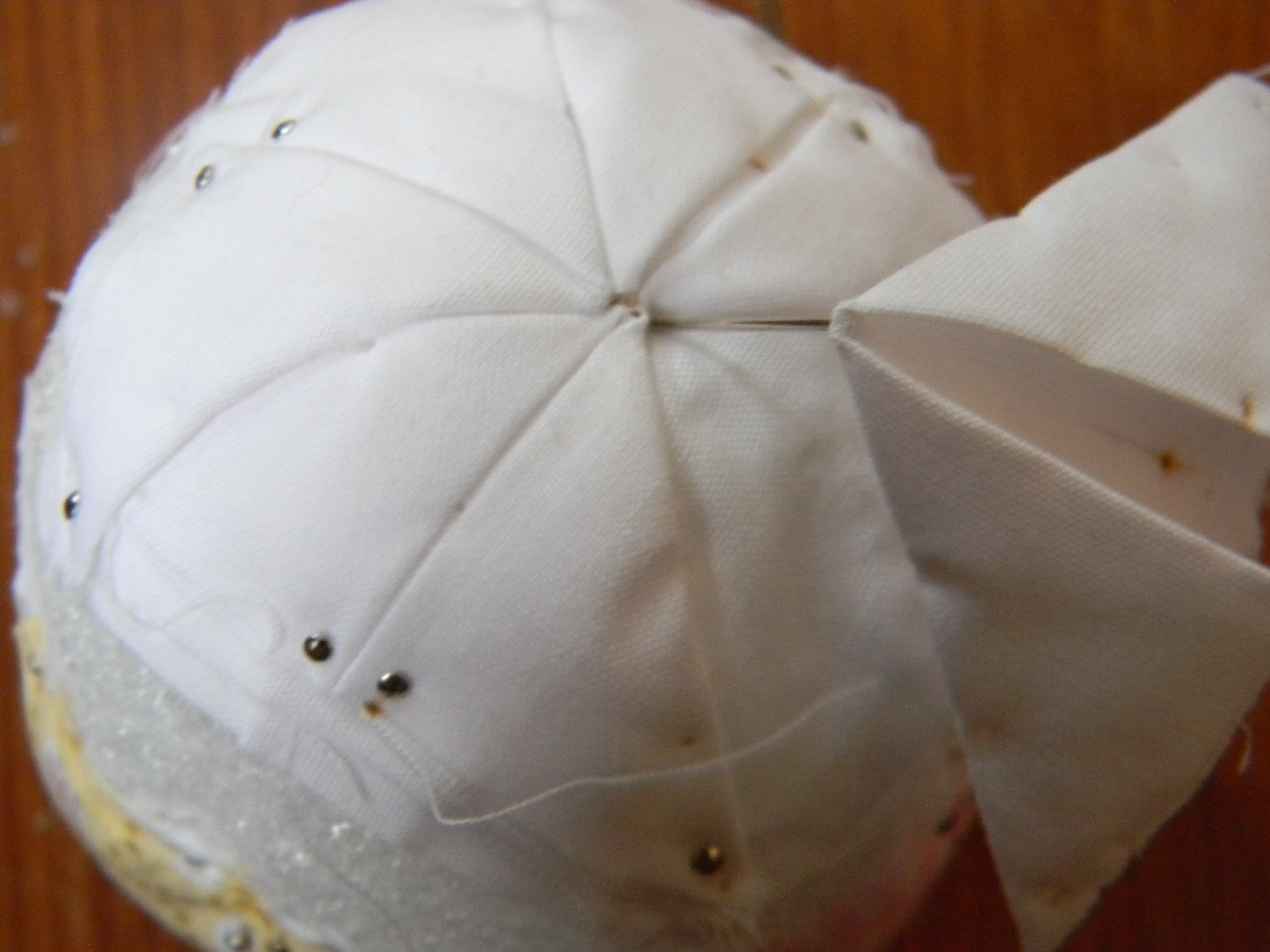
add the fourth to complete the first set of triangles

add the first triangle of the next set between triangles of the first, inserting the top pin about 1/4 inch from the center
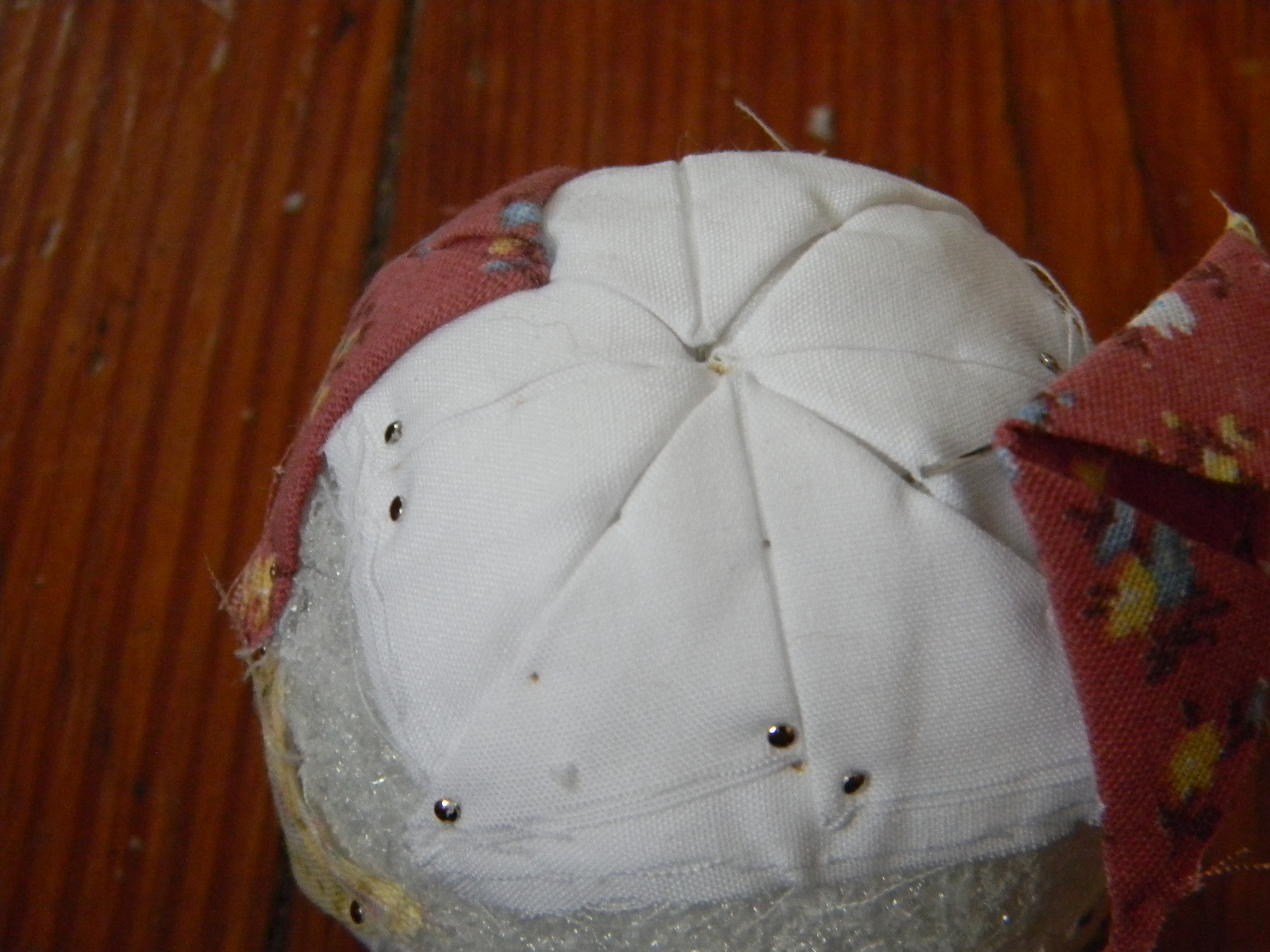
add the second opposite the first
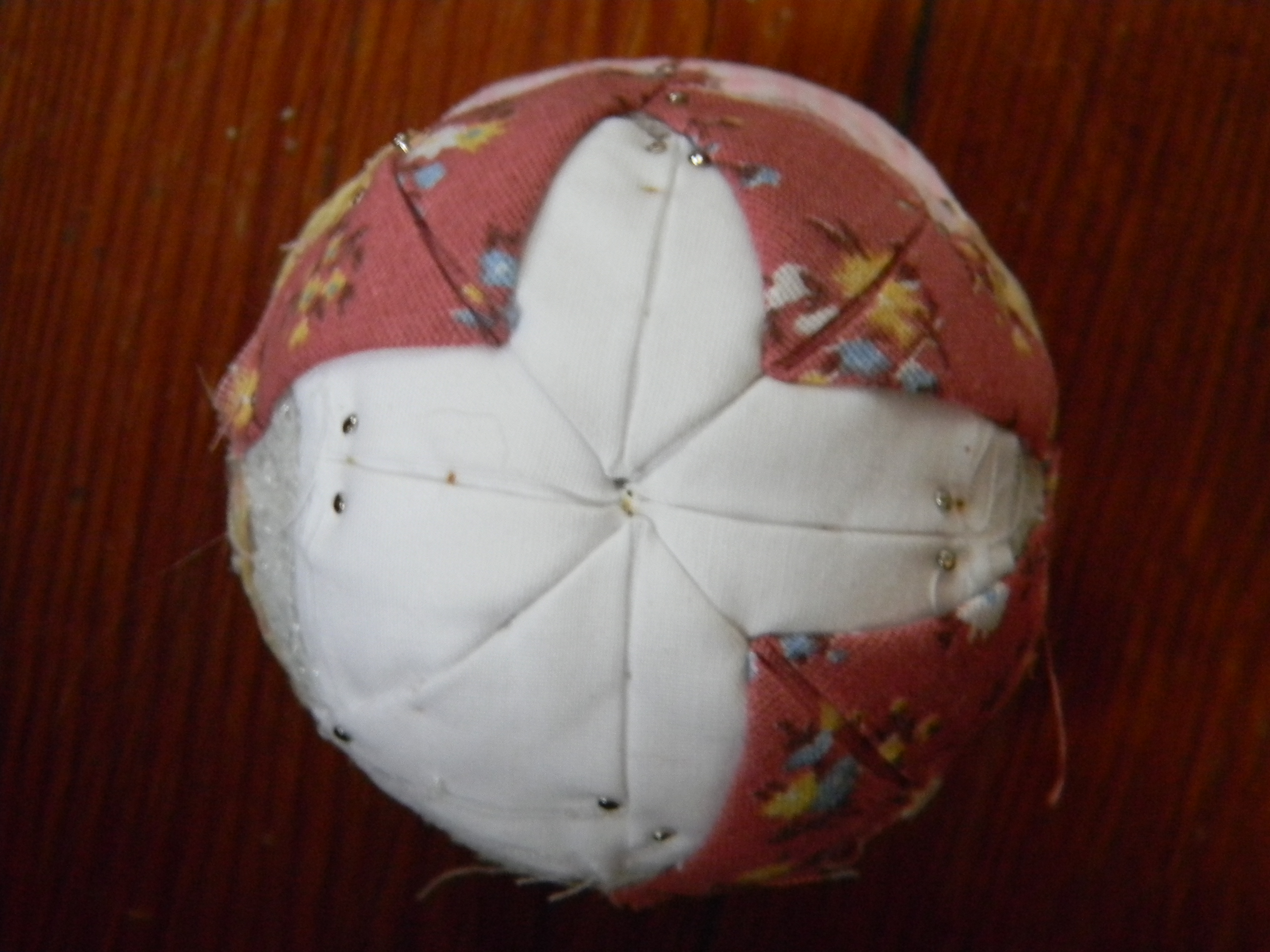
attach the third triangle of the second set
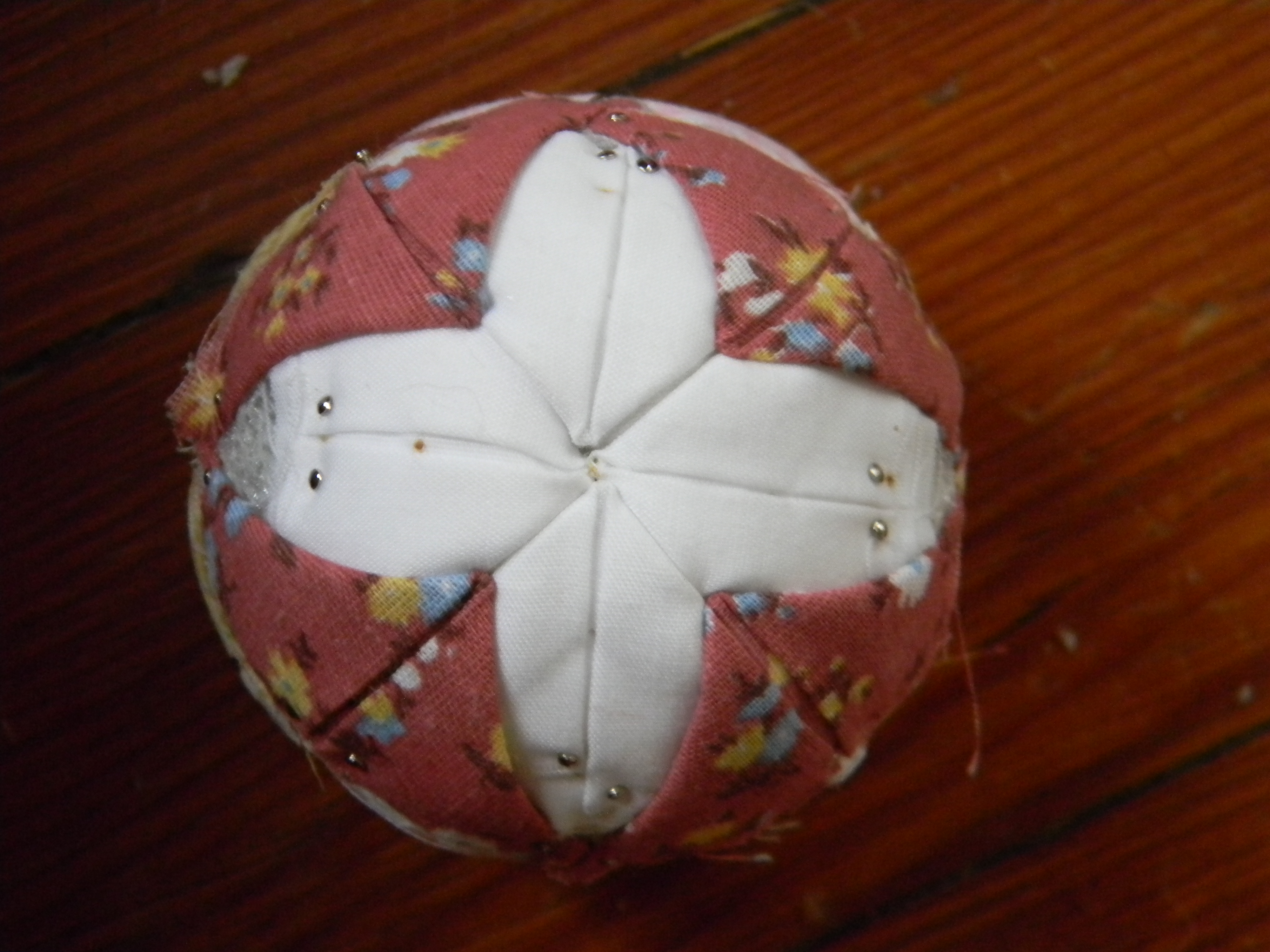
add the fourth

the fifth
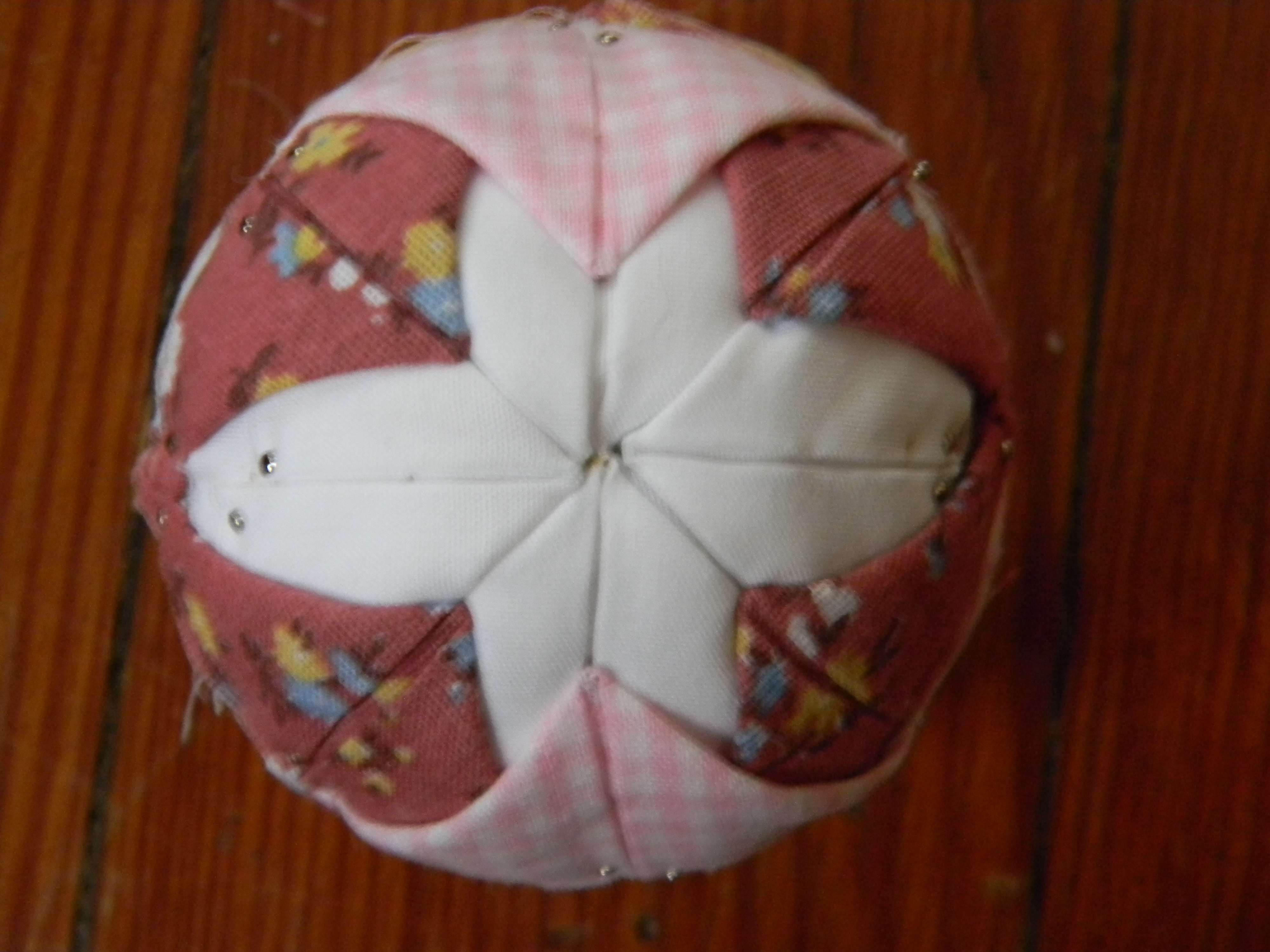
the sixth
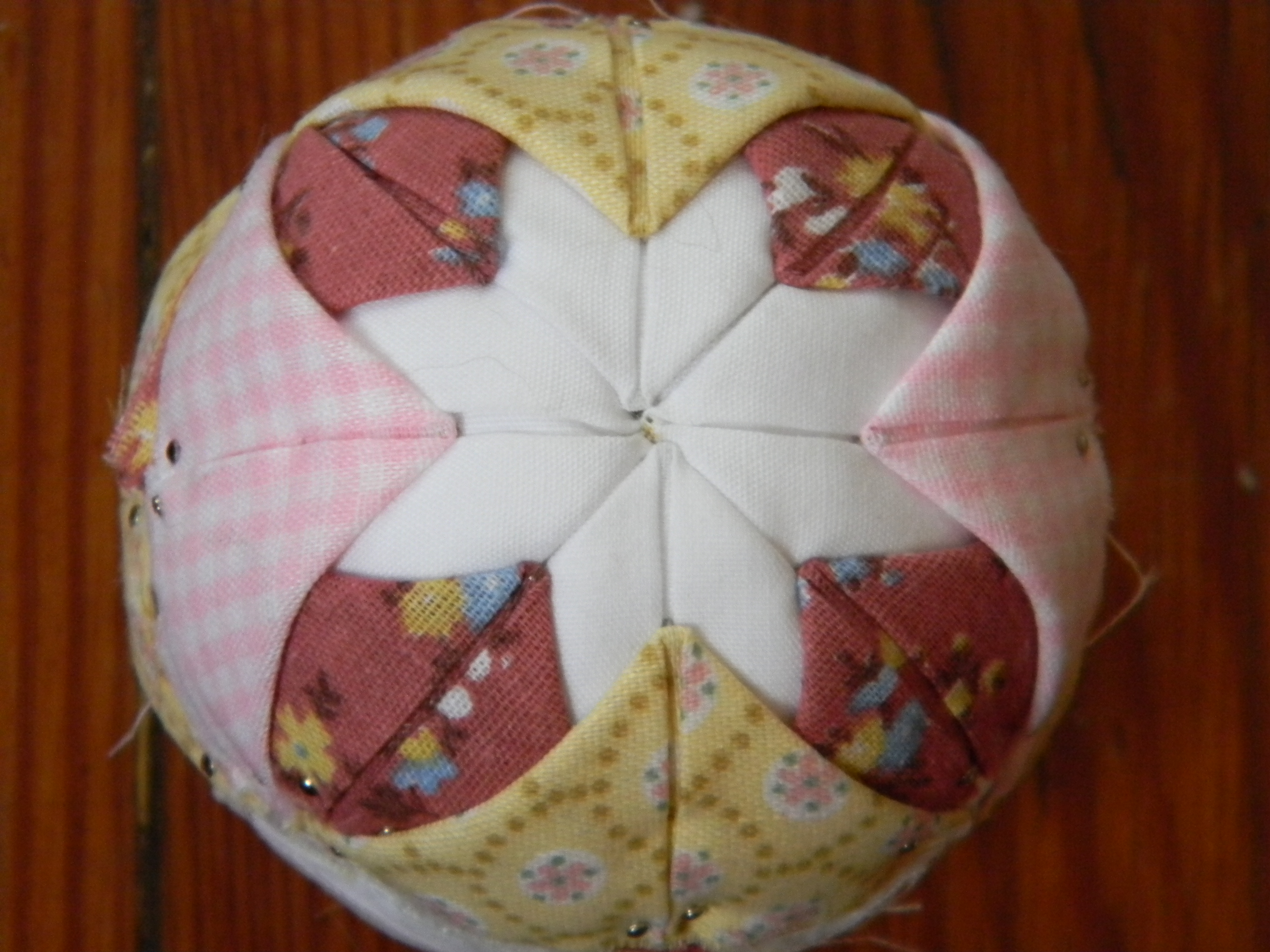
eighth triangle finishes the second set

second triangle of third set
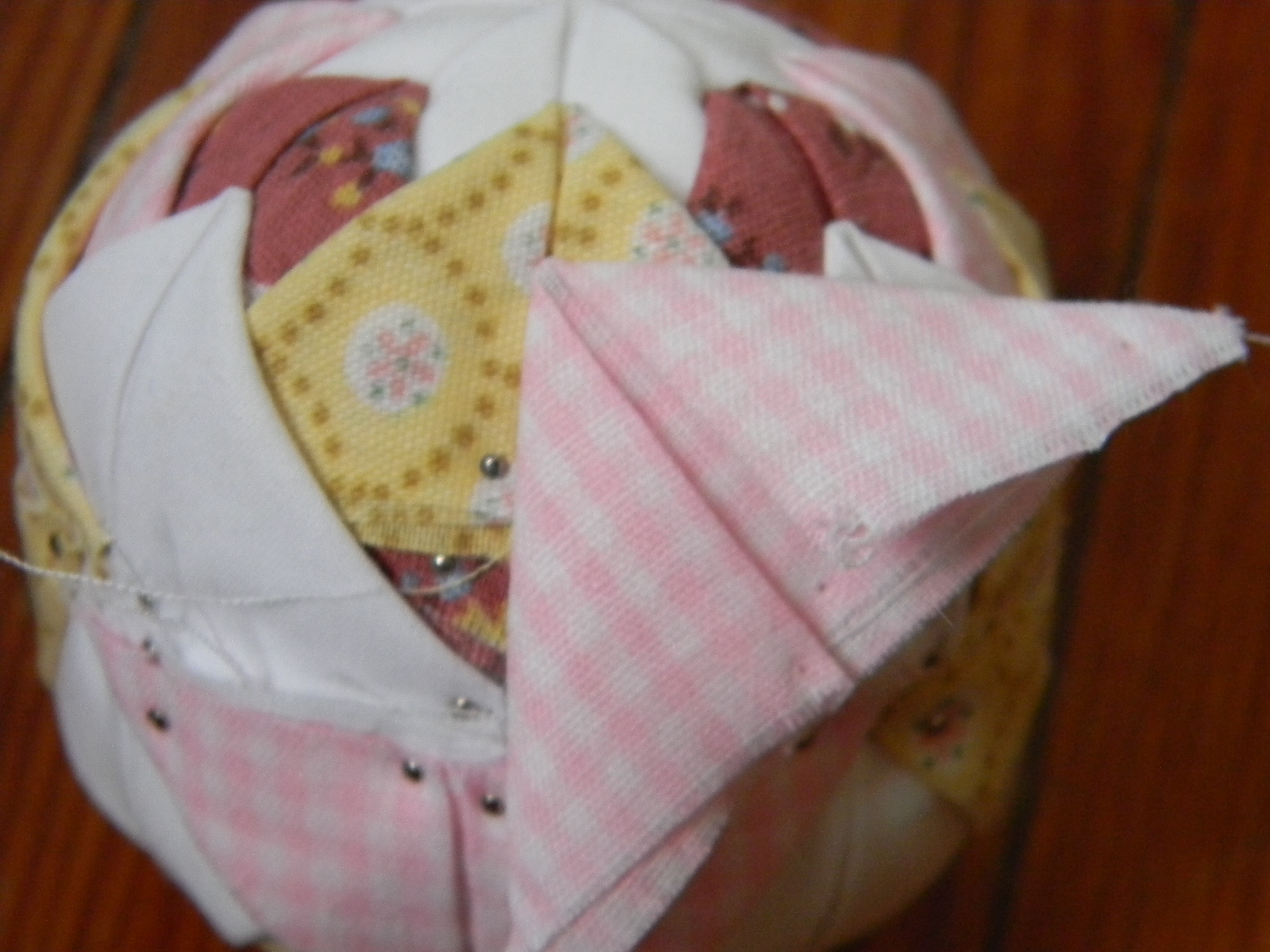
third triangle of third set and so on until third set is complete

  1. Repeat steps 2-4 on the opposite side of the ball, again adding 4 squares in the first circle, followed by 8 each in the following 2 circles, until fabric/paper squares nearly meet in the middle and you can see only a narrow band of Styrofoam circling the center of the ball.  (See images below.)

side one and side two meet in the middle

  1. Pin 8 inch strip of ribbon (5/8 inch wide) around the middle of the ball to cover pins.

secure one end of ribbon with two pins

where ends meet secure with two more pins

  1. Add optional ¼ ribbon over the 5/8 inch ribbon to create layered effect and pin in place.
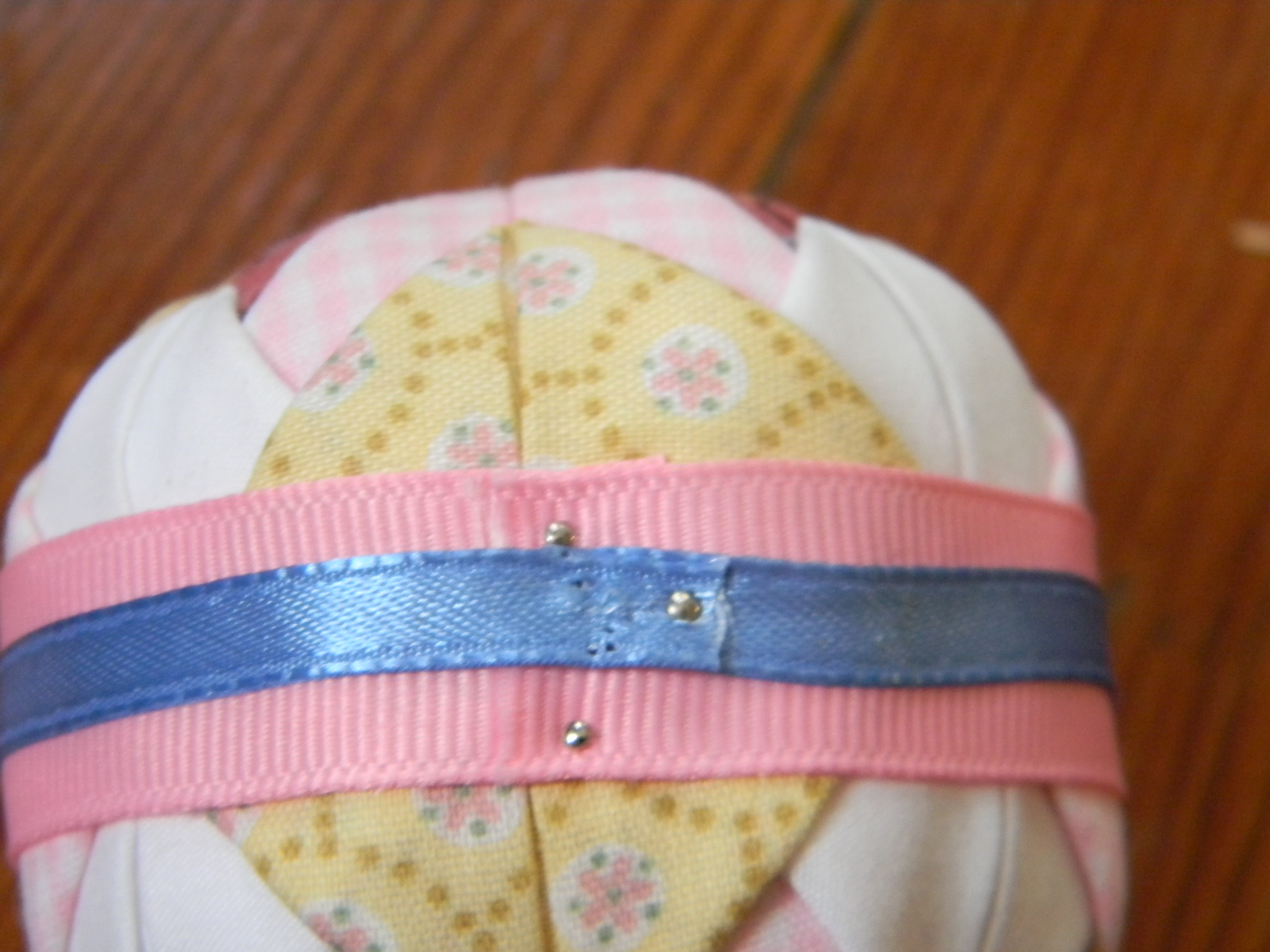
secure quarter-inch ribbon on either end with pin

  1. Attach ribbon to form bow on top in desired pattern and color.  Secure with pins.  I usually use two colors, applied in opposite directions and crossed in the center.
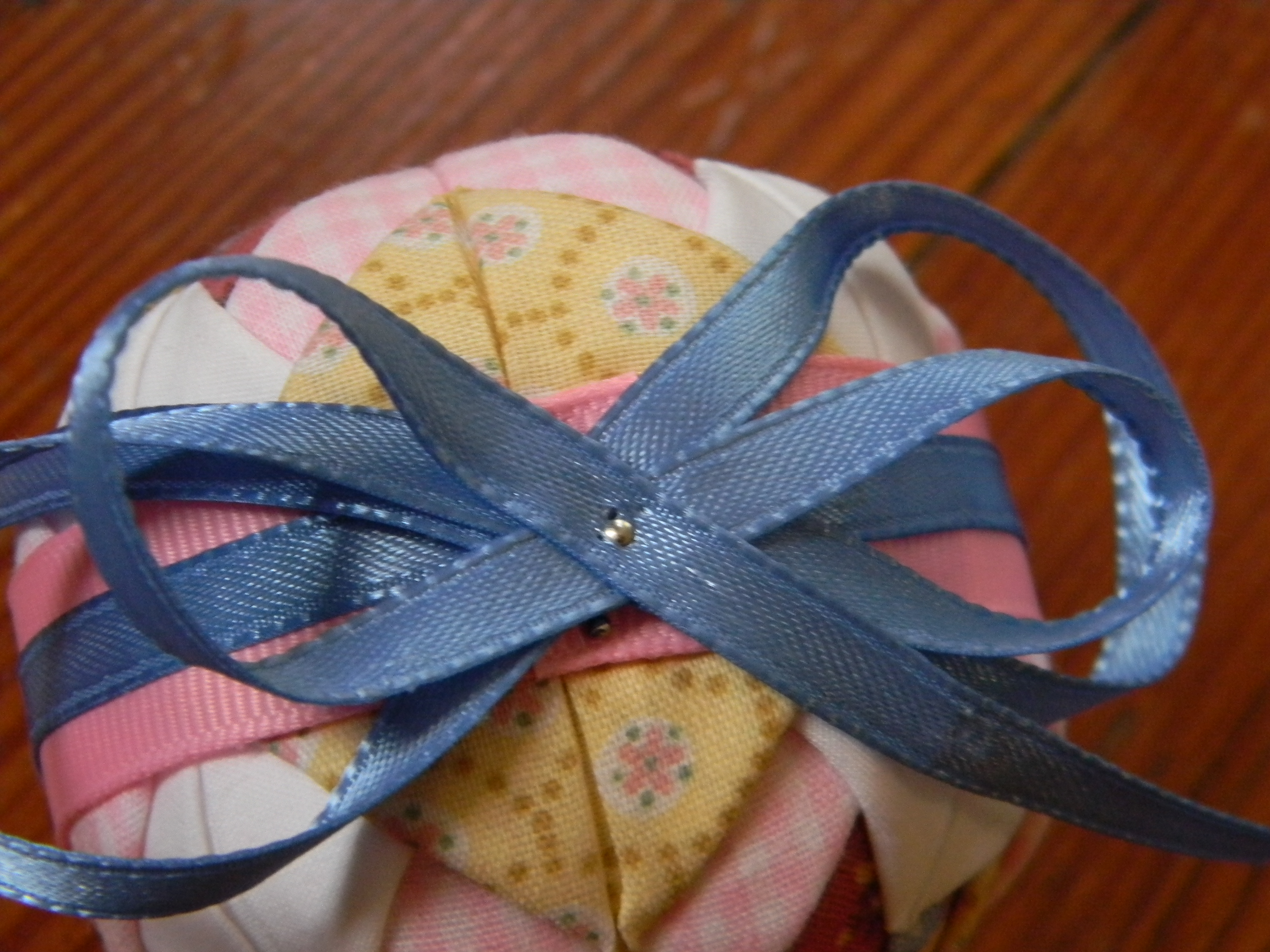
attach first half of bow in the same direction as 5/8 inch ribbon
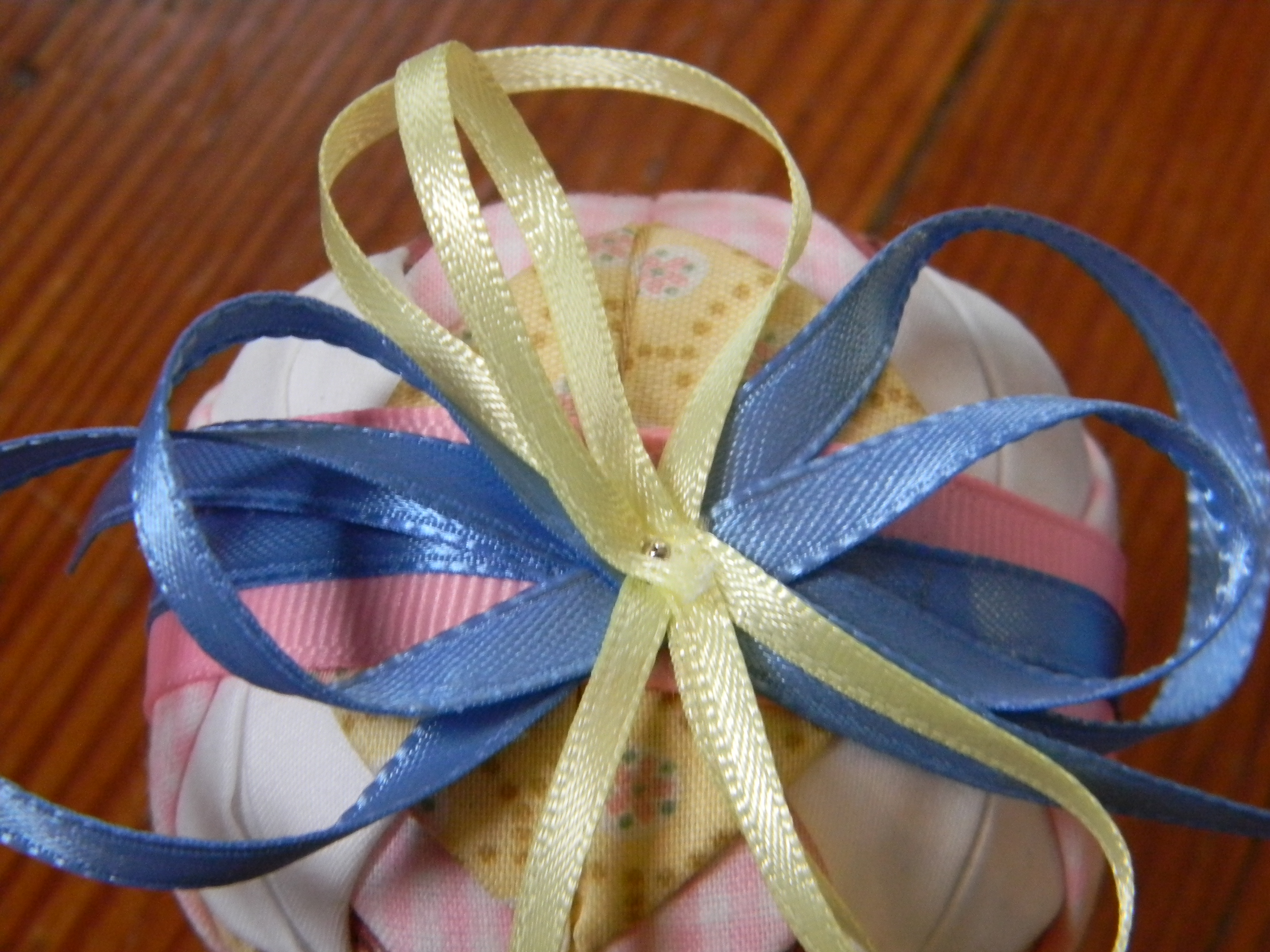
attach the second perpendicular to the first

  1. Secure loop for hanging with decorative beads and pin.

loop attached with pin
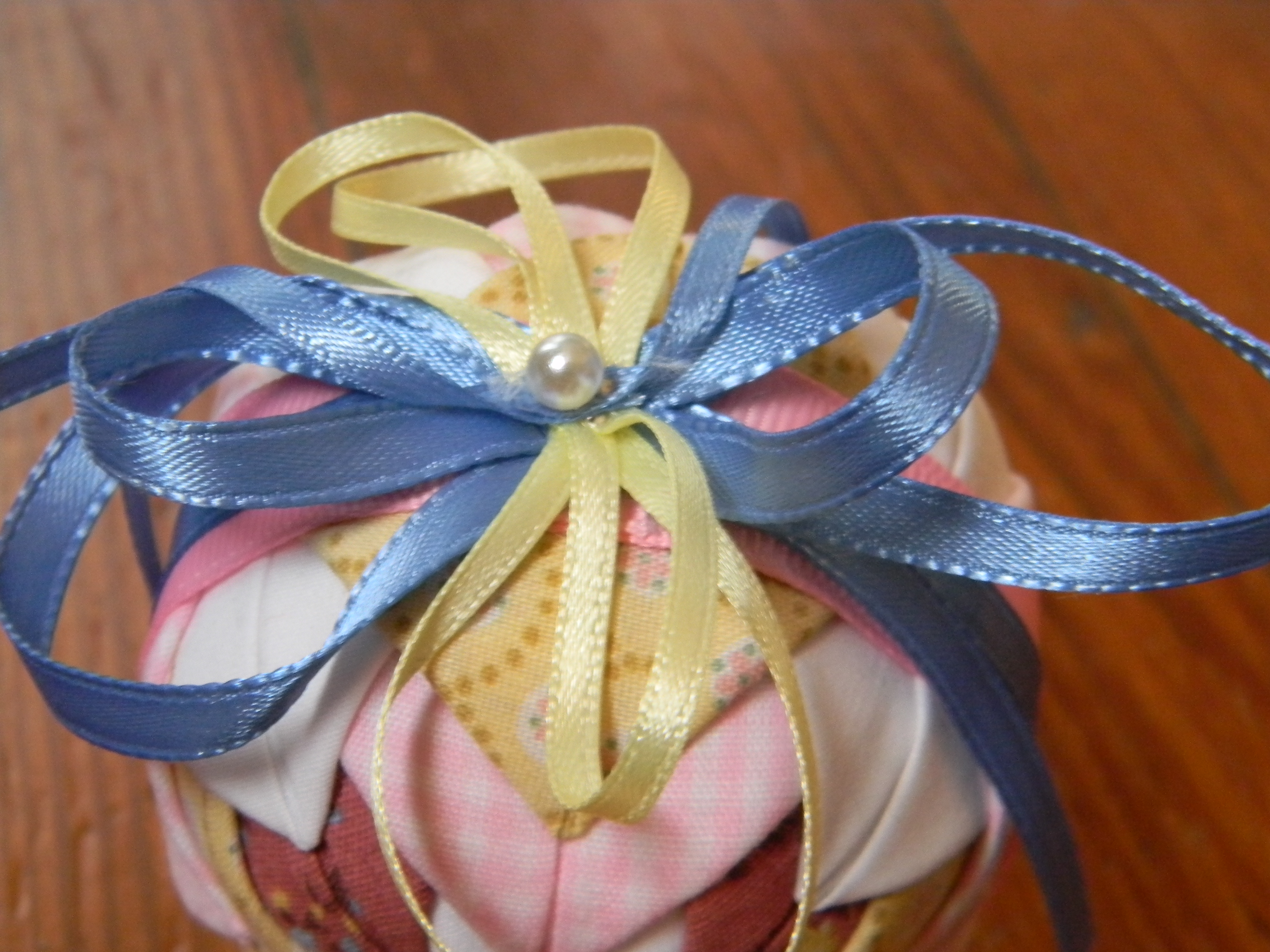
decorative bead finishes the top

  1. Pin optional decorative beads in the center of the smallest star on either side of ornament.
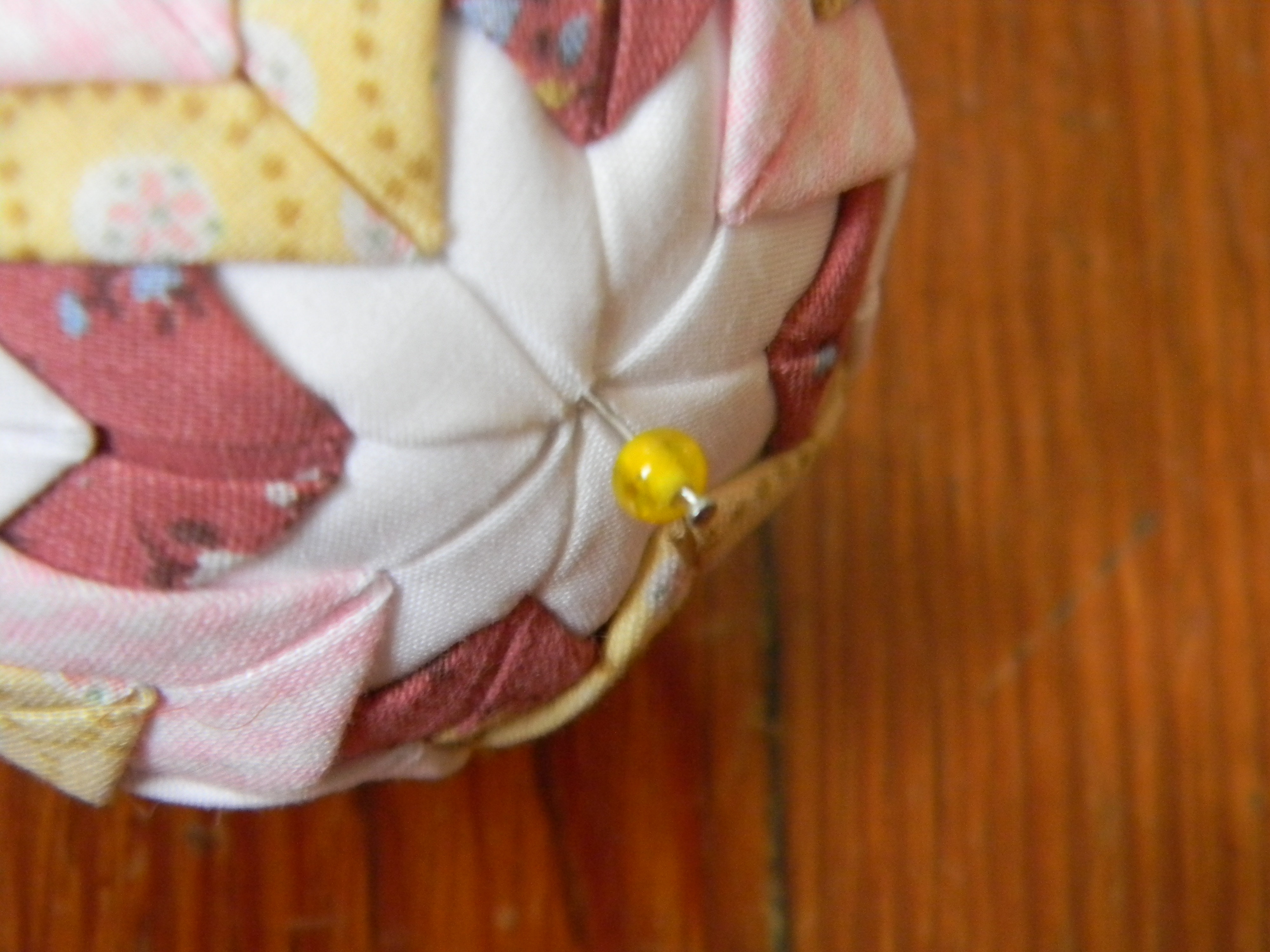
feed bead onto straight pin
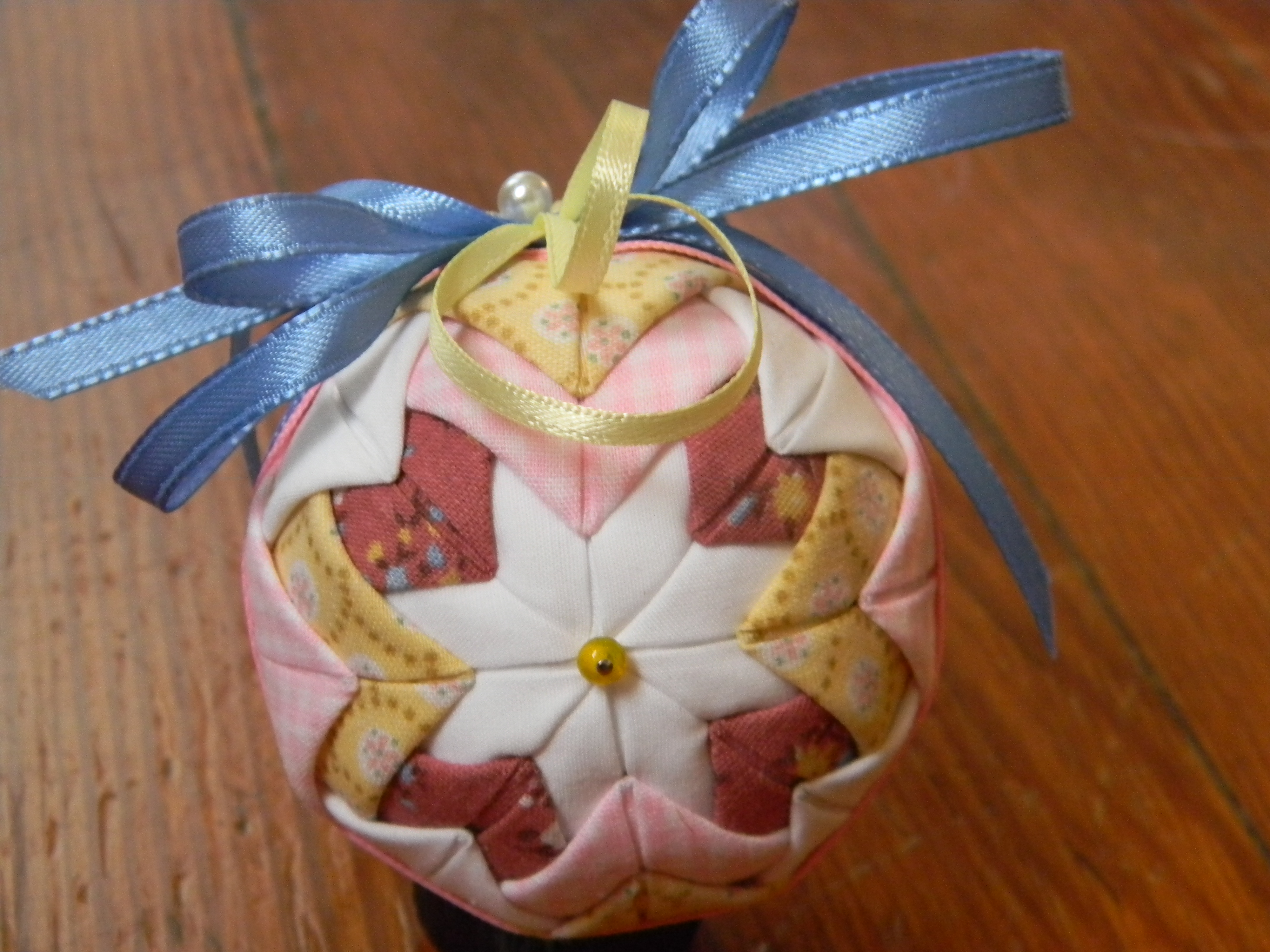
finished ornament

(Note:  I would make a number of ornaments with fabric before proceeding to paper, which is more difficult to manage.)

Will you rethink your ethic of giving this Christmas?  Do you have a holiday ecology?

HGTV Premiers New Show (Does Haiti need to be HGTV’d?)


On Monday, June 6, 2011, HGTV (Home and Garden Television) premiers its new series, “HGTV’d.”  The network’s website says the show is for anyone who has ever wanted an HGTV makeover and that in each episode an HGTV designer “will arrive at the home of a viewer, surprising them with jaw-dropping makeovers and over-the-top transformations.”

Back in February, however, having read about this upcoming series (while still living in Port-au-Prince), I posted a piece called “Haiti needs to be HGTV’d.”

So, it seems only appropriate, since earlier this week I wrote about the Food Network and its disconnect from the “food insecurity” so much of the world endures, that today I share the February post again and comment (in light of this premier) on HGTV’s own culpability in not addressing the housing crisis so much of the planet faces.

(Please be aware that I’m a big fan of HGTV.  I watch it daily, at least when I’m in the US and near a television.  You should also know that the network does
support Rebuilding Together—”a nonprofit working to preserve affordable homeownership and revitalize communities” here in the US.   And I appreciate this effort.)

However, the network—though it airs shows such as “House Hunters International,” which follows the house hunts of ex-pats seeking to
relocate abroad–does nothing to share how the less-privileged
citizens of places like Costa Rica or Ecuador actually live, and it, moreover, does nothing to support housing projects in these countries—ones that would improve the standard of living endured by the poor in developing countries.

Perhaps, it’s not the responsibility of the network to do this.  Perhaps, this kind of programming wouldn’t sell.  Perhaps, people wouldn’t watch.

However, it seems reasonable to raise this question—especially in light of the series premier on Monday.

So, take a look at what I posted several months ago—photos of the housing crisis I witnessed when I visited a small Haitian village outside of Leogane—and tell me if you think HGTV has any responsibility to help a community like it:

Like many Americans, I love HGTV (Home and Garden Television).  When I go home to the US, I can’t wait to watch kitchens upgraded, bathrooms remodeled, landscapes transformed.

Whether I’m cooking with the ease of Lean Cuisine, laundering with the convenience of Kenmore, or cleaning with the miracle of Mop & Glo, I appreciate the perky background chatter of “Divine Design” (to learn more about the show click here) and “Design on a Dime” (to learn more about the show click here).

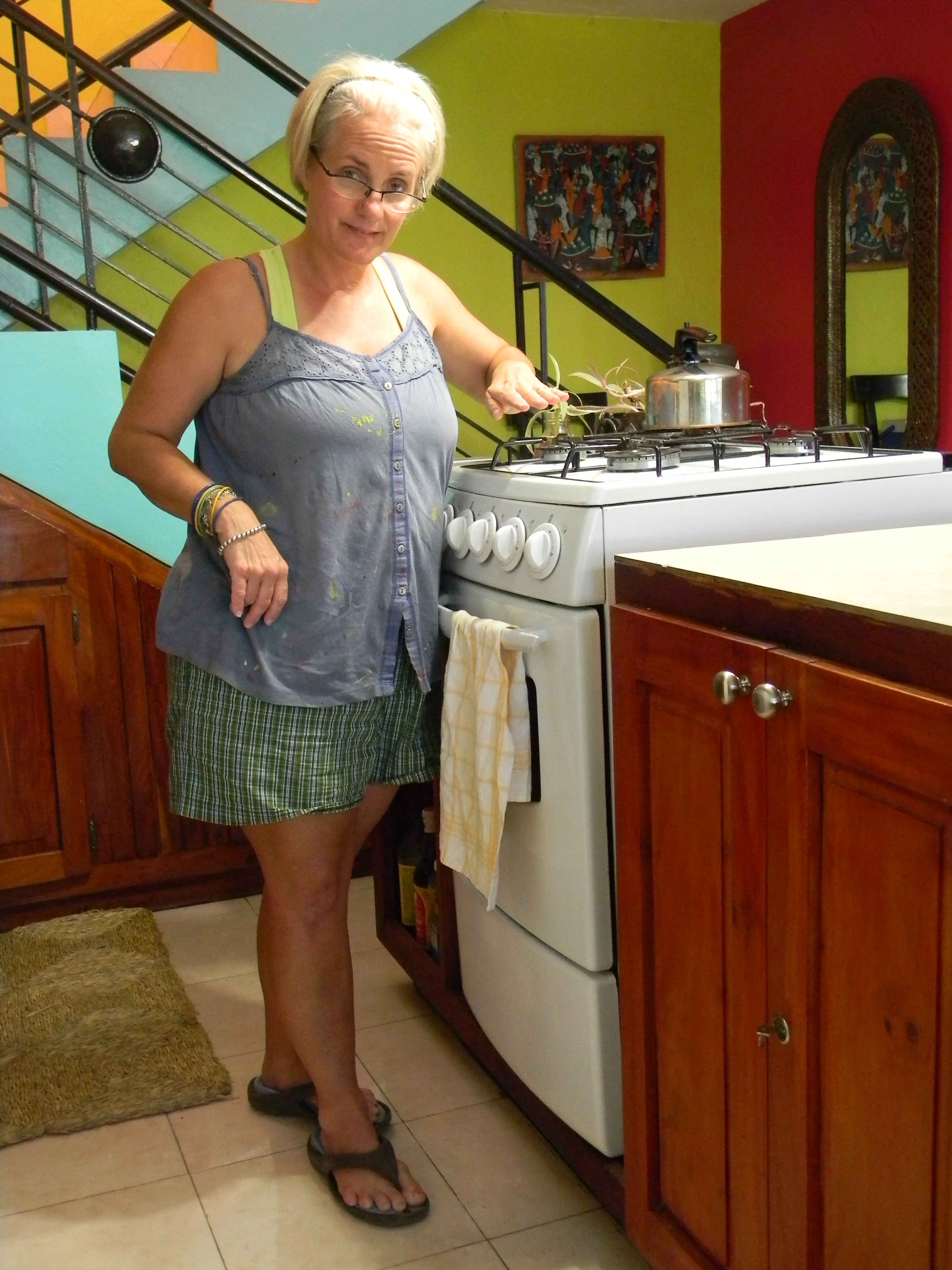
I enjoy segments on how to install bamboo flooring at a diagonal as much the next surface-obsessed, granite-loving, domestic goddess in North America.  Even when I’m at our house in Haiti, I complain about our stove, our oven, our cook-top.

It’s so small:

So tall:

—so not the stainless steel I have at home in the States.

But—(and this is a big BUT)

This past week I went with Sara to Leogane, a coastal town about 30 kilometers west of Port-au-Prince, close to the epicenter of the January 12th earthquake.  A United Nations assessment team deemed Leogane “the worst-affected area” in Haiti, with 80 – 90% of buildings damaged and nearly all concrete structures destroyed.

Just outside of Leogane I visited a community called Nolivos—

Where the houses look like this:

 a “Desperate Space?”

(To learn more about the HGTV show, “Desperate Spaces,” click here.) 

The washing machines look like this:

doing laundry for a family of 7 children

The kitchens look like this:

a “Sizzling Outdoor Kitchen?”

(To learn more about the HGTV show, “Sizzling Outdoor Kitchens,” click here.)

The sinks look like this:

the community well

And the stoves look like this:

a “Kitchen Impossible?”

(To learn more about the HGTV show, “Kitchen Impossible,” click here.)

Watching a woman cook dinner for seven on  a stove of sticks and stones, I wondered whether Vern Yip would be willing to bring a “Deserving Design” to this mother or another mother in the Port-au-Prince slum of Cite Soleil.  (To watch an episode of Yip’s series, “Deserving Design,” click here.)

I wondered whether David Bromstad (the designer featured in the premier of “HGTV’d”) would splash some color a little south of Miami.  (To watch an episode of  Bromstad’s show,”Color Splash: Miami,” click here.)

I thought:

Haiti needs to be HGTV’d!  (To learn more about the series, “HGTV’d,” click here.)

(and I thought I needed a kitchen remodel.)