Real Boys do Cook Quiche: a Reflection on Fathers’ Day


(in memory of Sam’s daddy Dino–Happy Fathers’ Day from far away)

Much to our delight, my nephew Sam came to visit Sara and me this weekend.  His mother, my younger sister Lynn, is in Cuba for 10 days, so Sam has a series of family, friends, and camp to keep him company.

And his stop Friday and Saturday just happened to be our home.  Goodness–what a gift to us!

The boy is precious–kind, smart, creative, with not only a soul of gold, but also a spirit bright and brilliant.

Sam is eleven.  He plays football, basketball, and a bit of soccer.  He golfs.

But his primary passion is in the kitchen.  He loves to cook, to bake, to create.  I don’t imagine there are many eleven-year-old boys in Kentucky whipping up quiche in the kitchen.  But Friday morning that’s just what Sam did.

So today–a journey in photographs–a quiche-cooking boy–a foodie’s young life:

Aunt Kathy holds her new-born nephew–Sammy’s first day of life:
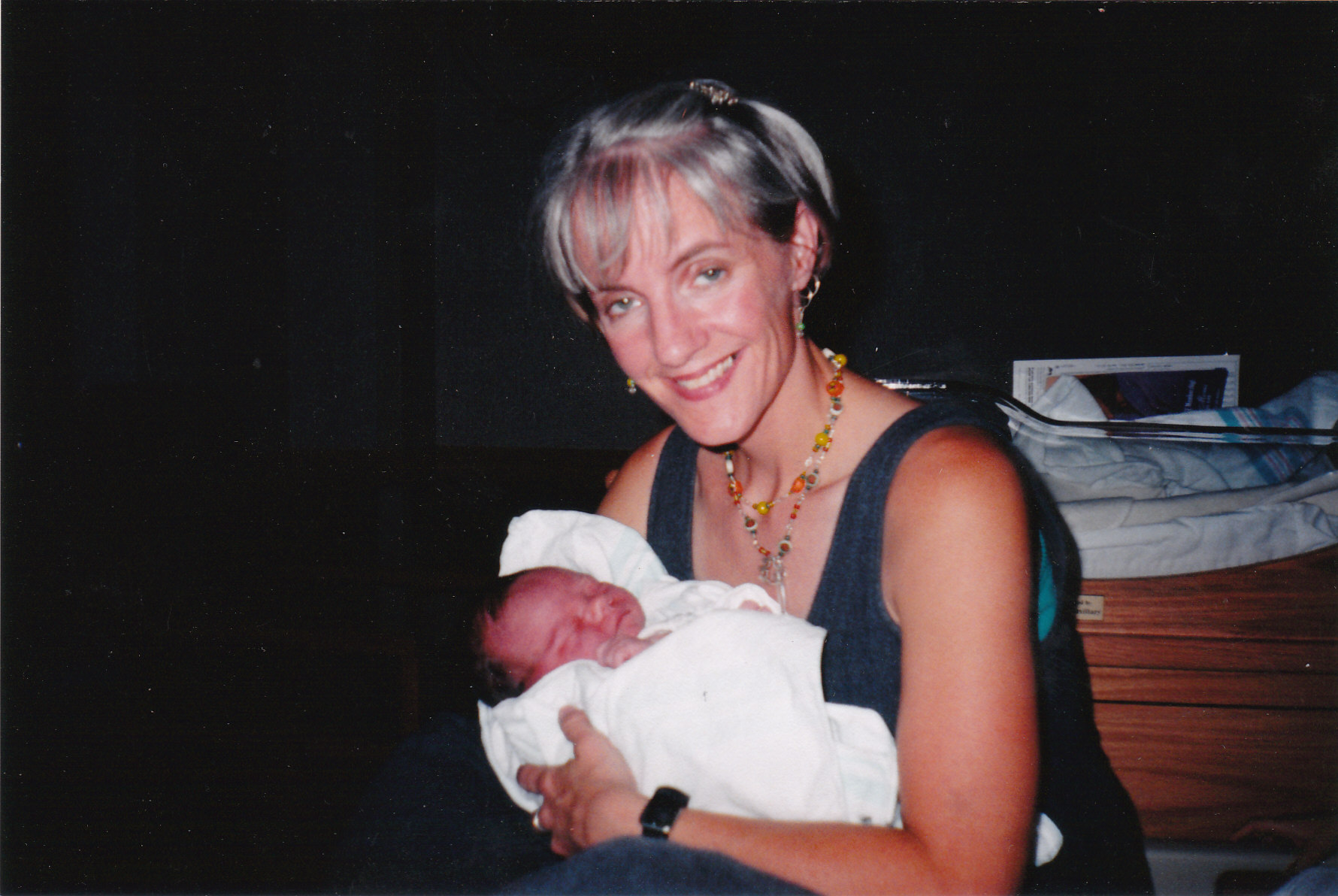
for the love of nephew!

He’s grown a bit and is visiting Aunt Kathy again:
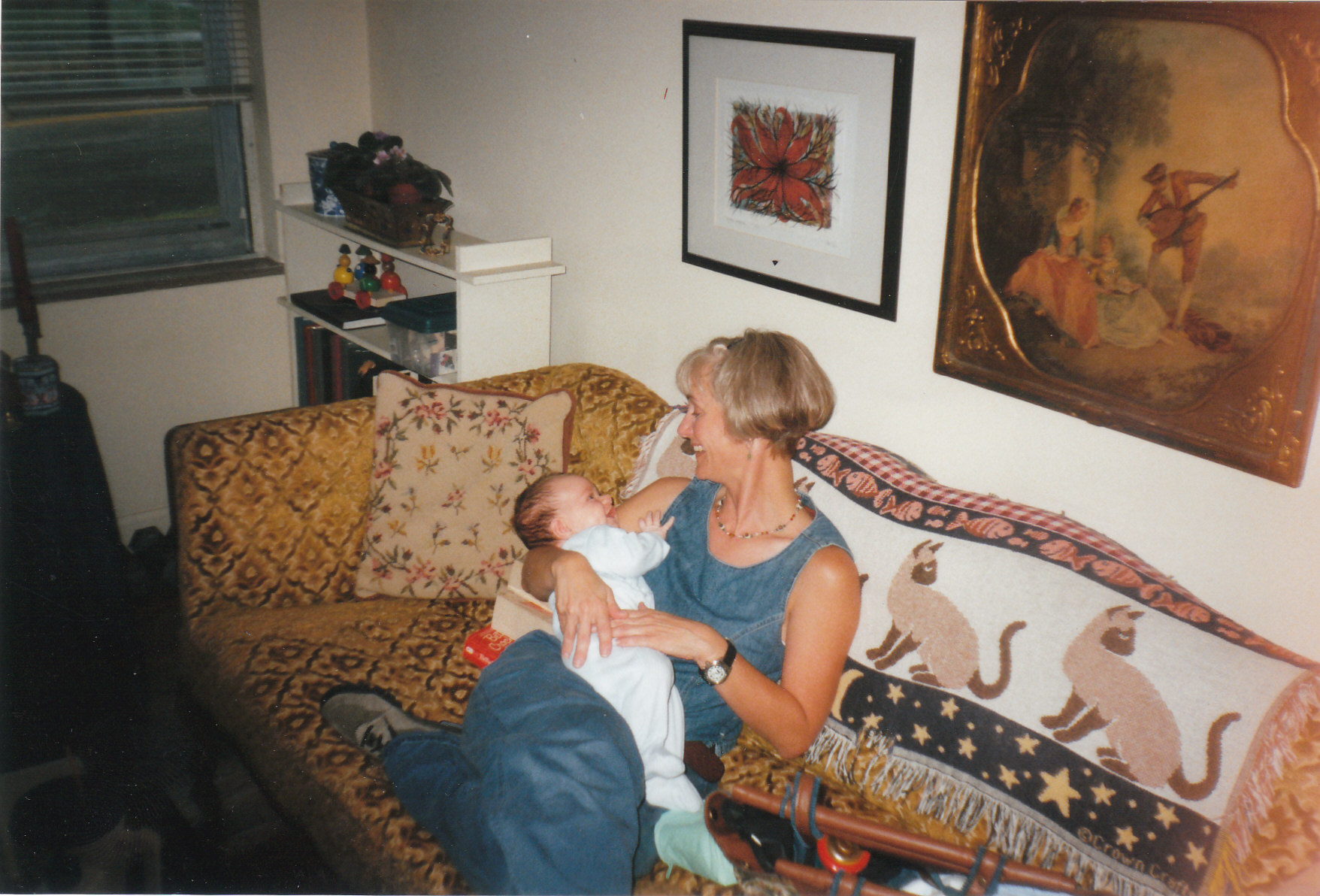
rock-a-bye-baby

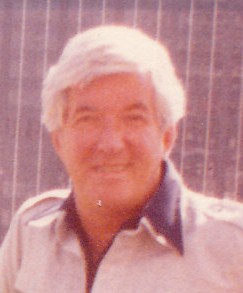
Sam and Daddy–(Sam’s daddy died when Sam was only six.):
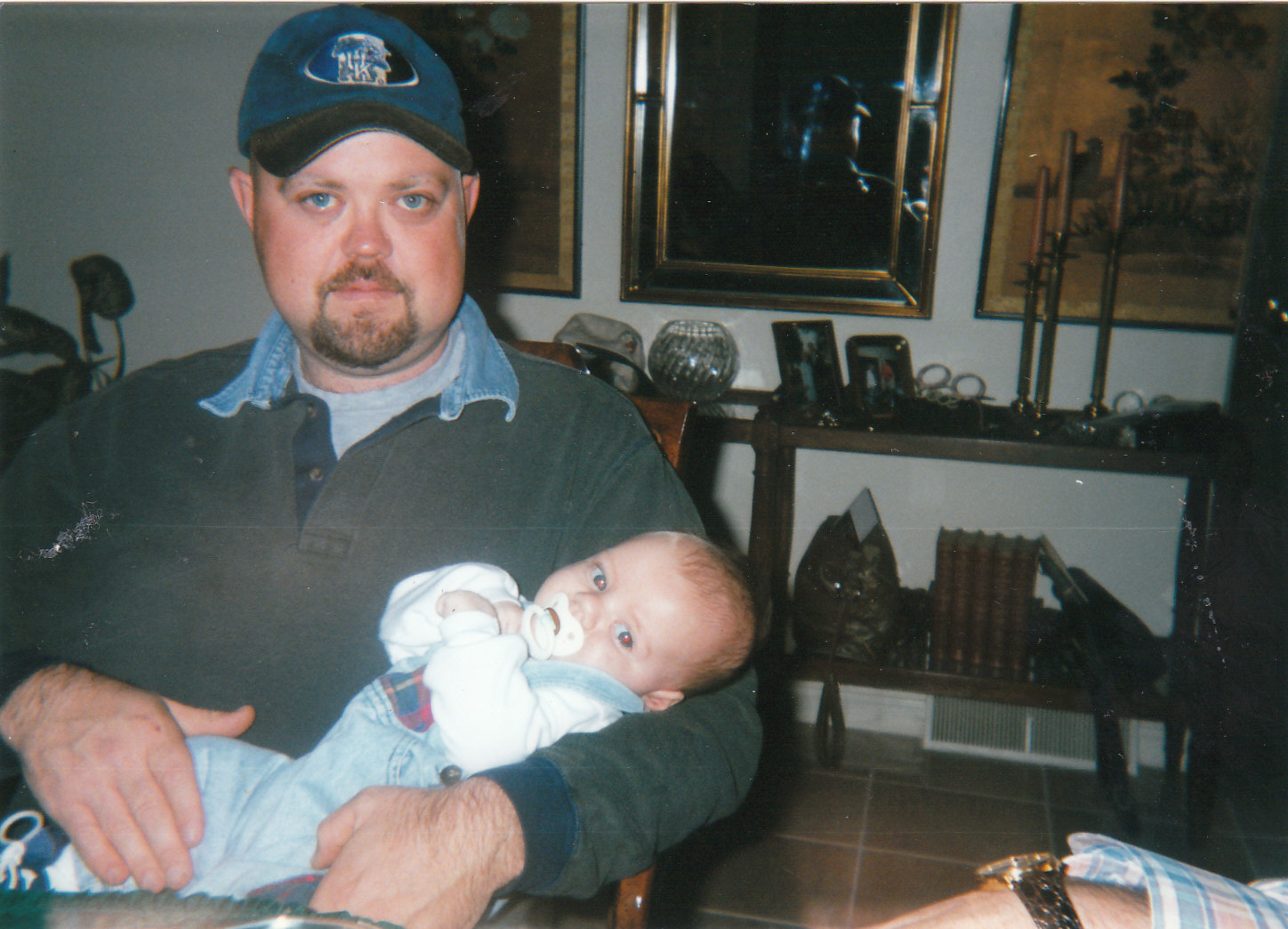
Sam adored his daddy!

Sam and big brother Johnny visit Santa:
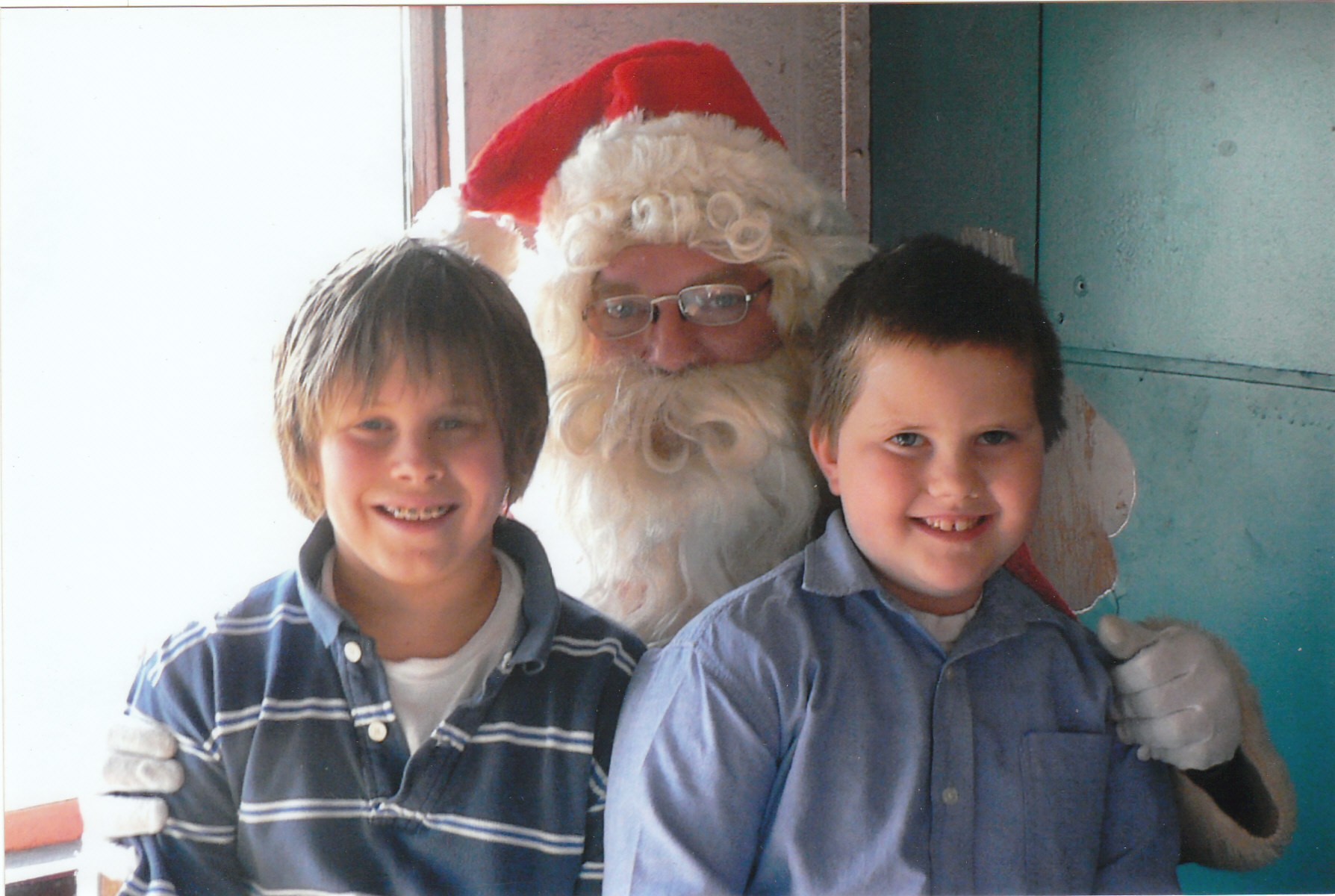
seasons greetings from the nephews

Sam graduates from pre-school:
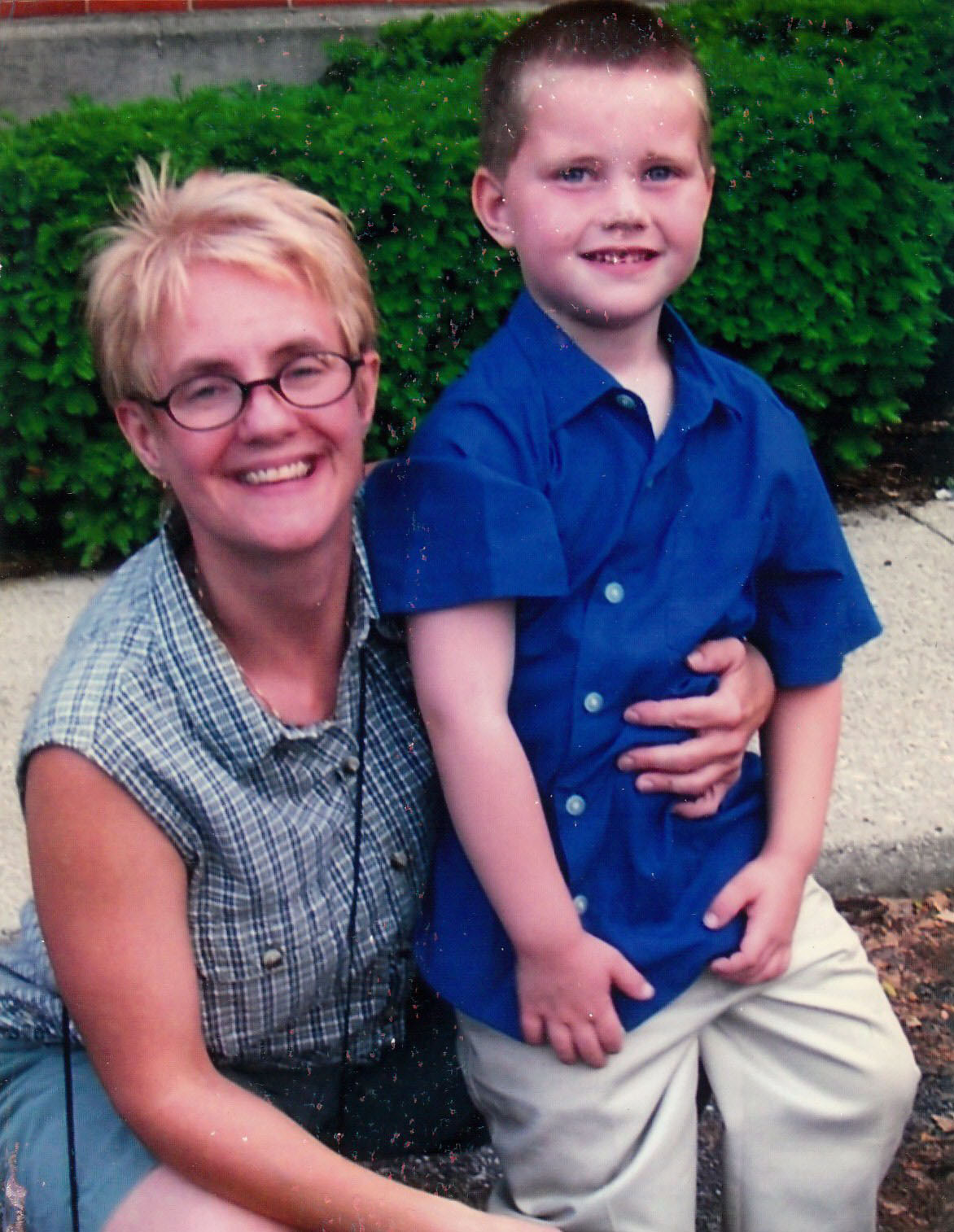
entering the land of "Big Boy"

Sam tends to under-arms:
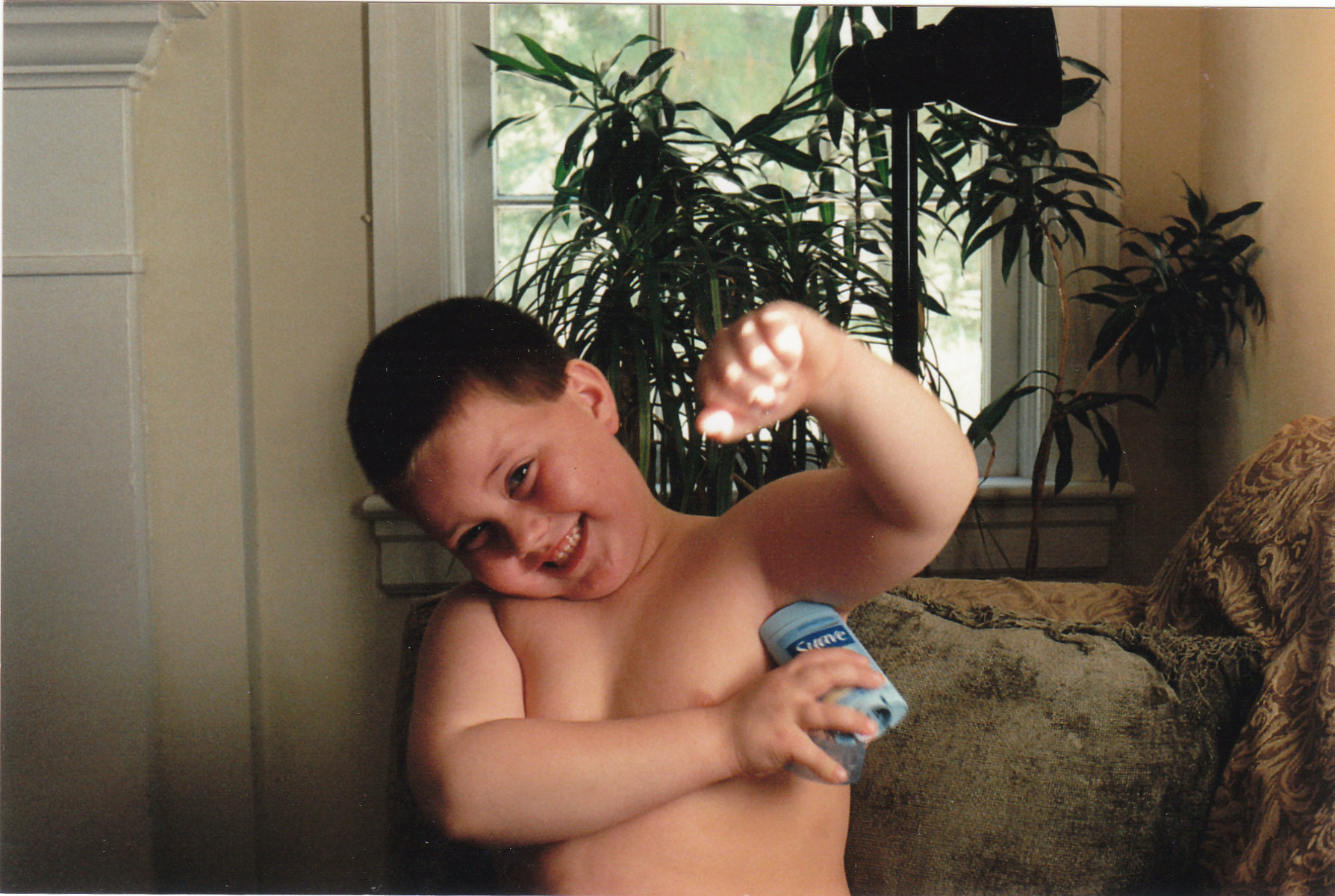
Sammy does deodorant.

When Sammy was six, we rode together in our town’s 4th of July parade:

I pedaled and pulled. Sammy sat.

Sam’s school picture:
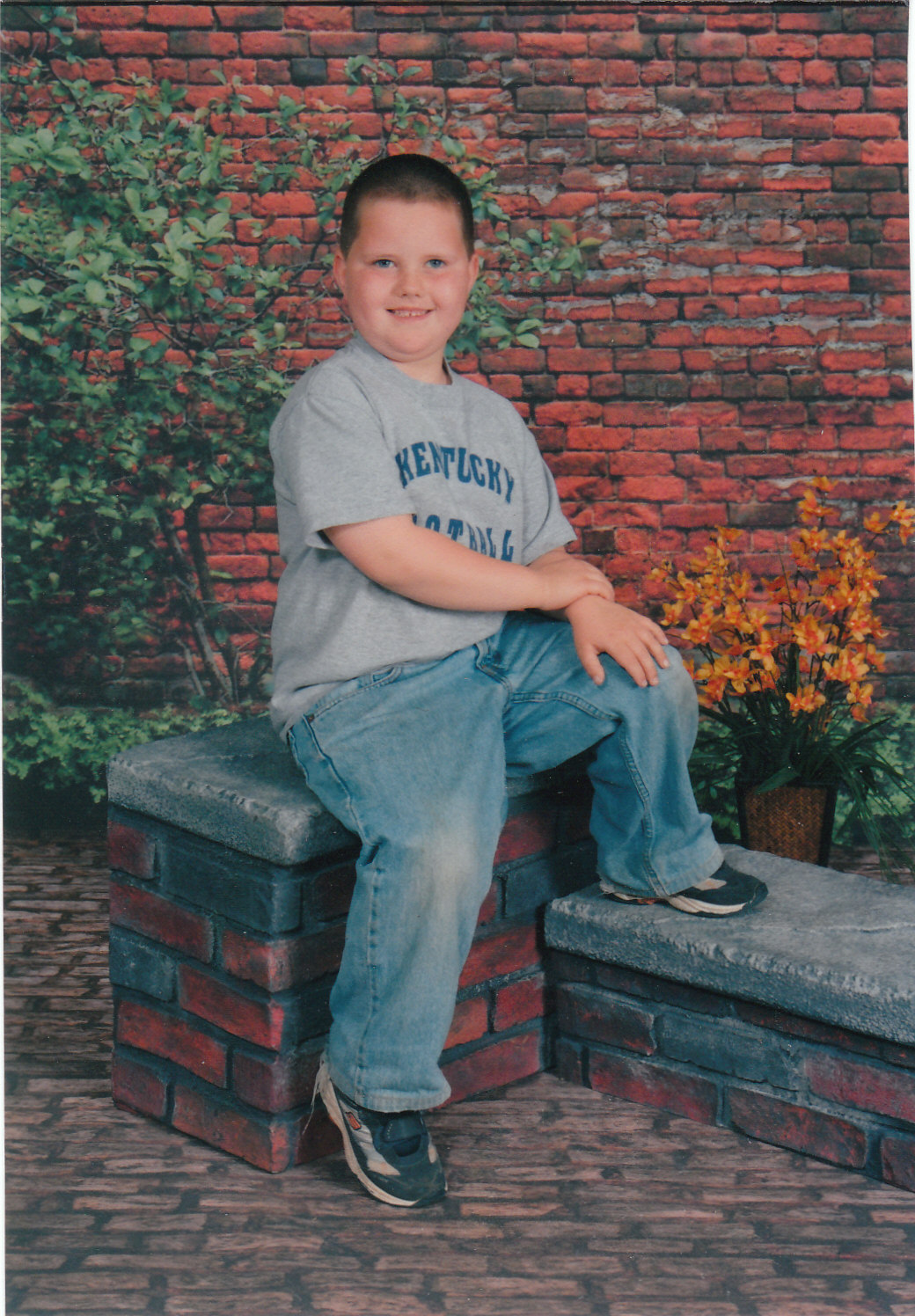
Our boy is growing up.

This weekend Sam and I ate dinner at the Atomic Cafe, a block from our house in downtown Lexington:
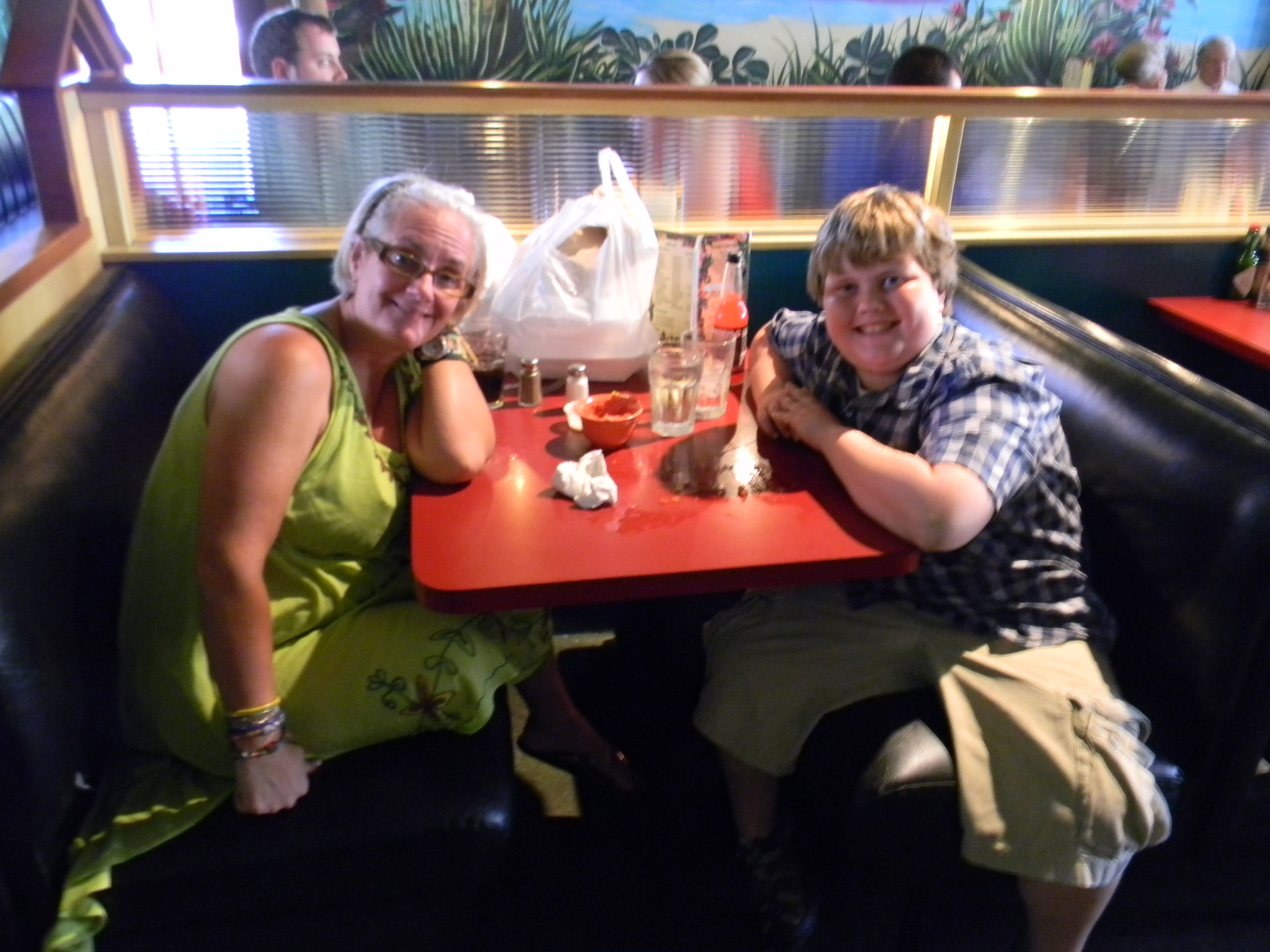
We each ate shrimp linguine.

When Sam visits, he and I almost always collaborate on an art project:
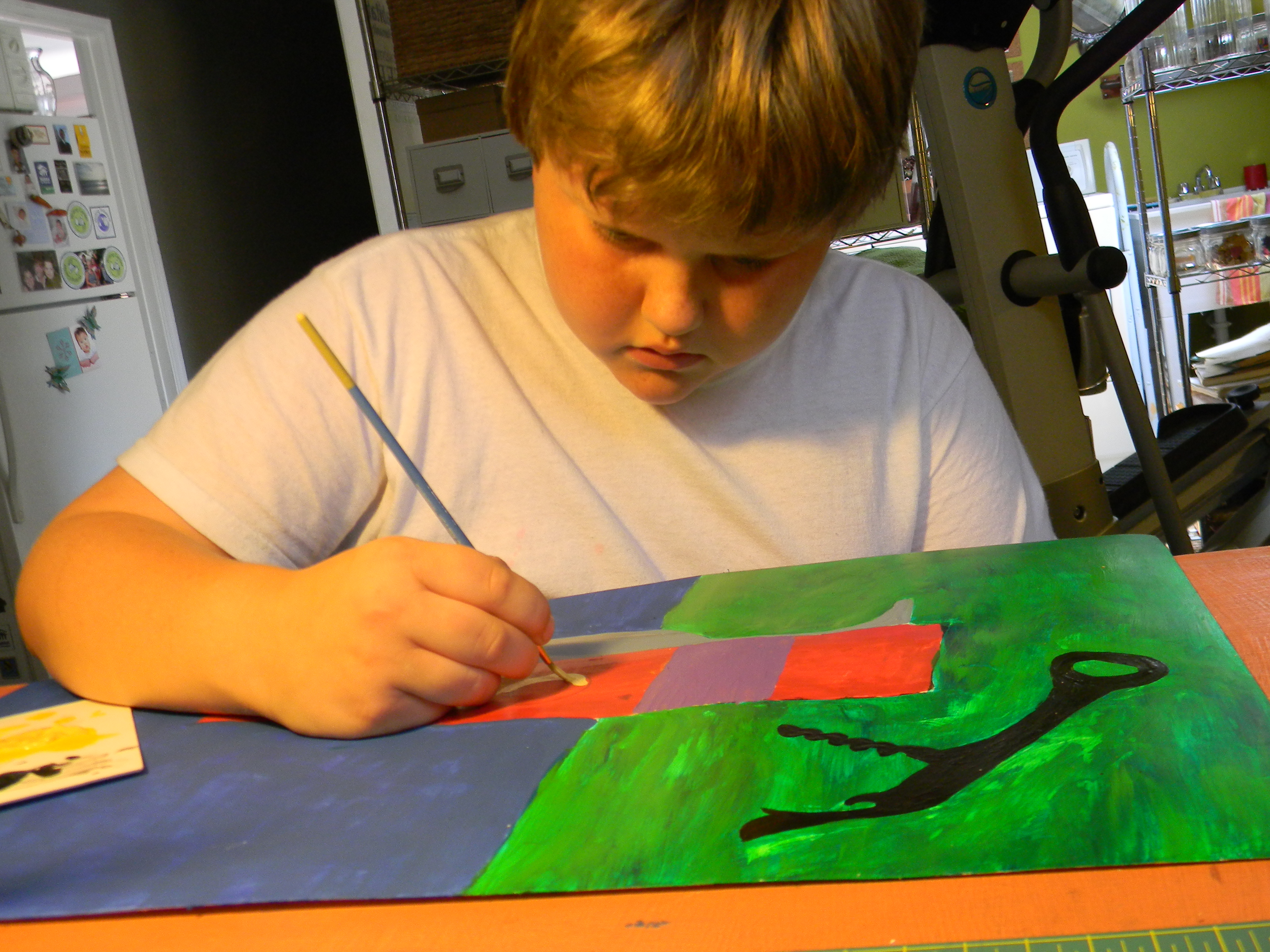
Sam adds a logo to his painted bottle of wine.

Saturday morning we visited our local farmers’ market:
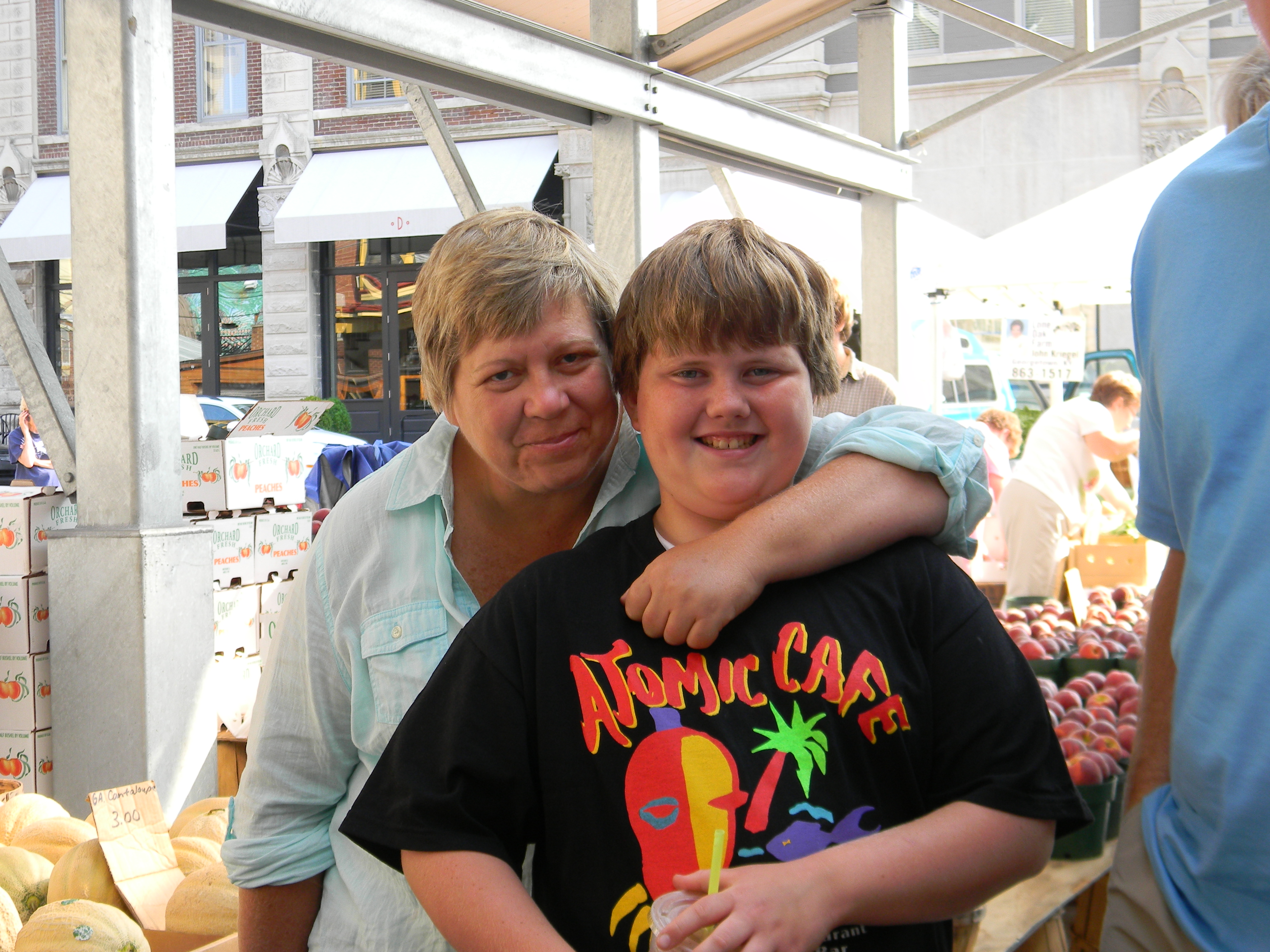
Sara and Sam

Smoothie goes green at Farmers’ Market:
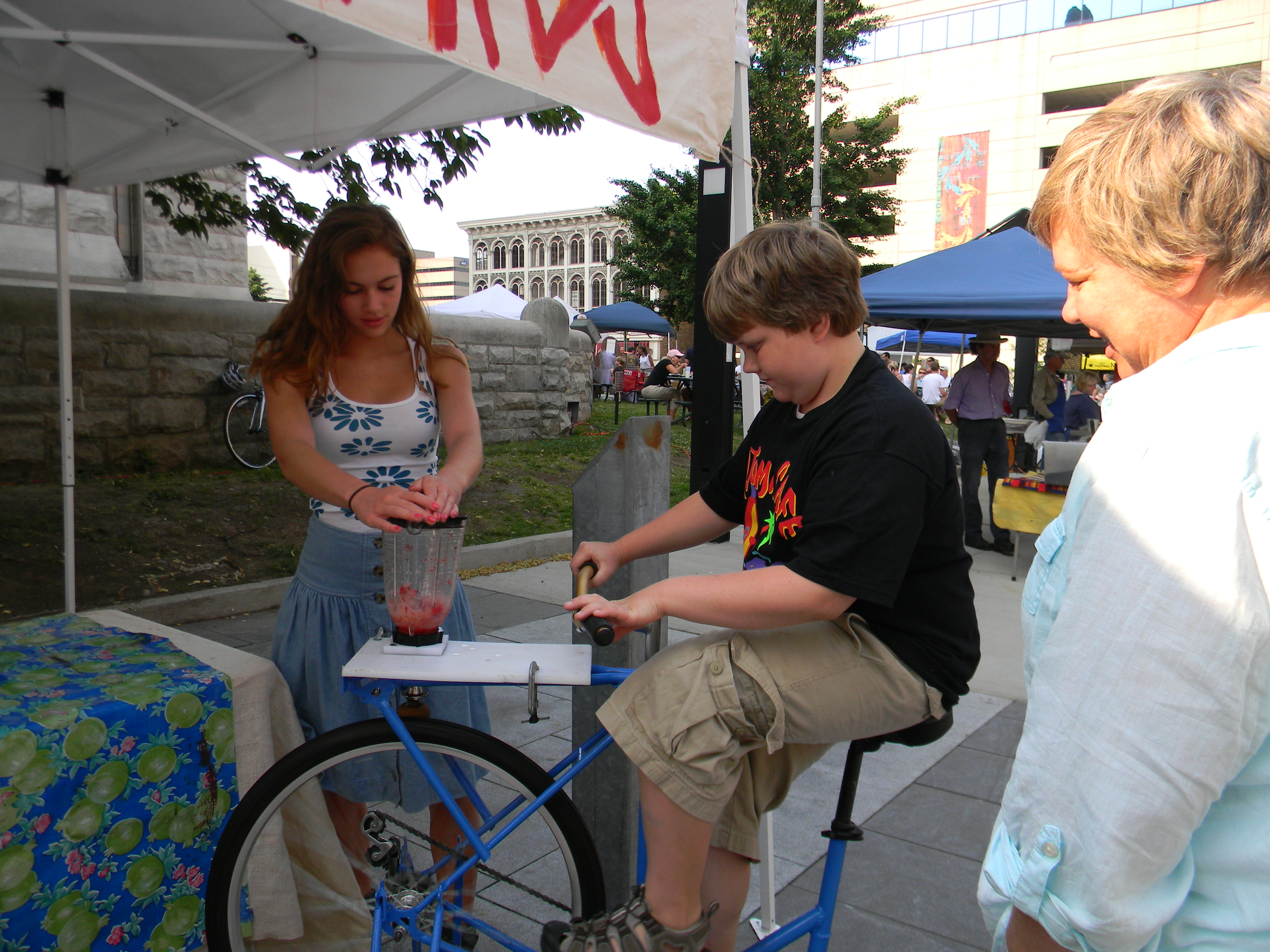
pedaling toward smoothie

Yet another bike invloved in Sam’s Saturday:
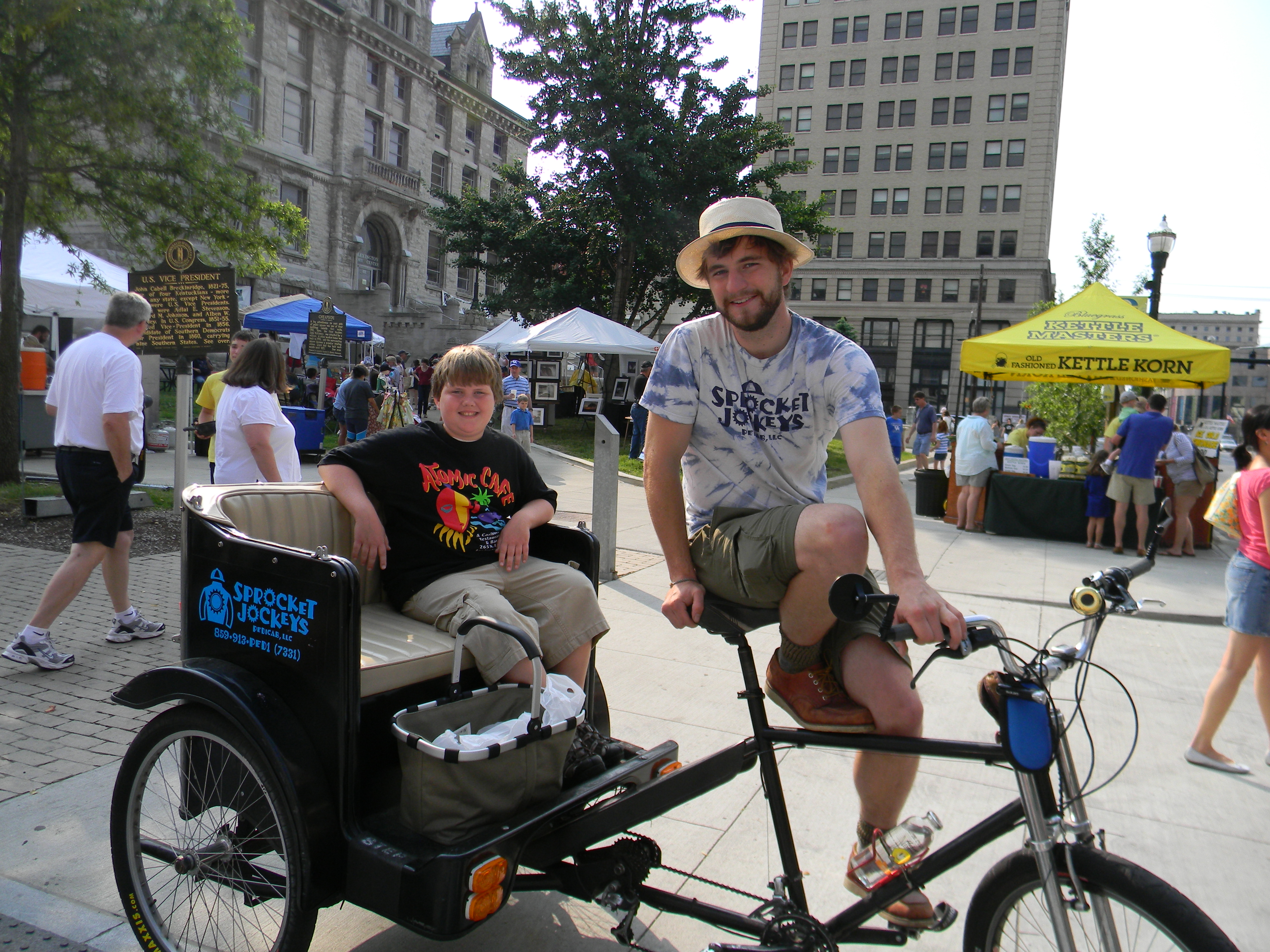
Riding home fom Farmers' Market

So Sam is off to camp this week, but with Daddy gone, our boy has big pants to fill, as Fathers’ Day approaches:
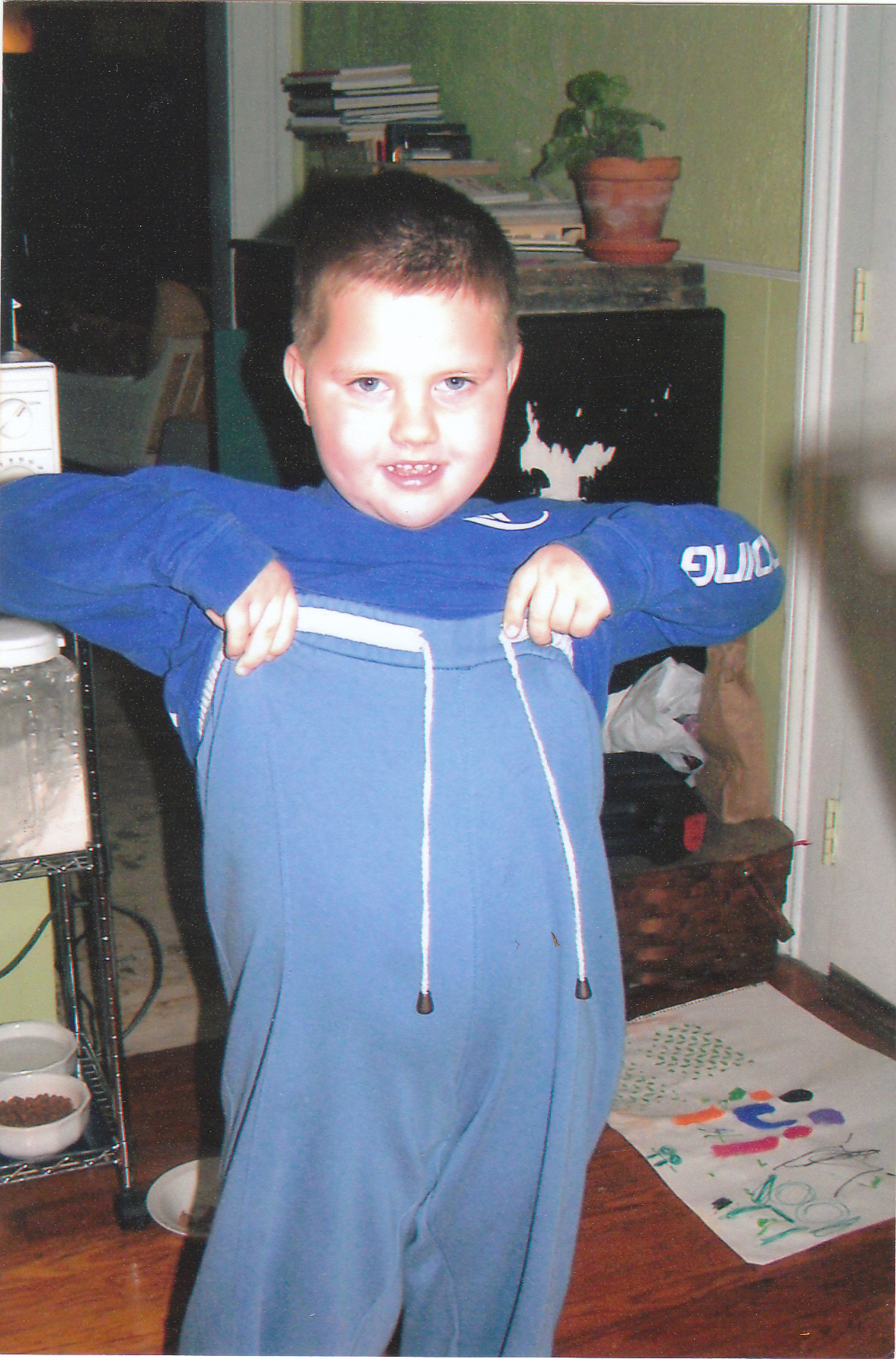
Sam pulls himself up, britches better than boot straps

Happy Fathers’ Day, Dino!  We love you and know if you were here, you’d assure your son, that real boys do cook quiche.

But then Sam knows that already!

With the Edges of her Eyes


Today I’d like to share a poem I wrote about my maternal grandmother, who died in 1980, when I was only a senior in high school.

My grandmother was probably my favorite person on the planet.  I adored her and thought, as a teenager, that I could deal with just about any challenge, as long as it didn’t involve losing her.

Nana and I, two years before her death

My grandmother, born in 1903, was beautiful as a young girl:

However, when I was myself an adolescent, Nana fell and broke her hip.  She  was subsequently unable to reach her own feet, so when I visited her, my favorite place to stay in the summers, I often washed them for her–something I allude to in the poem that follows.

nana

(in memory of Martha Gilbert Kunkle)

we are oblique and
at odd angles:
     me at the feet
     i once washed
     on a regular basis
 
in the dream:
     she is getting older
                melting or
                shrinking
 
looking at me
only with the edges
     of her eyes.
 

Though often in my dreams my grandmother is still alive, I’m grateful in the mornings  to know Nana, in all the ways that matter,  has never really left–blessing enough–in my own now aging  eyes.

It’s the DNA, Stupid!


(in memory of my father who died May 13, 1981)

I never knew my paternal grandfather.  Sure, he died before I was born, but my father never knew him either, as least not in any meaningful way, after infancy, when my grandparents separated.

Ultimately, their ugly divorce left my siblings and I knowing nothing about the McCullough family, whose name and DNA we share.

For years I searched for information about my grandfather, as I’d been told he was a sports’ columnist for the Pittsburgh Post Gazette, perhaps the person from whom I’d inherited the urge to write.

Never finding anything meaningful, I searched, as well, for my great-grandfather, William Tice McCullough—for whom both my father and brother were named.

my father, who died in 1981

my brother

I found nothing.

Until Monday—

When I received an email response to an Ancestry.com inquiry I made in 2005:

William Tice McCullough was born in California, Ohio in 1873 and married a woman named Minnie from Pittsburgh born in 1875.  He is the grandfather of David McCullough, the historian, by one son and Nancy McCullough Griggs, who is being buried today in the North Cornwall cemetary, Cornwall CT, a grandchild by another son.

It turns out that William Tice McCullough had several sons, three of whom were Mark McCullough, father of Nancy McCullough Griggs, buried this week in Connecticut, Christian Hax McCullough, father of historian David McCullough, and Horace George McCullough, my father’s father.

As a writer, what interests me the most, assuming I received accurate information, is that my father was the first cousin of David McCullough, a two time Pulitzer Prize winner.

David McCullough

So, maybe there are some writerly genes in McCullough DNA.

Maybe there’s hope for my memoir after all.

Letting Go, Letting Liz


Guest post today from my friend and fellow writer Mindy Shannon Phelps. 

A journalist by training, Mindy is a project management and communications specialist.

How remarkably we humans are made, that once a child reaches a certain age, she is able to say goodbye to all that is known and familiar to her – parents, mother, father, sister, cousin, close friends – and her bedroom, her house, the only home she has ever known –and, just, move on.

Remarkable that the human child willingly and even longingly leaves the familiar – the scents, the sounds, the comforts – 19 years of cuddling and coddling – pancakes for breakfast and tea in bed –  I will admit the first 12 years were more fun for both of us than the next seven – but she is just so ready to be an adult daughter and I can’t see beyond her beautiful little hands and sweet, expressive, perfect face. She will always be my little Liz. My baby.

I had just said goodbye to Lizzie.  I’d hoped it would be a warmer parting, even though she was eager to get to her dormitory and the small space we created together for her yesterday and just settle in. But, at the end, she seemed tired and ill at ease from the days we had spent together.  Uncomfortable, and in need of privacy.  I noticed that she had not read her Bible or written in her journal – had only captured her thoughts and emotions in the emails she had written and sent each evening to people she did not identify for me.

It’s hard to read Liz – often difficult clearing the fog off the hard glass she surrounds herself with.  Her glass is not brittle but it is breakable and I try not to shatter the shield when she has it up and in place.  It is her safe enclosure and there is no need to breach it.

We had been traveling together for three days, from Kentucky to Colorado in her tiny Volkswagen Beetle. Our travels were glorious—the billboard-sized copy of Van Gogh’s “Sunflowers” in the middle of a Kansas wheat field,  the vivid blue September skies and the rain we could see a hundred miles away that never touched us.  So peaceful and fun and adventurous, even blessed. 

And now, the end.

Liz would keep her car at the school where she would begin training as a missionary with an international NGO. I would fly home after helping her settle in.

 A quick ride to the airport and, suddenly, Lizzie seems as if she doesn’t want me to go.  She wants to park and come in with me.  I think this is what she wants to do, but, again, her glass is up and I can only peer in, bringing my nose and eyes and face up to the enclosure, trying not to cloud the view with a sudden exhalation.

I decide a quick goodbye is for the best because my prayer this morning had been for a bit of grace and a letting go with joy.  This is what I’m supposed to do, I think.

So I quickly hug her and say too loudly, “I’ll call you when I get home.”  “Yes, do that,” she replies.

And I turn and go, denying Liz the tears and sorrow of saying goodbye – an emotional farewell we might have shared but did not. It’s for the best, I think.

I turn and walk a few steps and begin weeping as I enter the terminal.

 I still weep when I think about the time I let Lizzie go.

Now 27, Liz is married and expecting her first child.


 (Note:  When Lizzie was born, Mindy was an evening news anchor for the NBC affiliate in Lexington, Ky. Viewers (about 250,000 at the time) avidly followed Mindy’s pregnancy and loved Lizzie from the moment they saw her.)

(un)Sunday’s (un)poem post


The poem below is about an (un) family–one that appears to be something that it’s not–a family where things seem to be order–but are, in fact, far, far from ordinary.  It’s about family dysfuntion on a massively deceptive scale. 

We wear nice clothes.  We drive nice cars.  We go to church, to school.

But–we are, in fact, none of those things. 

We are the inversion of family.

(un)poem

everything begins and ends
     with appetite
                                the edge
 
of the photograph
     where the girl’s
     arm ends
                                and the tablecloth
 
begins again its
     grammar of red
                and white
                                diagramming
 
father / mother
     sister
     sister
                                plates
 
in their places
     knives to the right
     spoons
     roast chicken
                                relics of
 
10,000 family dinners
                                that swim
 
     white cat
     cadmium yellow
 
to the windowsill
     on the east side
               of the house
                                where we
 
have set blue mason jars
     absorbing particles
                of spring
                                the early
     face of april growing
                in the yard
 
seeming untime
                unspace
 
work room
wood floor
 
tangle of limbs
     jungled
     wet
 
always never
     arriving


Piecing and Pasting: Re-Membering (Part 2)


It’s the forgetting I remember most.  The fact of forgetting.  The past is fuzzy for me, something that will make memoir difficult.

So, for me, re-membering will partly be a process of re-constructing and re-assembling the story, piecing and pasting.  Largely, this is due to trauma.  Trauma around growing up in a dysfunctional family whose front door was broken down by the FBI on way too many occasions.  Trauma around having a mental illness that at times disconnected me from reality and the people I love.

However, I have a strategy for doing this detective work, because I, clearly, need to research and document the parts of my life I can’t recall.

So today I’ll outline the most obvious steps to take in reconstructing both the story about my father’s connection to organized crime and the one about my mental illness—what amounts to a 20 year struggle to win (and sometimes seemingly lose) the battle against bipolar disorder.

Though I don’t know that my family is entirely comfortable with my writing about my father, who, in fact, died in 1981 (when I was still a teenager), I plan to do the following to document my dad’s story:

  1.  File a “Freedom of Information” act, so I can access my father’s FBI file.
  2.  Search news paper indexes to locate articles that were published about my father in the Pittsburgh Press and Pittsburgh Post Gazette during the 1960s and 70s.
  3. Access transcripts of court proceedings, so I can understand why several grand juries indicted my dad and can appreciate the nature of my father’s testimony in court proceedings against him.

And in order to reconstruct the bipolar narrative, I plan to:

  1.  File for copies of in-patient medical records, so I can review notes taken by doctors and nurses during my many hospital stays.
  2. Request copies of notes kept by doctors and therapists during out-patient treatment.  (Some of this I’ve already done.)
  3. Review journals kept from the time I was 15 until the present.  I wrote a lot during the years I was sick.  And though I don’t recall everything about that time, the journals recorded much of what I don’t remember.
  4. Watch video tapes of several years’ worth of out-patient and in-patient therapy.   This will be an invaluable source of information about my symptoms, my behavior, my thoughts and feelings at the time.  (This first involves having the videos transferred to DVDs, so I can bring them back to Haiti.  Frankly, the thought of watching this material terrifies me.  I can’t imagine what it will be like to see myself so sick.  I tried to watch one video a couple of years ago, but had to stop.  It was too painful.)

As I lay out this agenda, I want you to be assured, also, that I am well these days.   No one would ever know I had ever been sick or still carry this diagnosis.  In fact, when I’ve shared this information with folks in recent years, they’ve been shocked. 

My partner can certainly see how moody I remain.  I’m not always easy to live with.  As Sara says, when I feel something, my emotions fill the entire house.  I still hallucinate at times, but you would never know.  I’ve learned to manage the symptoms that remain, the ones that still break through despite the medication.

I hope some of you will help by holding me accountable with regard to the strategy outlined above.  Renee over at “Life in the Boomer Lane” recently posted a two-part series on memoir writing (something you should check out by clicking here and here).  But in the second of those posts Renee suggests assembling a supportive group of friends to keep oneself on track during the process of writing a memoir.  (So, I hope some of you will be willing to “support” me with periodic kicks in my memoir-writing ass.)

Thanks to all of you who read my blog.  Please know how much I appreciate your on-going support.  You all have given me the courage, the faith in myself as a writer, to finally take on this task I’ve been avoiding for years.

Peace to each of you and, as always, hugs from here in Haiti,

Kathy

Re-Membering the Past is Not an Easy Task


And for me it is, indeed, a matter of re-assembly.  Sorting and piecing , cutting and pasting. 

(So, today I have a confession to make.)

From the beginning, I’ve wanted this blog to be an avenue into memoir, since, in many ways, the story of my past is far more interesting than the narrative that is now.  And, in fact, the most significant “event horizons” in my life happened a long time ago.

I know that may be hard to believe, as the life Sara and I have lead over the past several years has been an exciting one—taking me to places like Bangkok, Hanoi, New Delhi, Port-au-Prince.

But in many ways to travel backward in time is the bigger challenge—more over-whelming, more frightening, yes, but also more meaningful, and perhaps even profound.

The story of how I’ve gotten here—how I’ve gotten “now” is one that must be told.  And how I’ve gotten here involves telling at least two stories, requires that I follow two narrative threads.  (There’s actually three but only two I’m even close to comfortable sharing now.)

The first is the story of my father’s involvement with organized crime and the second is the story of my twenty-year struggle with bipolar disorder.

Neither of these is easy to tell.  And honestly I’m afraid.

I still intend to write about Haiti.  I still intend to write about the “now” that is the life I share with Sara on this troubled island.  In fact, I believe the struggles Haiti faces nationally are not dissimilar to the personal challenges I’ve endured.  My story and the story of Haiti both involve sickness and corruption, oppression, endurance, even hope.

In the coming days and weeks I’ll outline my strategy, share my goals, my hopes, my fears.

I don’t know how to tell this story.  I don’t know where to begin.  I feel swallowed by the enormity of the task, dwarfed by it.

So, I’ll pray for peace—and if you’re a praying person, please offer your own prayer; if you’re not, please say you care, please say you’ll share.

I still need that massive infusion of grace.  I still need that holy yes.

Losing time, a . . . gain


Wall to wall
                memory is platformed
                into rows
 
Now asleep
Now awake
Now a place not namable
                (asleep)
                                a jagged interlude
                                of spine
 
                rock
                tooth
                decay
 
I am here, I remind myself
                this bed
I am now
                                two faucets
                                one sink
 
I count
                lose count
                forget
 
Begin again
                                stripped

poem about a table?


“Tell all the Truth but tell it slant—“
                –Emily Dickinson
 
in the center where the people
should be is a red and white
checked cloth which covers the
dining room table where the
parent is working.  the parent
has cut up the picture in order
to save space in the sticky
plastic-covered pages of the
family photograph album.
 
i want to write a poem about
this picture with a hole in the
center where the family should
be, but the parent says i should
write about something else.
 
perhaps then this is not a poem
about the picture.  perhaps it’s
not the picture that’s important.
perhaps it’s the table.
 
think about the table.