Stumping for Haitian Art: Gorgeous Gardens in Port-au-Prince


I had a close encounter with garden art last week—

An unexpected one at that.

Regular readers of my blog know that I’m a visual artist—of sorts—self-taught, poor, and living in exile on a Caribbean island, where electricity is in short supply, political stability is even harder to come by, and cholera is spreading like good gossip in a gaggle of girls.  I’ve shared my work in previous posts.  I love art, support art, enjoy it in all its incarnations, shapes, and sizes.

But it surprised even me last week, when an artistic enterprise unfolded in my own Port-au-Prince back yard—one uninitiated by me.

Ever since last spring when Sara moved into our house on a hill—Morne Calvaire (where we’re told a new neighbor is Baby Doc Duvalier), the land-lady has promised a garden, and last week she delivered, arriving with a landscape artist who installed a stunning rock garden near our front door.
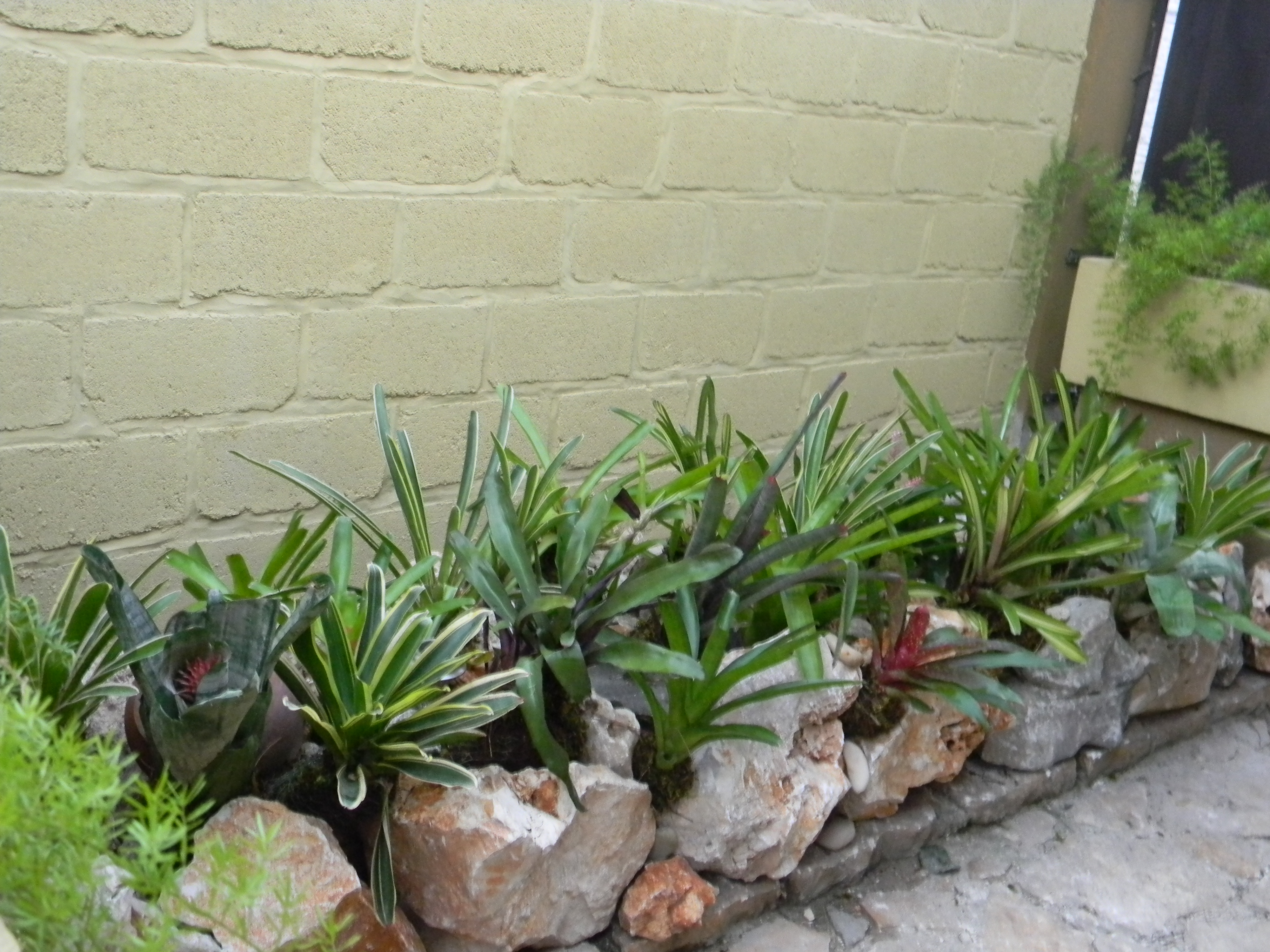
We were happy.  We were actually thrilled.  However, we were not prepared for act two, which unfolded the following day.

It was morning; the sky was clear, blue bold enough to brighten even the most bored of bloggers.  I was writing, enjoying light that angled through my wall of windows.  While I was working, however, the dogs alerted me to a noise outside, one I might have otherwise ignored. Thank God for canine clamor.

There on the hillside that slants down and away from our house, three men, our landscape artist included, pushed and pulled, grunted and groaned the most massive of stumps toward a wall and fence that border the back of our garden.
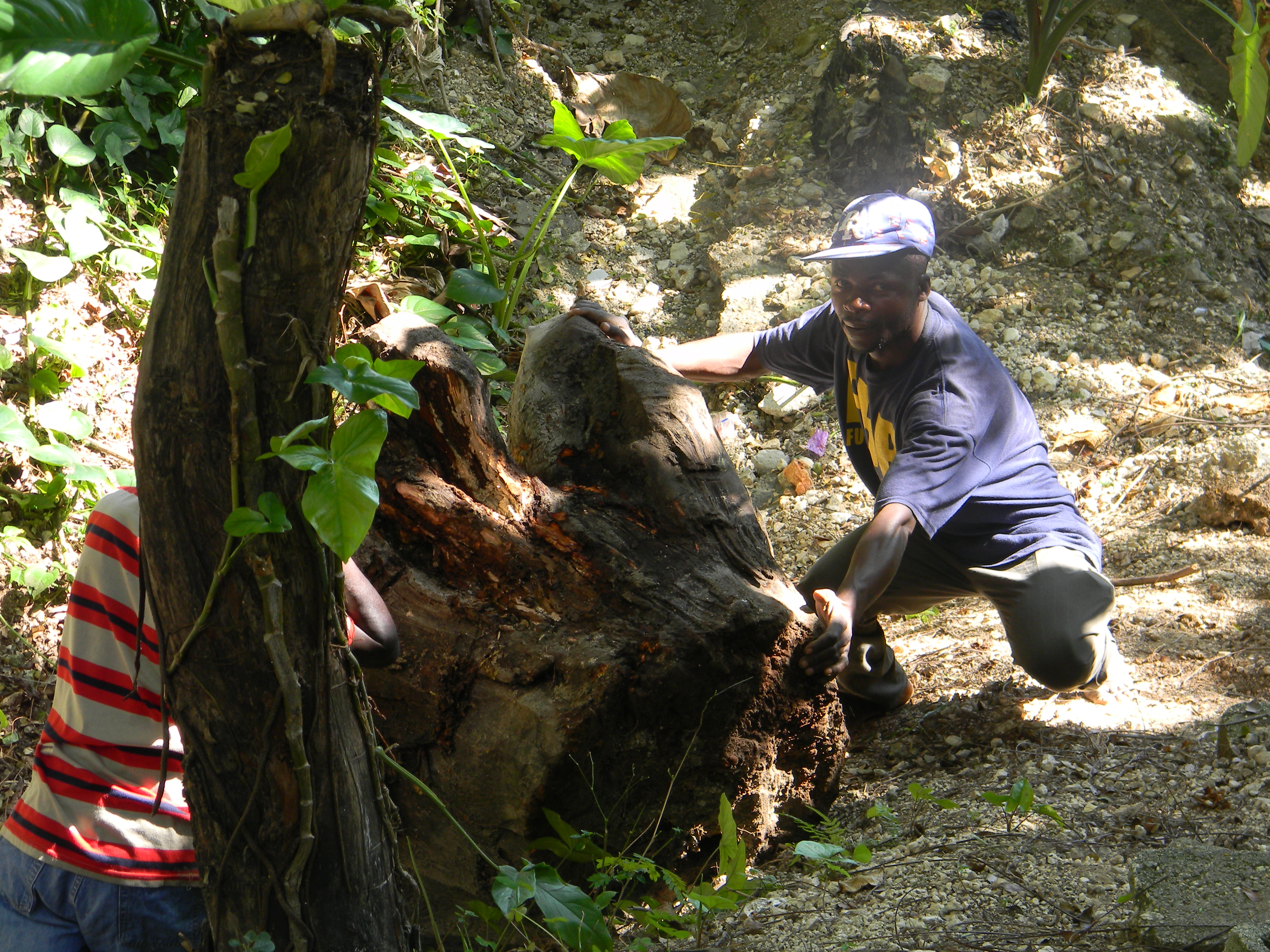
I couldn’t imagine why.  What was the purpose behind this effort?  Why had Sisyphus himself shown up on my Haitian hillside?

What concerned me most, however, from my interpretation of signs and signals being gestured below, was an apparent plan to heave the stump over the wall and through the fence cemented into it.  I watched and wondered, watched and wondered some more till I was sure the plan indeed involved such fence bull-dozing, before running out to get our security guard to intervene and interrupt this planned assault.  Within seconds Sonny came running, riffle gesturing the men away from ruining our fence.

It was soon discovered via a phone call to our landlady that, having forgotten the fence was attached to the top it, she had asked the men to remove the stump by pushing it over the top of the wall.  Our stump-movers extraordinaire interpreted her instructions quite literally, intending to force the tree through the fence in an effort to accomplish the task.  So much for common sense.

Stump removal ceased for the day.

The men then returned the following morning, removing a section of fence, forcing their burden over the top of the wall, lowering it with ropes into the back of a truck on the other side, and replacing the offending section of fence, before departing—

I assumed forever.

However, the following morning, while I was again writing, a horn honked outside our gate, the dogs barked like insane caricatures of canine companionship, and I soon heard the shouting of what turned out to be seven men.  Within minutes massive crashing commenced on the deck above, more shouting, still more housing-rattling crashes, shouting and crashing, shouting and crashing, until I simply had to investigate.

The stump had returned.

It was now living on our patio, puzzling me, puzzling indeed.  I like trees as much at the next semi-green ex-pat on the island, but REALLY, did we want this stump on our patio?

Over the next several days, however, Dicton Gaston, our new gardener guy answered that question for me, proving more and more a sculpting savant, as the stump morphed from this:
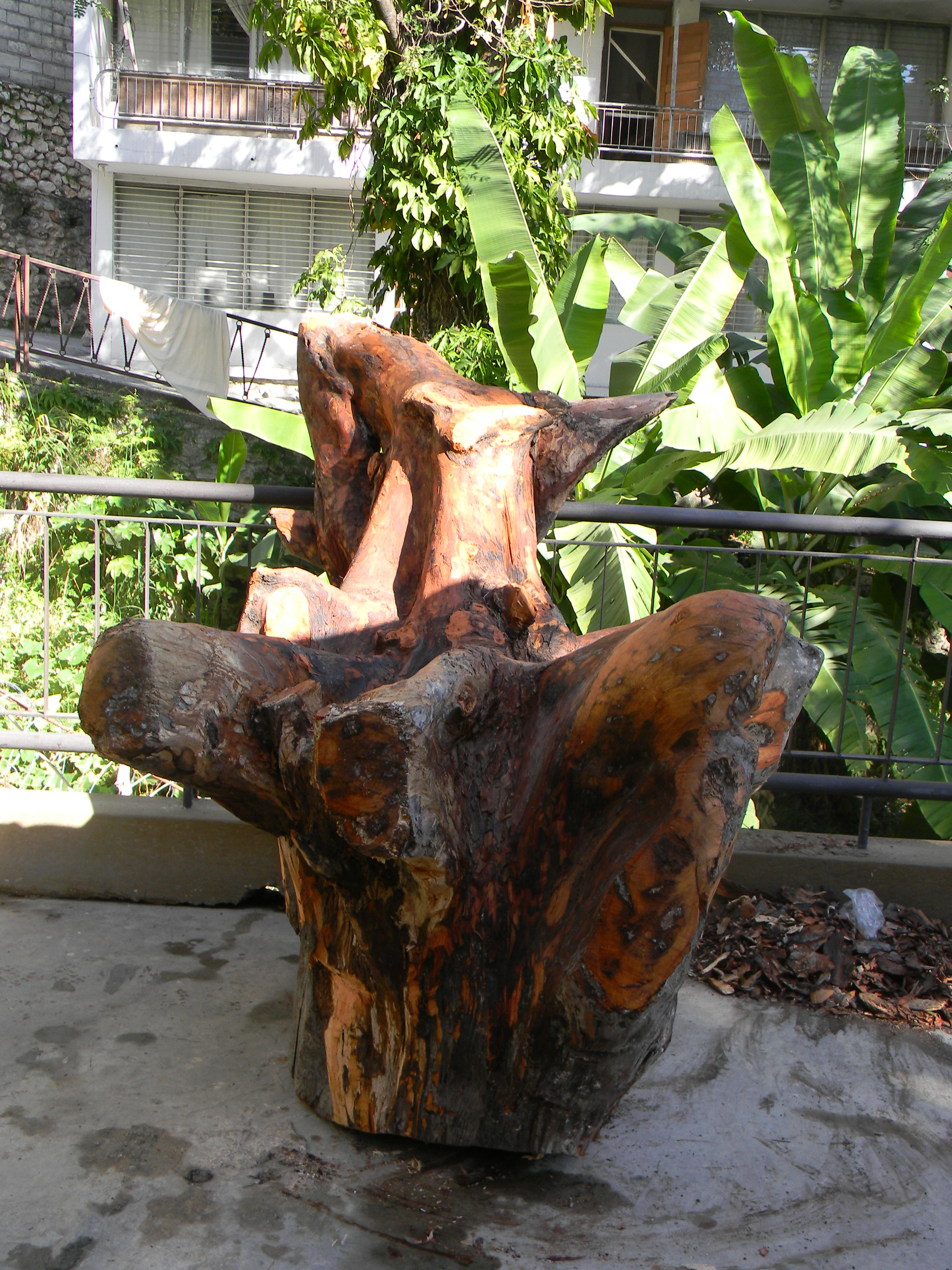
Into this:
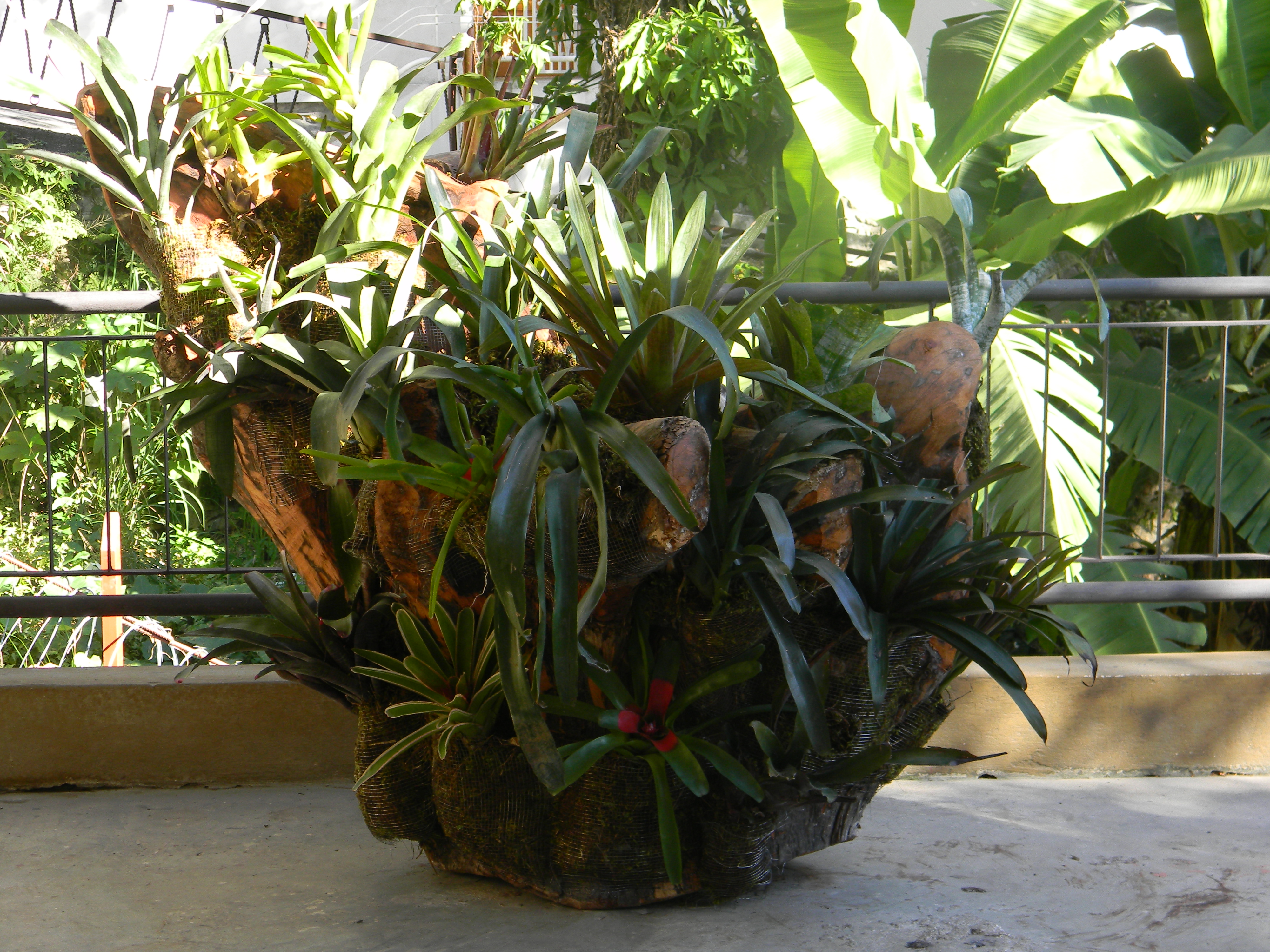
Dicton Gaston is a gardening genius.

Dicton Gaston proves art emerges from even the most unlikely places.

Dicton Gaston proves that in Port-au-Prince, though ex-dictators may show up unannounced at airports, though they’ll be arrested and released and move onto the mountain where you live, art can come from equally surprising places, in delightfully surprising packages.

So, this week, as long as the ex-dictator can maintain his EX-dictator status, as long as protesters don’t take to the streets and shut down the city, as long as posts can go as planned, this week I’ll bring you a series on Haitian art, hoping to remind you—

Port-au-Prince may be leveled, reduced to a dead stump of its former self, discarded on a hillside, in ruin.  Haiti may be broken, lost, and nearly forgotten, but still, like Dicton’s stump, it can occupy a prominent place, a patio blooming, green, and living once again.

A work of genuine genius.
Bargaining for the Good Life: Duvalier and the Haitian Elite


As I’ve struggled over the past several days, trying to make even minimal sense of Jean-Claude Duvalier’s return to Haiti Sunday evening, and worked even harder attempting to understand the Duvalierists I’ve discovered in my life since then, I’ve remembered why art is such a good way for me to grapple with complex issues, ones for which there are no easy answer.  When slugging through the muck and mire of not knowing remains the only way through a particular darkness, I, like both Aristotle and Shakespeare, find comfort in art and literature’s ability to “imitate nature,” be like the thing that’s bothersome, while, at the same time, not being the thing itself.

 So, in the midst of my Duvalier-induced dementia, I remembered a short story by Ursula Le Guin, “The Ones Who Walk Away From Omelas.”  I’ve often taught this piece to composition students when wanting to demonstrate how “showing,” rather than merely “telling,” makes for stronger writing.  But yesterday Le Guin’s story reminded me why and how literature can become a way through confusion, especially in a place where more than a million remain homeless, cholera continues to kill, and ex-dictators come home to roost. 

“The Ones Who Walk Away From Omelas” describes a seemingly ideal city that hides a dark and disturbing secret (a dystopia, in literary terms).  Happiness and peace in Omelas depend on the suffering and misery of one small child, dungeoned in filth and despair.  According to Le Guin’s narrator, coming of age in this seemingly perfect place involves visiting this child and realizing, for the first time, the price Omelas pays for peace.

Clearly Omelas is not a perfect parallel to Port-au-Prince, since here the wealth and luxury enjoyed by an elite minority depend on the suffering of millions.  My Duvalierist friends may long for the good-old-days of Papa Doc and Baby Doc, an era when the lights stayed on and the streets were clean, but even now in Haiti the balance is shifted in favor of the privileged few.

 In the story’s final paragraph (click here to read the story in its entirety), Le Guin tell us about a few citizens of Omelas, but only a few, unwilling to accept this “bargain,” unwilling to exchange the suffering of an innocent child for their own well-being, to trade conscience for comfort.  These are, indeed, “The Ones Who Walk Away From Omelas.” 

Night falls; the traveler must pass down village streets, between the houses with yellow- lit windows, and on out into the darkness of the fields. Each alone, they go west or north, towards the mountains. They go on. They leave Omelas, they walk ahead into the darkness, and they do not come back. The place they go towards is a place even less imaginable to most of us than the city of happiness. I cannot describe it at all. It is possible that it does not exist. But they seem to know where they are going, the ones who walk away from Omelas.

 For the same reason these few in Omelas walk away, here in Haiti some have come and  decided to stay, refusing, in their own way, to accept the bargained-comfort that is life back home.  But this situation is extreme. 

I wonder how this same unwillingness to compromise conscience plays itself out in your life.  What do you sacrifice, what do you say “no” to, because doing so is good and fair and just? 

 How is conscience alive and well in your life?

Gallery Day: Mixed Media


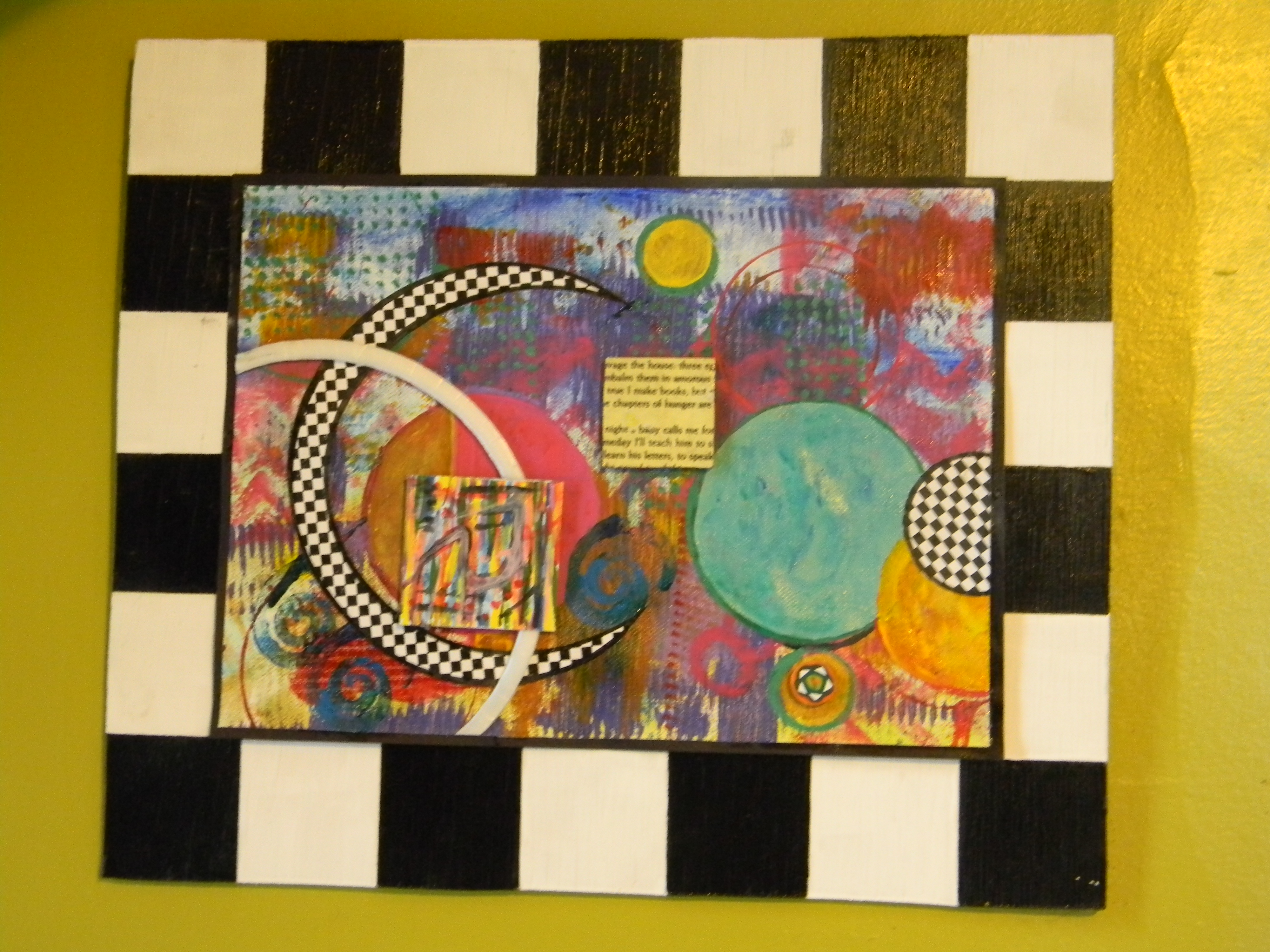
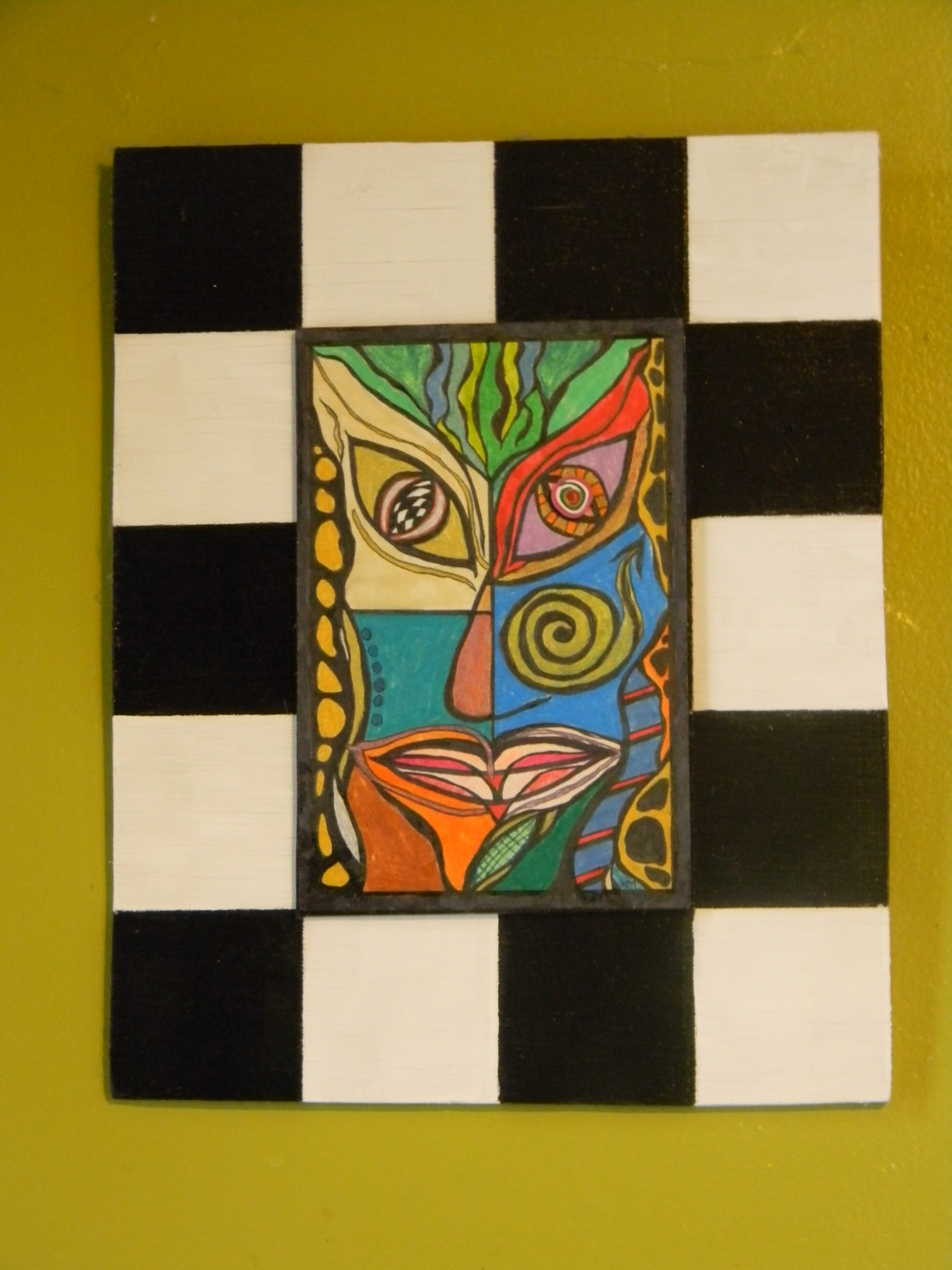
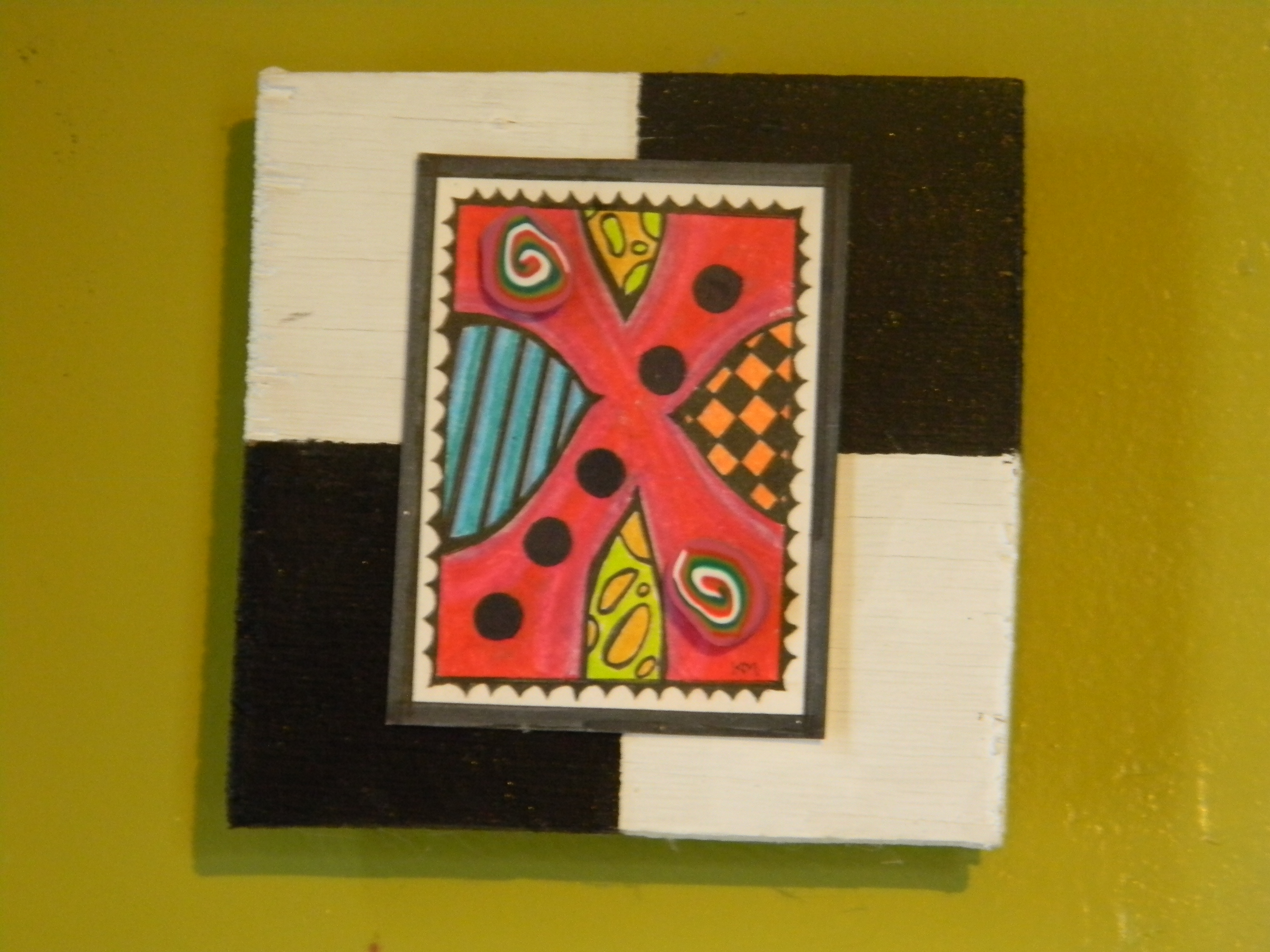
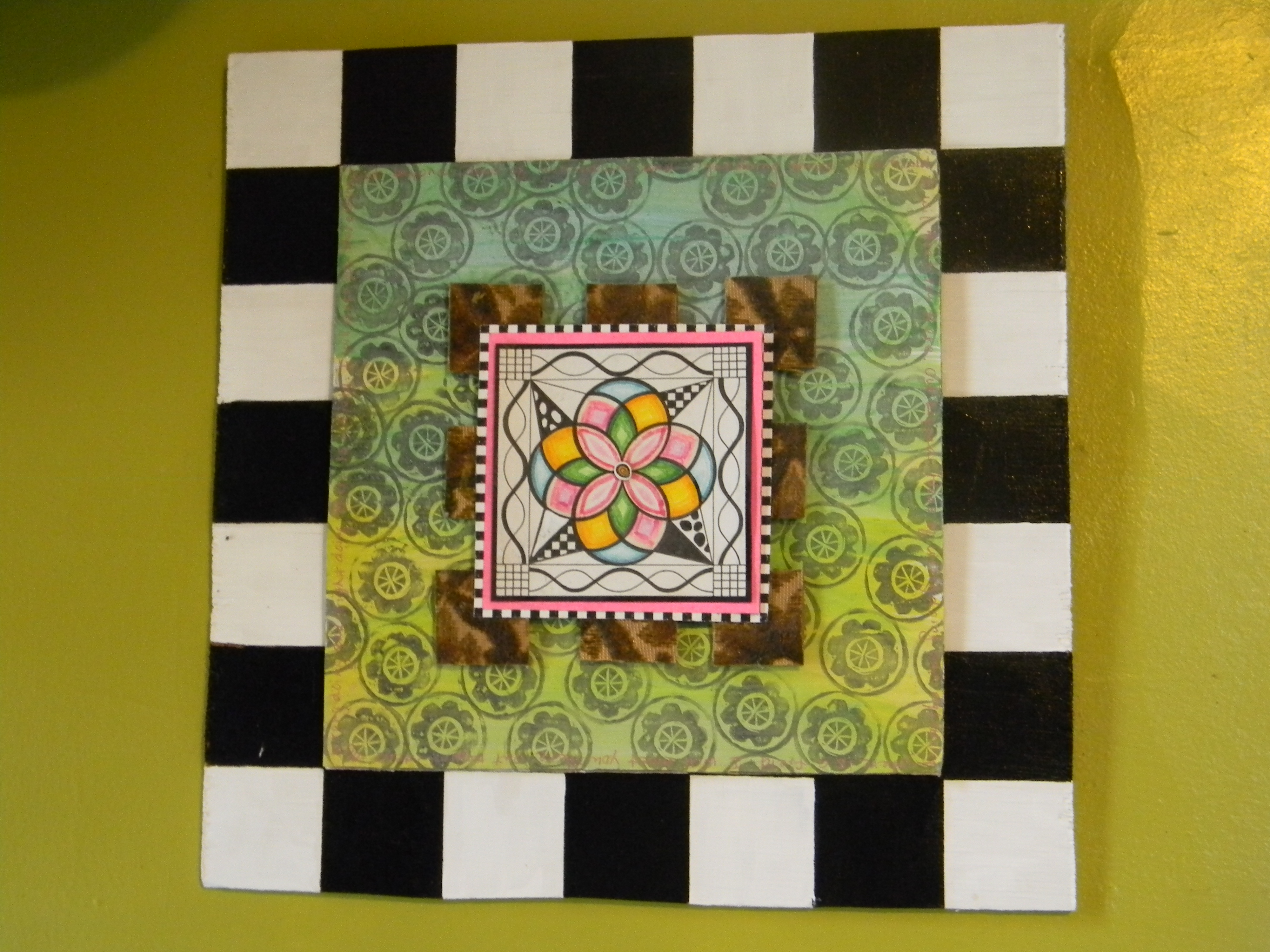
Another day for art.    This time it’s more recent mixed-media pieces that incorporate paint, color pencil, rubber stamps, wood, beads, found objects, etc.  Hope you enjoy this look at the kind art I love more than most others.

I’m uploading this art before leaving the US and scheduling these particular pieces to post on Monday, January 10th.  More textually-based material should resume tomorrow, Tuesday–at least that’s the plan!  Enjoy!

Gallery Day: Gone Graphic Galore


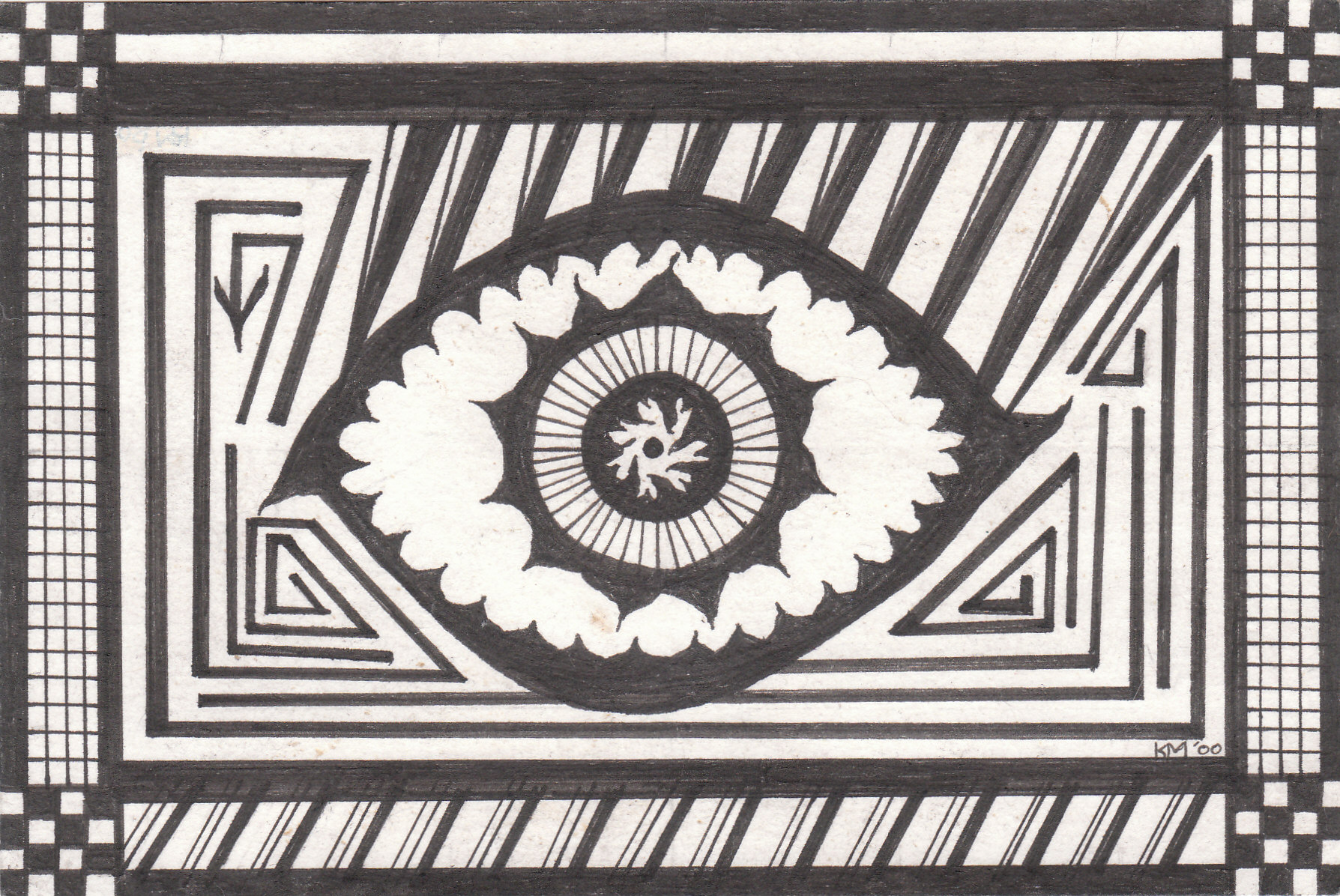
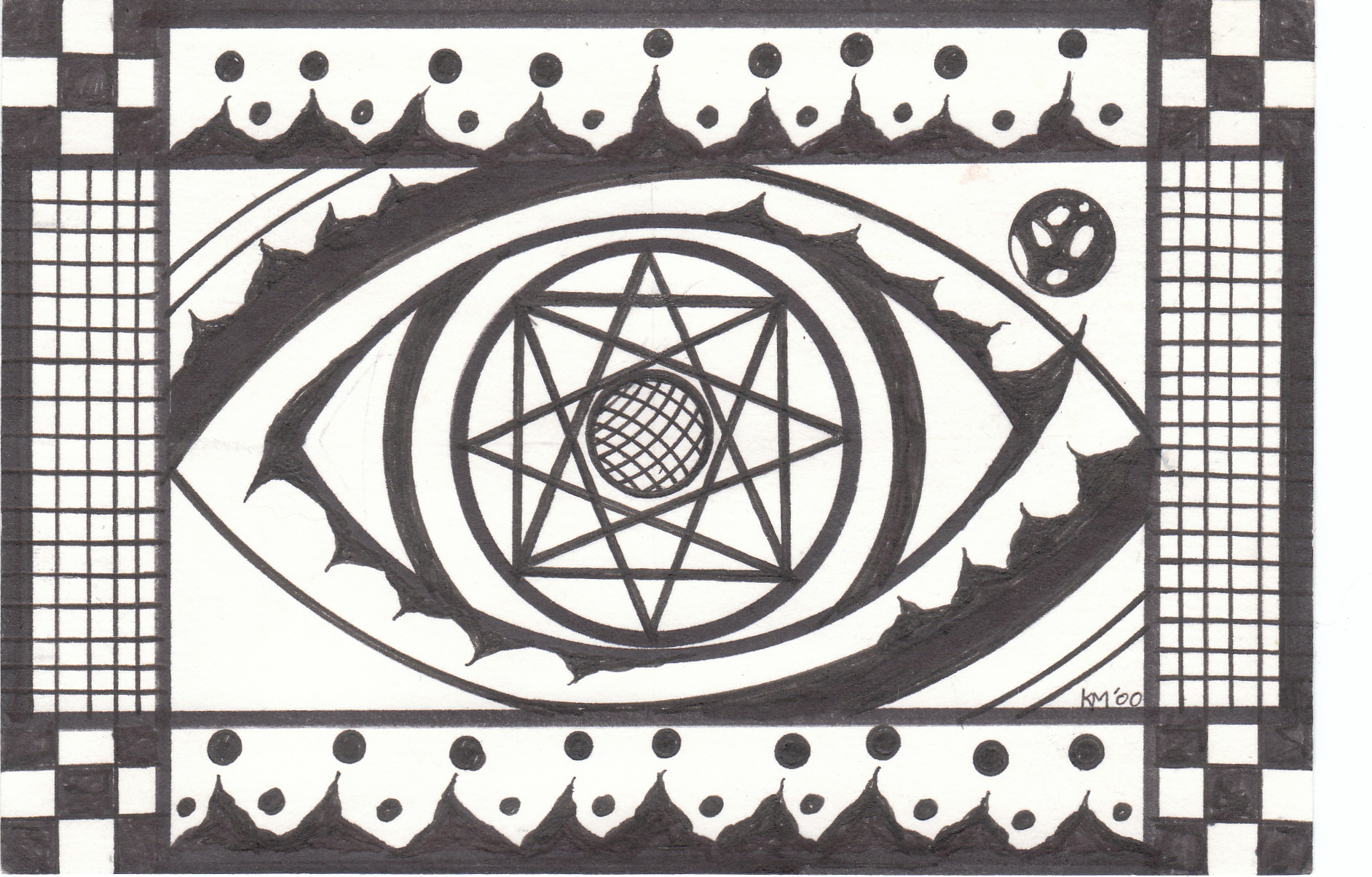
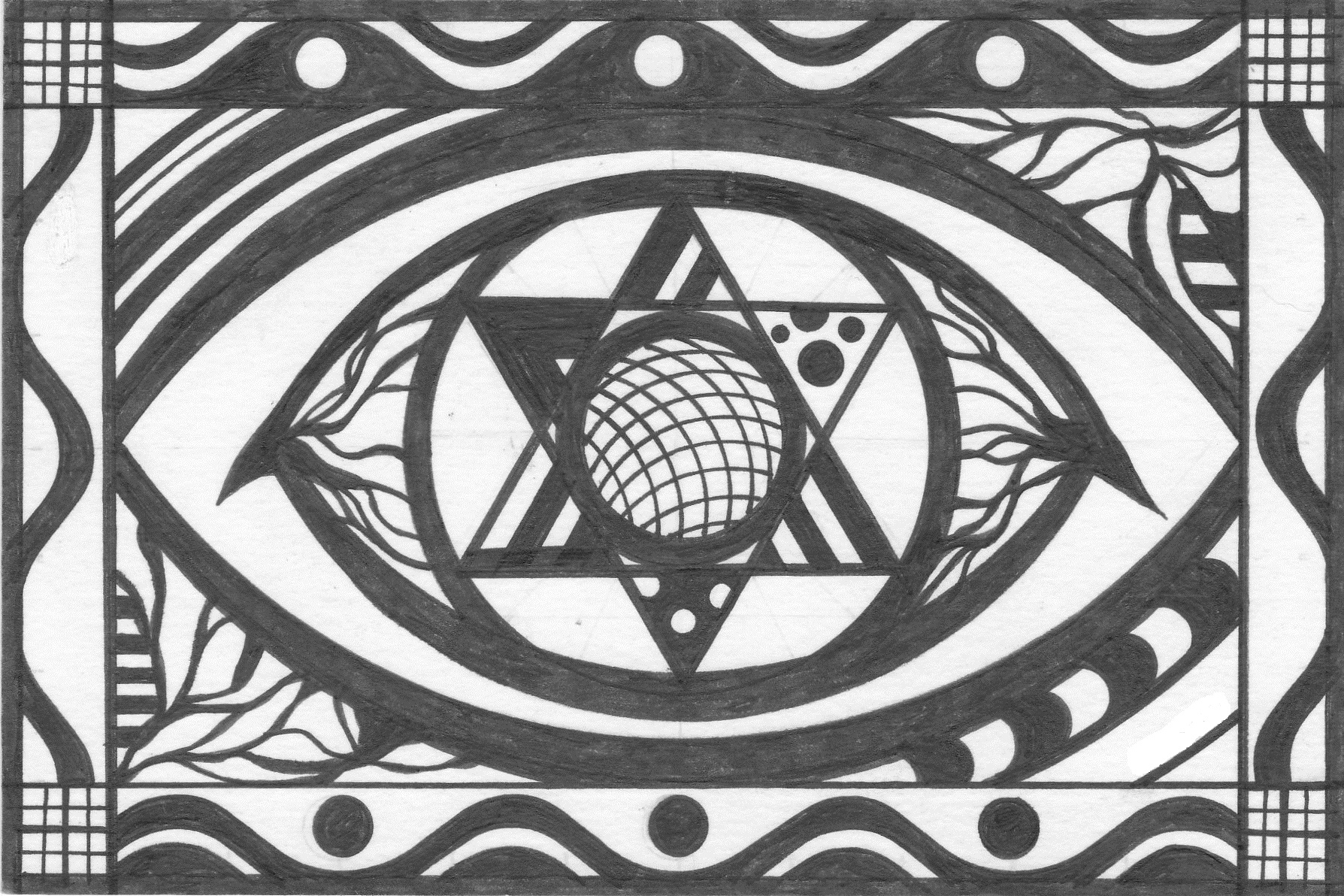
If all went according to plan, it should be Sunday and I should have arrived in Haiti last night.   So, in honor of that arrival, I’ll share some graphic drawings done over the last decade, some more recent than others.  I’m wanting to upload this art before I leave the US and schedule these pieces to post during my travel and transition.  You’ll see, I have a thing for “eyes.”  Hope you enjoy!

Triple “A”: Art, Apology, and Anniversary


A few updates on this travel day.  (Yes, hopefully I’ll be in Port-au-Prince by Saturday evening.)  Be sure to keep reading, as I’ll share some new art at the end.

First, I want to apologize for not reading anyone’s blog yesterday.   Leaving a house for several months and traveling internationally with a dog require a good bit of preparation.  Given this, I’ve been insanely busy over the last couple of days, so please forgive this lapse.  Actually, reading your posts is a favorite activity of mine, so I promise to get back to regular reading early next week.

Second–yesterday, it was a month since I was Freshly Pressed, so since I’ll be traveling today, I thought you might enjoy looking at that post.  I know it’s not been that long, but so many of you have only begun reading my blog in the last 2 or 3 weeks, a decent number may not have seen it yet.  If you haven’t read “A Tale of Miserable Failure: Moanings of a Second Language Learner”–about my struggle to learn French–click here.

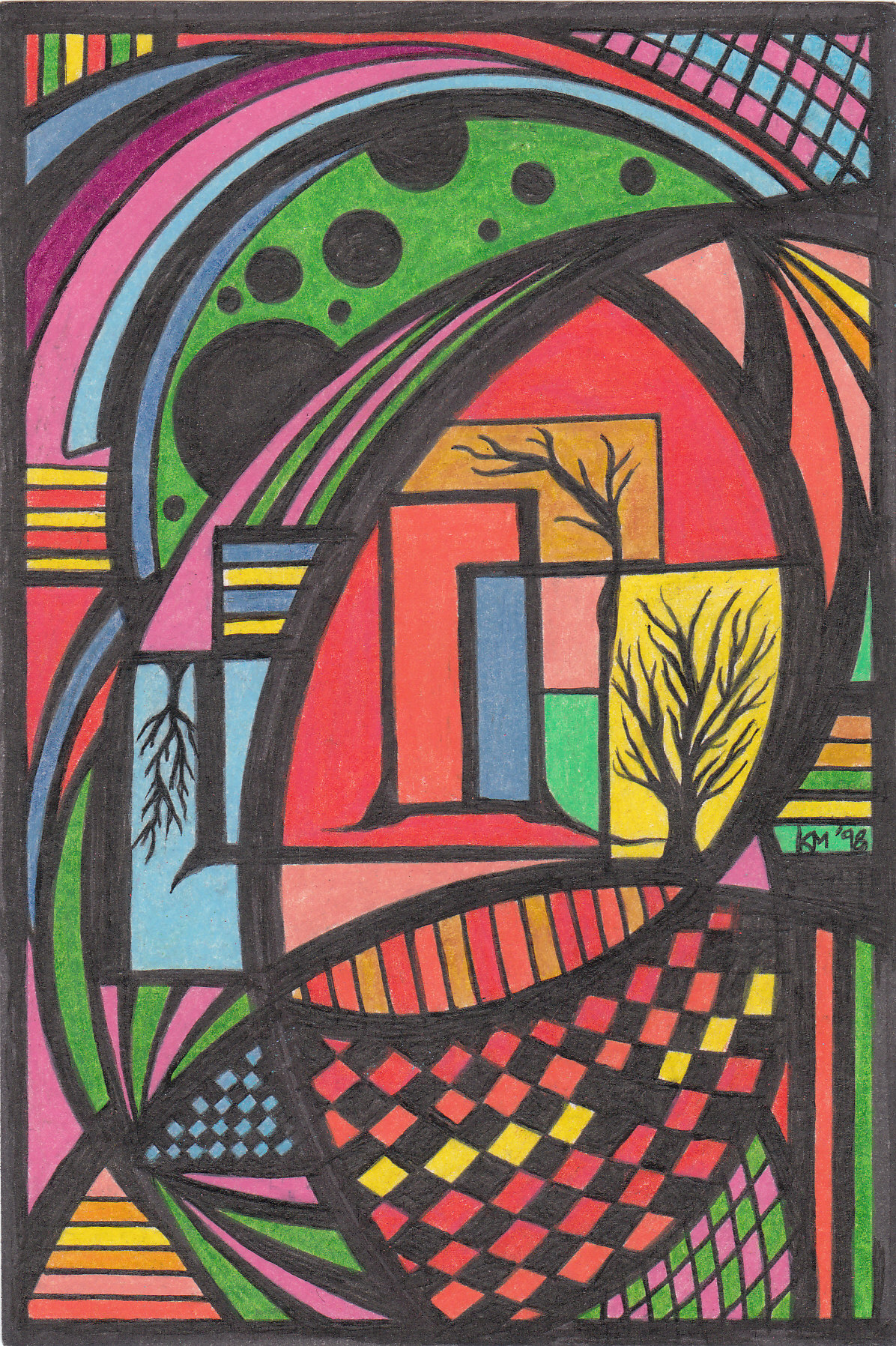
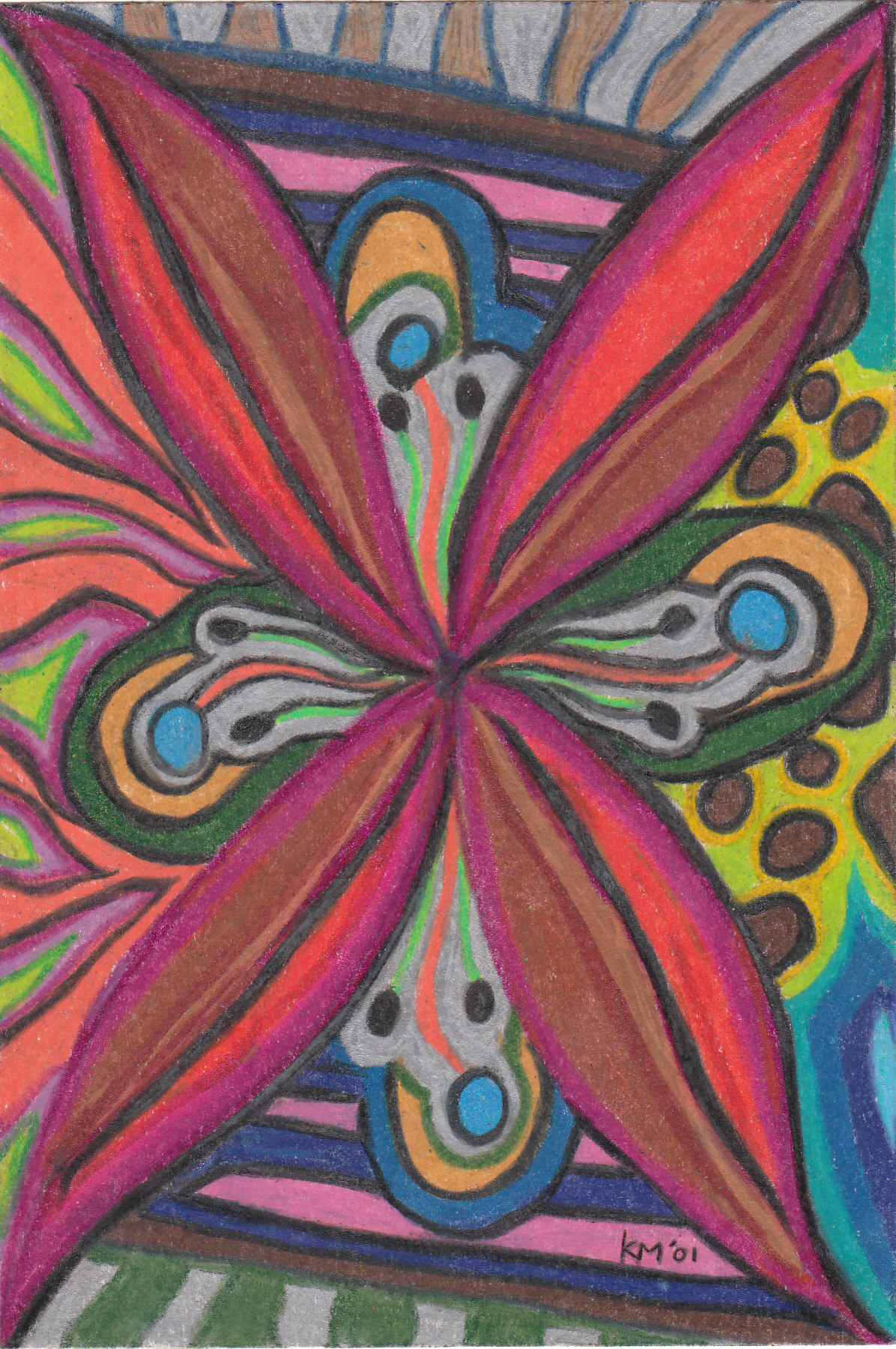
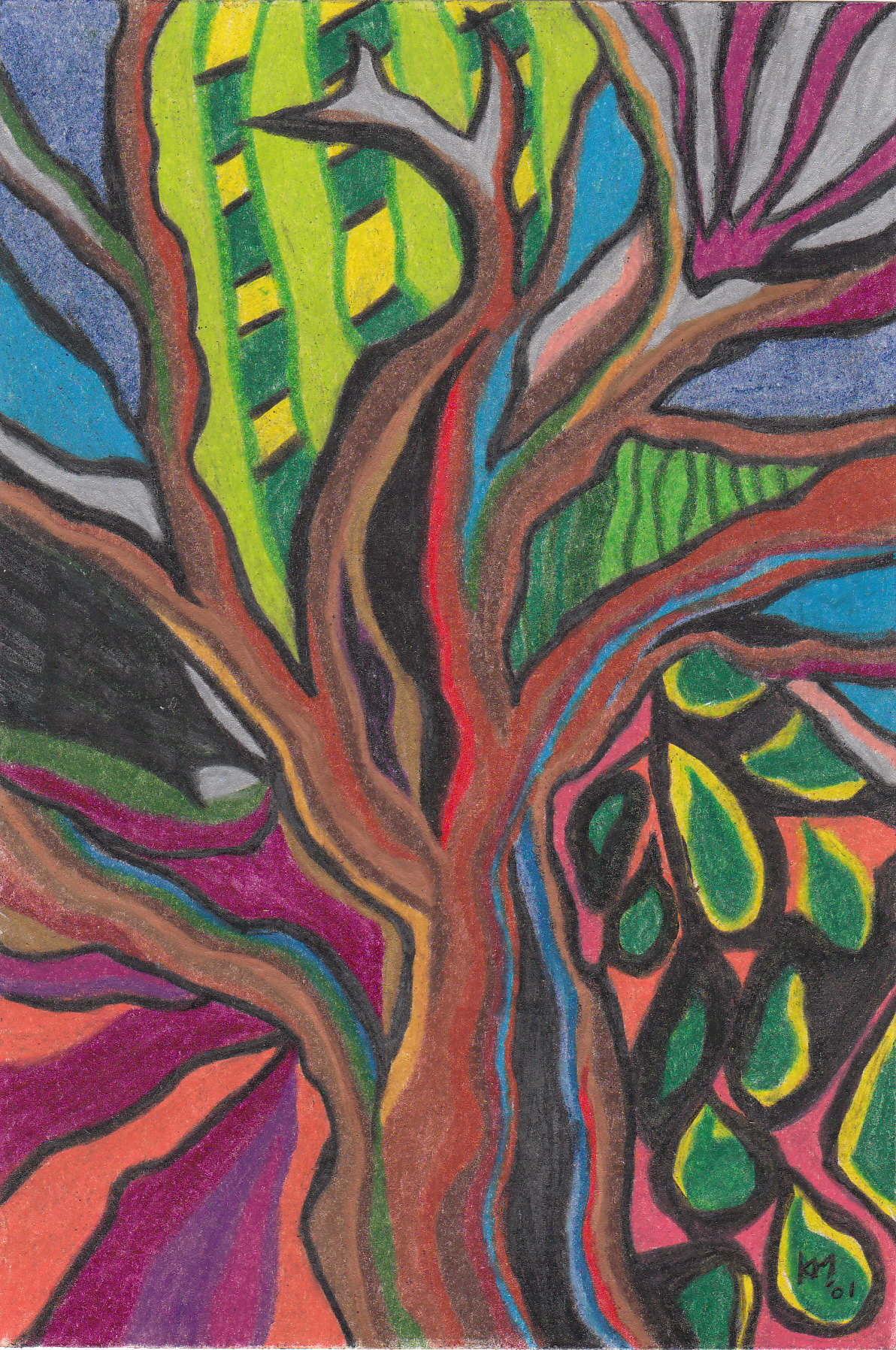
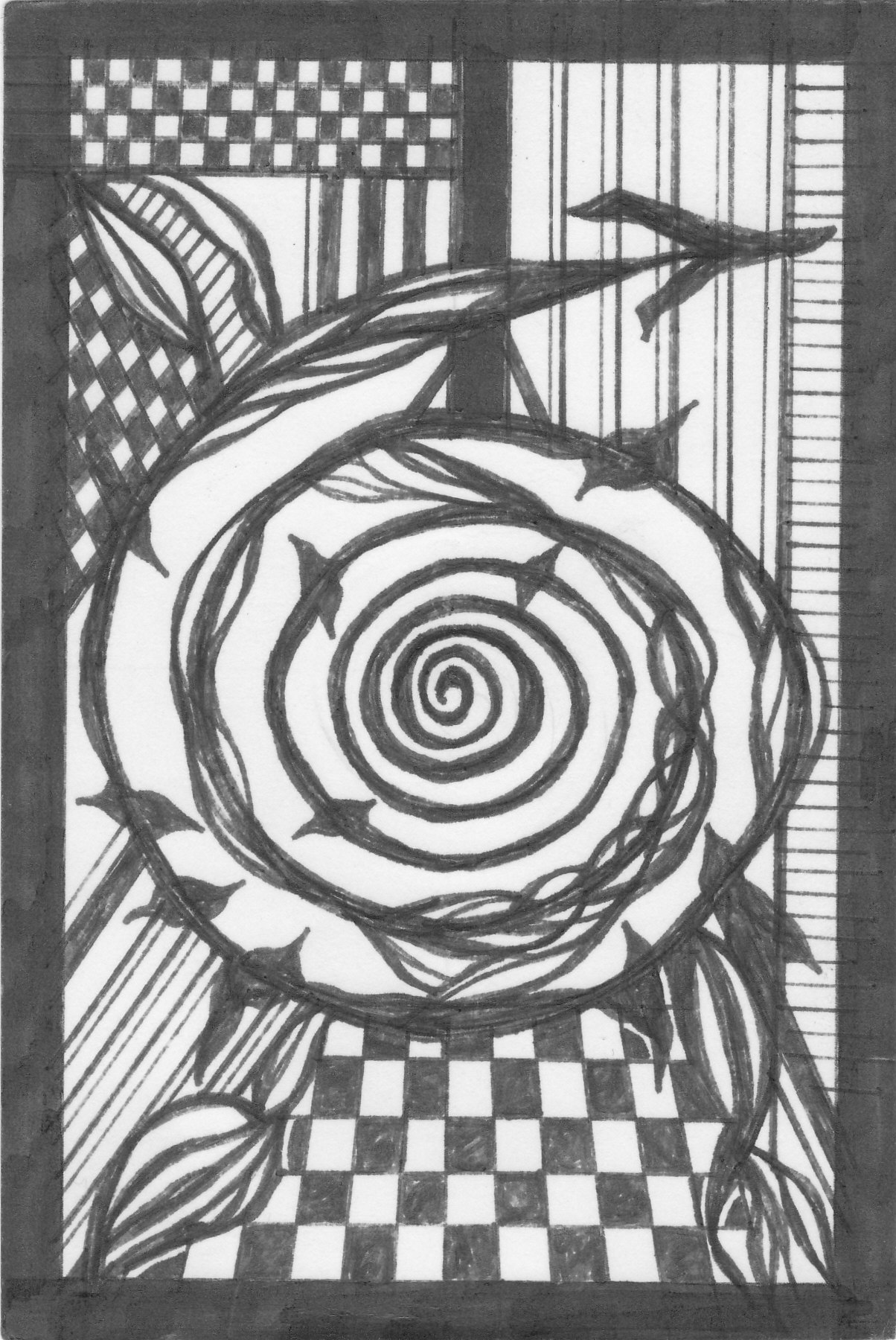
In the event that you have read that piece, I’ll also include here a few pieces of art, you might enjoy.  These include a number of color pencil drawings I did a decade or so ago:

I will try to upload more art before I leave the US and make it available between now and my arrival in Port-au-Prince.  No guarantees, but I will try!

Haiti’s Greatest Gift: notes on the nature of giving


It amazes me how often Haiti is a study in extremes, not only between the most obvious of oppositions: rich/poor, white/black, have’s/have-not’s—but also between the more subtle and insidious of extremes—the ones I notice once I’ve returned to the US and realized all over again just how much we as Americans have and just how much the people of Haiti don’t.

I understood this even more clearly yesterday when I thought about how well “we-with-the-leisure-to-read-blogs” have it, that one of our biggest anxieties during the Holiday Season is the worry over whether we’ve gotten Uncle Joe or Cousin Rita just the right gift—from perfect stocking stuffer to the most ideal of electronics—iPhone, iPad, iPod.  It’s i-ronic just how much “I” is in our gift-giving, how many “me’s.”

I realized that the leisure and disposable income gift-giving presumes suggest profound things about these two countries I now call home.  Namely, if we have the time and energy, not to mention the funds, to spend on gifts, then we obviously aren’t worrying about keeping our children safe from cholera, aren’t worrying where our next meal might come from, aren’t worrying how we’ll keep our babies dry during the rain at night, the torrential downpours that turn the floors of our tents into pools of liquid, dripping mud.

However, sometimes I think that my graphic, black and white drawings, even my poems, express something about the extremes of Haiti that these well-chosen words of explanation fail to communicate.  So in closing, I offer some recent, some not-so-recent drawings that try to articulate in ways these words do not—the kinds of graphic contrasts that keep me awake at night—not only in Haiti—but in other places, as well.  Below the images are used to punctuate a poem I wrote some years ago, one written in the voice of someone displaced, alienated, alone—someone struggling to climb up out of endlessly hopeless circumstances, someone not unlike the poorest of the poor in Haiti.

On Rattlesnake Mountain

At dusk we lock

                the iron gate 

                                                collecting bones

                bleached in tufts of matted grass

                scaffolding the bluff

I insist on picking them

                a carcassed bouquet

                                                of cow bone

                picketting our path

                back up the crooked slope

Eye sockets shape

                a separate ascent

                                                dead leaves

                thicken the air

                like smoke

The moths are tongueless

                it’s simple to blame

                                                the mothers

                their beaks vacant as stairs

                I climb a thicket ofdry sticks

(For a more light-hearted and truly hysterical look at the holiday, I suggest you read today’s post on “The Ramblings.”  Tori’s comment  helped me gain some of the insights I share here.)

Haiti Art Project: mixed media


I think I’ve mentioned before in this blog that I’m a visual artist–a self-taught one. 

However, since the internet connection at our house in Haiti is so slow, it’s been nearly impossible to upload images of my work.  While I’m home in the US, then, I want to take advantage of more bandwidth to share photos of some pieces I’ve completed in the past several months.

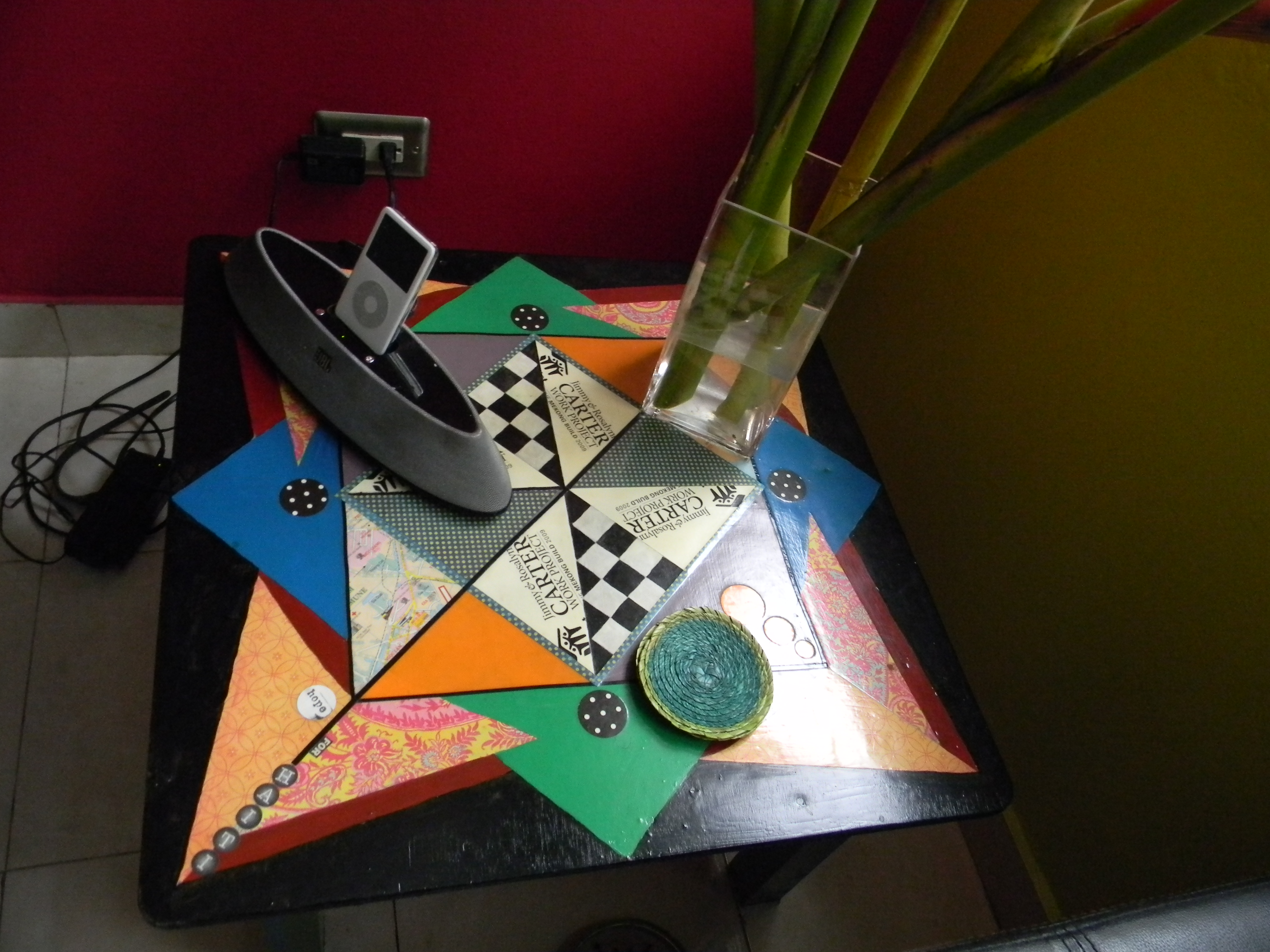
Today–a mixed media table I’ve made for our main living area in Haiti.  It attempts to map in visual terms the spiritual and emotional journey Sara and I have taken in the past 2 years, moving first to Vietnam and then more recently resettling in Port-au-Prince.

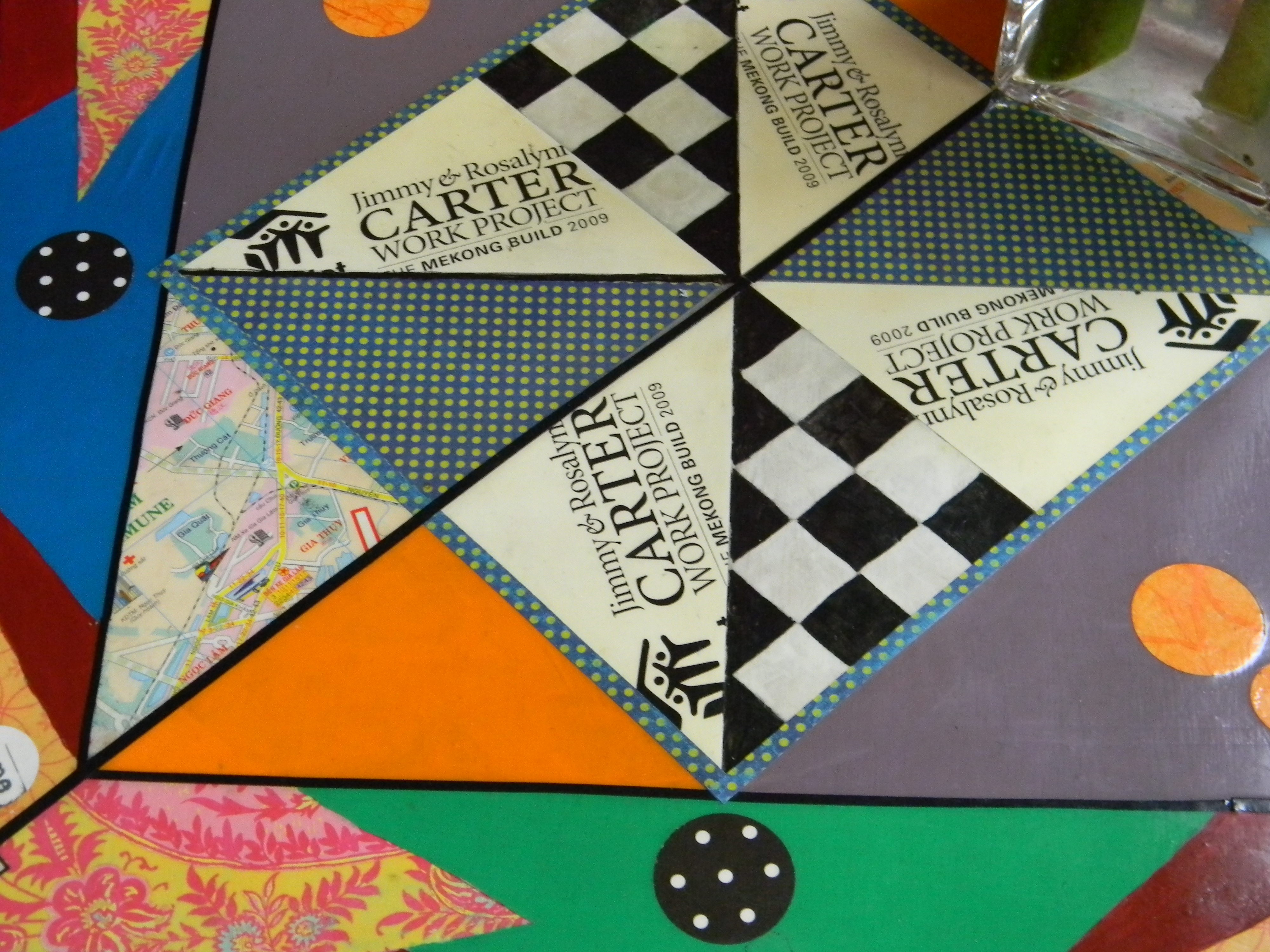
The table is part collage, part decoupage,  part painting.  The photos below begin with one of the corner where the table sits and then offer a narrowing series of snapshots of the table top itself.  You will see parts of Hanoi maps and other collected papers from the past year arranged, along with painting, to create an eight-pointed star.

I designed the table to fit between the black couch and love-seat and to coordinate with the colors in this space.

The table incorporates colors that are repeated on the sofa pillows, the wall behind the love-seat, and the painting (not mine) above it.

Nearly all of my work uses the checker-board graphic to one degree or another.

In some ways the table top resembles a game board, as Sara and I feel we have almost had to play a game of strategy in making our lives function smoothly while living abroad--"smooth" being a relative term.

In the lower left corner I incorporated a portion of an Hanoi street map, as well as pieces of an invitation to a reception with Rosalynn and Jimmy Carter. In Vietnam I volunteered my communications skill for the Carter Work Project in the Mekong.

Finally, this section of the table focuses on Haiti and my belief that there is hope for the place we now call home–my belief that good things will eventually come to our small corner of the Caribbean.


Do you have any questions about this tiny table or about my work as a visual artist?