Writing Round the Vertigo


At the beginning of Mental Health Awareness Month, I posted a piece called “Leaving the Seclusion Room  (some not-so-crazy notes on recoverying from mental illness)” about my stay at an Oklahoma psychiatric facility.  In that post I wrote about the voices I heard—an echo of children’s chatter—a description that prompted a question from my friend Sarah, who asked if I had ever explored those voices poetically—exploited their poetic potential, so to speak.

It turns out, I had.

Sort of.

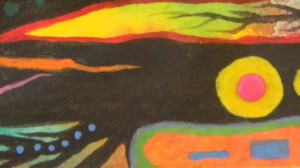
The poem I’ll share below is written in several voices that interrupt one another—echoing—overlapping—dizzying.  Though there’s only one child’s voice in the mix of layered sing-song, this poem reminds me of the voices I still sometimes hear during times of vertigo-inducing stress–a surreal “reality” that looks a bit like this:

(photo by John Drysdale, " High Living Crocodile," 1976)

So–I hope you’ll wind these stairs with me–

And take a listen—


Vertigo


My head is killing

     me and he is talking

     about the etiquette

          of date rape


     cassette in the player

     cassette in the player


          indigo

          girls

          indigo


Where have you been?


The staircase is winding

     off the edges of the lawn

     and I am here

                                  lavender


     lilies of the valley

     lilies

               of

                     the

                             valley


I’ve told you not to

     go there


     you

     you


There you

                     daughter in the photograph

                     age three in front

                     of an antique typewriter

Kathy--already a writer--age 3

Why can’t you be more like . . .


    lilies of the valley

     lilies

              of

                    the

                            valley


The world according to cats

     is not a crazy sphere

     of influence

                                 spinning

                                 spinning


          in my


     cassette in the player

     cassette in the player


          head
 

Home Again, Home Again: a Georgia Jiggity Jig


Sara and I are home again after nearly a week away, jigging in the exotic Outback that is southern Georgia.

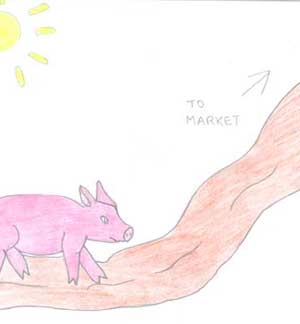
Drawing by Julie Barclay (www.symbolworld.org)

Though wonderful to travel internationally, we especially enjoyed the opportunity to visit locations a little closer to home, places in Georgia such as Americus, where NGO Habitat for Humanity International was founded; Plains, home of the 39th president of the United States, Jimmy Carter; Savannah, a southern city draped in Cyprus; and Tybee Island, where walked the beach, enjoying sea and sand.

More details soon.  Just wanted to let you know we made it “to market” and back,.  I plan to resume regular posting, as well as reading the blogs I love as soon as possible.

This little piggy has missed her blogging buddies!

Jiggity jig!

It’s the DNA, Stupid!


(in memory of my father who died May 13, 1981)

I never knew my paternal grandfather.  Sure, he died before I was born, but my father never knew him either, as least not in any meaningful way, after infancy, when my grandparents separated.

Ultimately, their ugly divorce left my siblings and I knowing nothing about the McCullough family, whose name and DNA we share.

For years I searched for information about my grandfather, as I’d been told he was a sports’ columnist for the Pittsburgh Post Gazette, perhaps the person from whom I’d inherited the urge to write.

Never finding anything meaningful, I searched, as well, for my great-grandfather, William Tice McCullough—for whom both my father and brother were named.

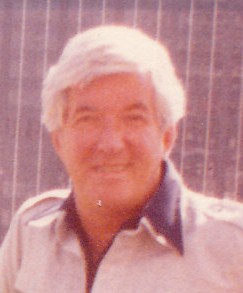
my father, who died in 1981

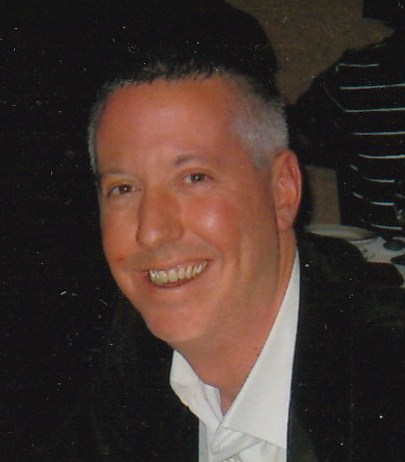
my brother

I found nothing.

Until Monday—

When I received an email response to an Ancestry.com inquiry I made in 2005:

William Tice McCullough was born in California, Ohio in 1873 and married a woman named Minnie from Pittsburgh born in 1875.  He is the grandfather of David McCullough, the historian, by one son and Nancy McCullough Griggs, who is being buried today in the North Cornwall cemetary, Cornwall CT, a grandchild by another son.

It turns out that William Tice McCullough had several sons, three of whom were Mark McCullough, father of Nancy McCullough Griggs, buried this week in Connecticut, Christian Hax McCullough, father of historian David McCullough, and Horace George McCullough, my father’s father.

As a writer, what interests me the most, assuming I received accurate information, is that my father was the first cousin of David McCullough, a two time Pulitzer Prize winner.

David McCullough

So, maybe there are some writerly genes in McCullough DNA.

Maybe there’s hope for my memoir after all.

Blogs Go Ghandi


Blogging is about community.  It’s about sharing and interacting and telling our stories.  It’s about friendship and honesty and all that’s good about people meeting people.  Blogging is about change, about language launched into action.  It’s about hope, about faith, and sometimes even about love.

So it’s happened in the past week, since I’ve been recognizing Mental Health Awareness Month, two bloggers have visited my site, two women who have fabulous and important blogs about mental health that put Ghandi’s imperative into action—they are “the change” many “want to see in the world.”

Sandy Sue’s “A Mind Divided” explores what it means to live with bipolar disorder and uses mixed media art to image its message of hope in the midst of struggle. Just the other day Sandy wrote about the poverty that often accompanies mental illness, about having to choose between meals and medication, since sometimes she can’t afford both.  She rightly suggests that those who say money can’t buy happiness . . .

. . .  aren’t considering those of us who walk to the grocery store when we don’t have enough money to get gas for the car.  Or who simply stay home, because funds for the groceries aren’t there, either.

Reminding us that “in all the ways that matter, money does buy happiness,” Sandy focuses a light on an ugly underside of mental illness, the poverty that often prevents patients, no longer able to work, from getting the medications they need and sometimes even food to eat.

However, “Suicide Ripple” delivers an even more sobering message—that, indeed, some don’t live long enough to go without medication or become hungry, because a hard, cold fact remains: mental illness kills.  Begun by the friend of a bipolar-diagnosed woman, who committed suicide in January of this year, “Suicide Ripple” is about

the effects such a suicide has on a family, a community, even people who didn’t know the person who completed suicide. This one act by one individual causes a ripple effect that can reach hundreds of people all over the country, even the world.

 The writer hopes her blog will prevent others from ending their lives, showing the impact such deaths have on loved ones left behind, as well as comfort the survivors themselves, creating a community of support.

The bottom line is this—social media has massive impact, affects the way we think about ourselves and the communities we’re part of.  As such, blogs should be used to lessen isolation, loneliness, depression and despair.  If blogging can create the very thing so many suicide victims lack, the very thing that drives them to end their lives and hurt the ones they love, if blogs can build community, create caring environments where sharing can be safely and anonymously undertaken, then  more mental health professions should exploit this potential, and many more who live with mental illness should tell their stories, talk about their struggles, share the hope and joy, peace and comfort that come with recovery.

May more of us use our blogs to affect change.  As Ghandi so wisely advised, “Be the change you want to see in the world.”

another variation on not-so-sane


Today I’ll share yet another poem I wrote during my 1990 admission to Parkside Hospital, a psychiatric facility in Tulsa, Oklahoma.

If yesterday’s poem demonstrated how my associations had loosened (in the psychotic sense), if it betrayed the way my brain was processing (or not processing, as the case may be) something we’ll loosely call information, then today’s piece provides the same kind of evidence, indicating even more strongly how strange my “thinking” had become. 

parkside hospital       

     “I am in my own mind, / I am locked in the wrong house.”

      —Anne Sexton, “For the Year of the Insane”

you wonder why I am sick but
you must come to understand
that apple trees drop apples
before they’re ripe and the
apples rot.
 
you must come to understand
that I am made to think of
kitchen utensils and screwdrivers
which belong in separate
drawers but which for me
are all mixed up with cotton
balls and alcohol and clothes
pins that are used to
hang laundry on the line.
 
doing laundry is a difficult
chore.  i have trouble getting
the spots out, getting blood
out of panty crotches, so that
when they dry, they dry stiff
more like cardboard than cotton.
 
(25 march 1990)
 

I apparently went round and round with this during my stay at the hospital, as I have several variations in my journal.  I won’t bore you with the embarrassing awfulness of any others.

Please know though, that I have no earthly idea what this means and will rightly claim the insanity defense, for what it’s worth.  What was I thinking?  Likely, a strong case could be made that I wasn’t thinking with anything remotely resembling reason, let alone sanity.

But then again, maybe I’m looking at this the wrong way, maybe my inability to make sense of this is a lesson in learning to develop empathy for myself, for who I was at that time.

How scared I must have been!  How confused! 

And what about others, the ones who are still struggling, right now–in real-time? 

Let’s remember them————————

A Poem from Parkside Hospital (for Mental Health Awareness Month)


Today I’ll take the story of my 1990 admission to Parkside Hospital, a psychiatric facility in Tulsa, Oklahoma, one step further, passing along a poem I wrote as a patient there.

One of the things I find most striking in the poem below is evidence that my associations had loosened–a common symptom of psychosis.  Here, in fact, they’ve loosened  to the point that the poem, I think, lacks cohesion in literary terms.  However, I believe the piece provides some clues about the way my mind processed information at that time and how my sense of reality was largely based on loose leaps in logic.

mental illness

the edge of this
is not like other
edges.  I approach
it from the angle
we associate with
bent sticks stripped
of bark and the inner
coating which comes
off in layers against
the flat edge of
fingernail pressing:
     paint peeling
     orange peeling
     skin peeling after
     sunburn
and all of this only
to reveal error and
a false start.
 
so stripped i enter
naked into the oblivion
and am washed
ashore along with tomb
stones on which we read
about the deaths of
certain navigators.
sailors are a special
breed of the explorer—
straining toward the edge
of anything—crazy to
believe in spheres
they say—all is as it
appears to be—flat as
slate and born of one
dimension—folded not
pleated—pleats are
said to complicate the
matter.
 

Notice that an image I now call the “event horizon”  has crept into my description of mental illness–“the edge of this/is not like other/edges.”  I seem to believe I’m approaching a kind of emotional frontier, not knowing what’s next, what’s beyond, comparing my experience of “crazy” to that of the early explorers fighting the misperception that the world was flat.

I wish I were able to recall more clearly and concretely what I was thinking during these weeks in the hospital.  However, most of what I wrote was like this poem, a web of loosely linked images, a gauze in the guise of information, more evocative than overt.

Does anything about this poem seem important to you?

A Weekend Away from Post-a-Day


Over the weekend Sara and I have been busy hosting Easter dinners for each of our families.  Sara roasted a leg of lamb with ginger carrots.  I decorated our house for the holiday. 

Here are a few photographic highlights of my weekend away from the blogosphere:

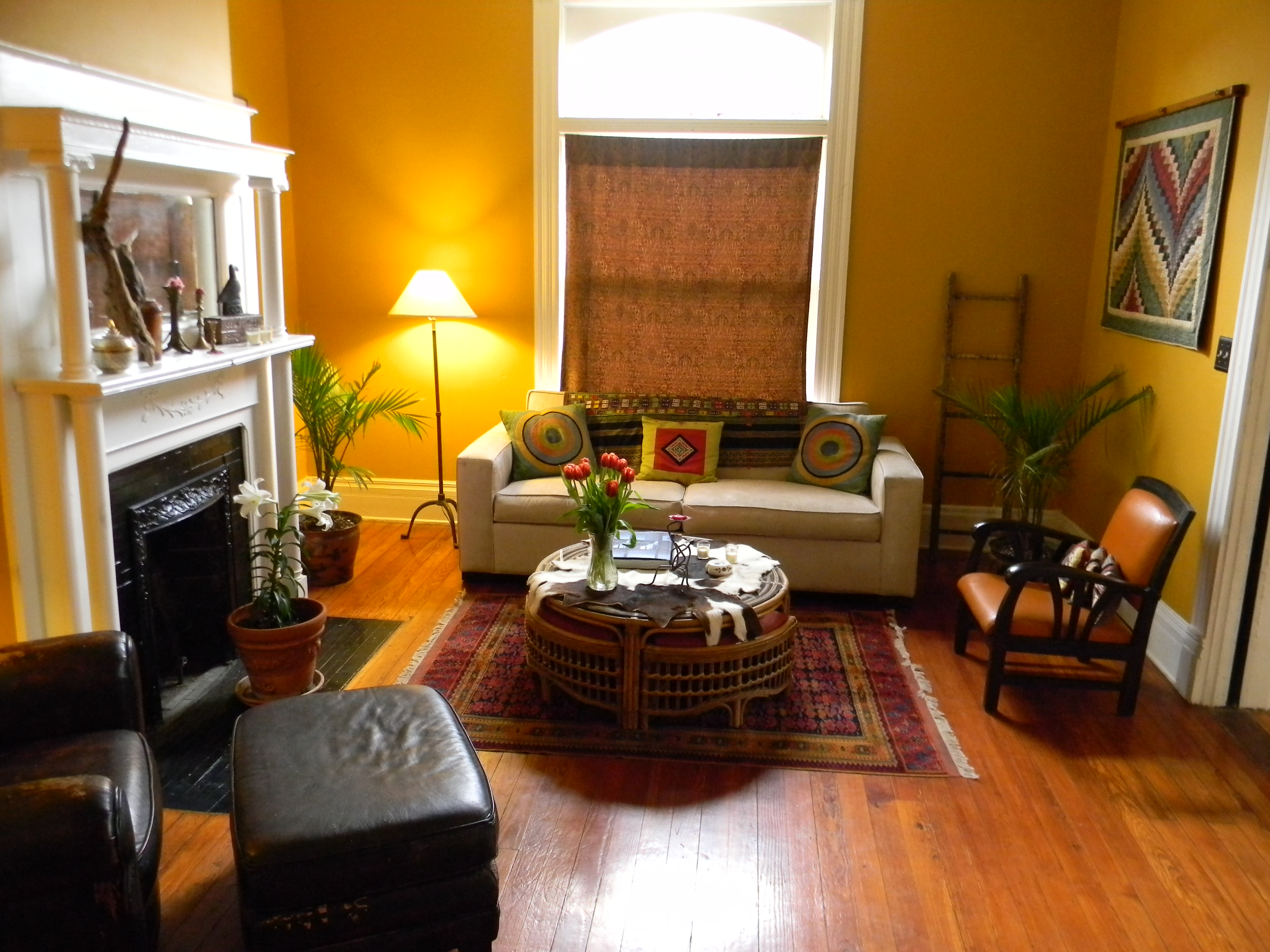
our library ready for Easter hors devours

living room set up for egg hunt
I hand-painted eggs for the occasion.
table set for Easter dinner

 What was the highlight of your holiday weekend?

Even Words Betray Me


Language, language everywhere.  But not a thought to think. 

That’s where I find myself today, folks.

No words.

One image.

A mixed media drawing I completed yesterday—

(Note: NIMH is the National Institute of Mental Health.)