News from the Asylum


 I don’t know how to tell you this, but I have some crazy news . . .

Sara and I are leaving Haiti— as in “permanently,” as in “forever.”

I’m just as stunned by this as you are, and frankly it seems hard to believe.   But Sara’s NGO is doing what a number of organizations are doing in Haiti—

They’re scaling back—

Why

Because of funding shortfalls—

The fact of the matter is, merely a fraction of the dollars pledged toward the Haitian relief effort just after the earthquake have been delivered to NGOs, because, in reality, donors are reluctant to hand over funds to a country whose political future is uncertain, a country that has a history of corrupt leadership, presidents who funnel dollars into their own deep pockets rather than passing them along to citizens in need. 

What?

You might wonder what this has to do with Sara and me—————

Quite frankly, Sara is a key disaster response resource for her NGO, especially in terms of her ability to drop into the aftermath of a disaster and get projects moving.  She launched the organization’s effort in Afghanistan after the Taliban fell in 2002 and directed its response to the 2004 tsunami in Southeast Asia. 

More recently, she’s worked a year in Vietnam and another in Haiti, without more than 5 consecutive days at home—an effort that has drained and exhausted her.  She needs a break.  She needs to rest.  

And the organization is smart to recognize this.

When?

Sara will have a three-month sabbatical before being reassigned.  This means Spring at home in Lexington—a lovely time of year to be in Kentucky.  And though I’m terribly sad to leave Haiti when there’s so much more of the country to explore and write about, I believe this change will ultimately benefit Sara and her ability to serve more successfully in the future.

Where?

 

We truly don’t know where we will be headed in another 3 months.  Before the earthquake in Haiti, her NGO had planned to send Sara to South Africa.  I suspect that could actually happen this summer, unless in the next several months there’s a massive disaster in another part of the world.

How?

So, how will this affect the blog—a blog that has largely been about Haiti?

Well, it’s ironic that I began shifting the blog’s focus slightly  even before knowing this larger change was coming—addressing the “event horizon” that is my past, while promising to not ignore the “event horizon” that is Haiti.

It could be that I shouldn’t have made that promise.  Certainly, I don’t plan to ignore Haiti even now, but it inevitably won’t be a part of my day-to-day experience.  Inevitably the focus will shift toward which ever country we live in next.

In the meantime, I intend to address the “event horizon” that was “then”—my personal past, whose story, I think, needs to be told.

Actually, going home to Kentucky will better equip me to research my mental health history—to do it in a way I couldn’t if I were in Haiti.  It will give me actual access to boxes and boxes of journals, video-taped therapy sessions, and medical records I already have on hand.

In practical, blogging terms, I suspect this may mean fewer posts and/or briefer posts over the next several weeks, as we pack up our lives here in Haiti and get resettled in Kentucky.  After that, I intend to spend the Spring exploring my past and sharing it here on the blog.

So pad your walls.
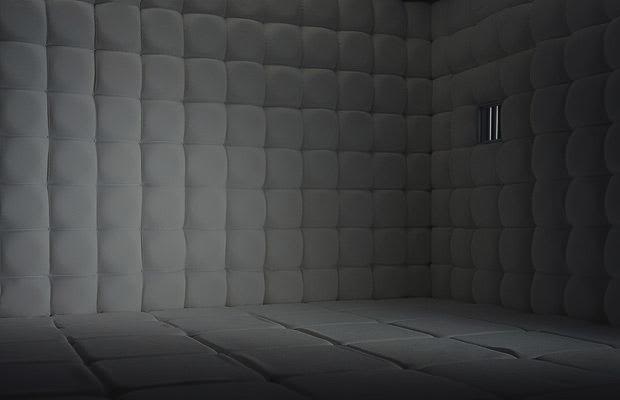
Things could get crazy around here.

This insane story’s just beggin’ to be told.

Text, Texture, and the Nature of Memory


I’ve been thinking a lot about memory this week.  How we remember.  What we remember.  Why we remember some things but not others.

And in process, I remembered a poem I wrote some time back about my own expereince of memory, especially my experiencing the past as text. 

In it, I allude to Anna Ahkmatova, the celebrated Russian poet who was so highly censored under Stalin , she resorted to writing her poems on cigarette paper, memorizing them with a  friend (friend’s memory as carbon copy), and smoking the evidence of her crime against the Soviet State.

Here, I also allude to the texture of memory and the texture of texts themselves.  It’s interesting to me that in English the word “text” is inherent in our word for “texture”–a sematic given.

Censorship

The past comes

back in bits

colorless as glass

ground almost to dust

so that any sense of shape

seems irretrievable


The taste of it lingers

                in my mouth like

                                something burnt

                                                marshmallow

                                                toast

                                                skin


Dream of Ahkmatova

                stanzas scratched out

                                on cigarette paper

                                during Leningrad winters

memorized by a friend

burnt in ashtrays

saying what we don’t

                (hear)

                                only know

like skin


(Something to be touched)


Text (ure)

                is everything

(The formatting of the poem is not correct, but I could not get WordPress to recreate my Word document without changes in spacing.  I finally decided to pass the poem along regardlesss, hoping its message would speak to you despite the irregularities.)

Piecing and Pasting: Re-Membering (Part 2)


It’s the forgetting I remember most.  The fact of forgetting.  The past is fuzzy for me, something that will make memoir difficult.

So, for me, re-membering will partly be a process of re-constructing and re-assembling the story, piecing and pasting.  Largely, this is due to trauma.  Trauma around growing up in a dysfunctional family whose front door was broken down by the FBI on way too many occasions.  Trauma around having a mental illness that at times disconnected me from reality and the people I love.

However, I have a strategy for doing this detective work, because I, clearly, need to research and document the parts of my life I can’t recall.

So today I’ll outline the most obvious steps to take in reconstructing both the story about my father’s connection to organized crime and the one about my mental illness—what amounts to a 20 year struggle to win (and sometimes seemingly lose) the battle against bipolar disorder.

Though I don’t know that my family is entirely comfortable with my writing about my father, who, in fact, died in 1981 (when I was still a teenager), I plan to do the following to document my dad’s story:

  1.  File a “Freedom of Information” act, so I can access my father’s FBI file.
  2.  Search news paper indexes to locate articles that were published about my father in the Pittsburgh Press and Pittsburgh Post Gazette during the 1960s and 70s.
  3. Access transcripts of court proceedings, so I can understand why several grand juries indicted my dad and can appreciate the nature of my father’s testimony in court proceedings against him.

And in order to reconstruct the bipolar narrative, I plan to:

  1.  File for copies of in-patient medical records, so I can review notes taken by doctors and nurses during my many hospital stays.
  2. Request copies of notes kept by doctors and therapists during out-patient treatment.  (Some of this I’ve already done.)
  3. Review journals kept from the time I was 15 until the present.  I wrote a lot during the years I was sick.  And though I don’t recall everything about that time, the journals recorded much of what I don’t remember.
  4. Watch video tapes of several years’ worth of out-patient and in-patient therapy.   This will be an invaluable source of information about my symptoms, my behavior, my thoughts and feelings at the time.  (This first involves having the videos transferred to DVDs, so I can bring them back to Haiti.  Frankly, the thought of watching this material terrifies me.  I can’t imagine what it will be like to see myself so sick.  I tried to watch one video a couple of years ago, but had to stop.  It was too painful.)

As I lay out this agenda, I want you to be assured, also, that I am well these days.   No one would ever know I had ever been sick or still carry this diagnosis.  In fact, when I’ve shared this information with folks in recent years, they’ve been shocked. 

My partner can certainly see how moody I remain.  I’m not always easy to live with.  As Sara says, when I feel something, my emotions fill the entire house.  I still hallucinate at times, but you would never know.  I’ve learned to manage the symptoms that remain, the ones that still break through despite the medication.

I hope some of you will help by holding me accountable with regard to the strategy outlined above.  Renee over at “Life in the Boomer Lane” recently posted a two-part series on memoir writing (something you should check out by clicking here and here).  But in the second of those posts Renee suggests assembling a supportive group of friends to keep oneself on track during the process of writing a memoir.  (So, I hope some of you will be willing to “support” me with periodic kicks in my memoir-writing ass.)

Thanks to all of you who read my blog.  Please know how much I appreciate your on-going support.  You all have given me the courage, the faith in myself as a writer, to finally take on this task I’ve been avoiding for years.

Peace to each of you and, as always, hugs from here in Haiti,

Kathy

Re-Membering the Past is Not an Easy Task


And for me it is, indeed, a matter of re-assembly.  Sorting and piecing , cutting and pasting. 

(So, today I have a confession to make.)

From the beginning, I’ve wanted this blog to be an avenue into memoir, since, in many ways, the story of my past is far more interesting than the narrative that is now.  And, in fact, the most significant “event horizons” in my life happened a long time ago.

I know that may be hard to believe, as the life Sara and I have lead over the past several years has been an exciting one—taking me to places like Bangkok, Hanoi, New Delhi, Port-au-Prince.

But in many ways to travel backward in time is the bigger challenge—more over-whelming, more frightening, yes, but also more meaningful, and perhaps even profound.

The story of how I’ve gotten here—how I’ve gotten “now” is one that must be told.  And how I’ve gotten here involves telling at least two stories, requires that I follow two narrative threads.  (There’s actually three but only two I’m even close to comfortable sharing now.)

The first is the story of my father’s involvement with organized crime and the second is the story of my twenty-year struggle with bipolar disorder.

Neither of these is easy to tell.  And honestly I’m afraid.

I still intend to write about Haiti.  I still intend to write about the “now” that is the life I share with Sara on this troubled island.  In fact, I believe the struggles Haiti faces nationally are not dissimilar to the personal challenges I’ve endured.  My story and the story of Haiti both involve sickness and corruption, oppression, endurance, even hope.

In the coming days and weeks I’ll outline my strategy, share my goals, my hopes, my fears.

I don’t know how to tell this story.  I don’t know where to begin.  I feel swallowed by the enormity of the task, dwarfed by it.

So, I’ll pray for peace—and if you’re a praying person, please offer your own prayer; if you’re not, please say you care, please say you’ll share.

I still need that massive infusion of grace.  I still need that holy yes.