Variations on Exile (Baby Doc, Part 3)


(To read Part 1 of this post click here, to read Part 2 click here.)

It’s been six days since I interviewed Baby Doc and I am still reeling—whirl-winded by the sheer size of the experience, the weight, the scope of opportunity that came so unexpectedly.

And, frankly, I’ve not digested the experience yet— it seems to have exhausted me; I feel depleted–confused by having almost “liked” the version of Duvalier I met that night.  What does one do with that realization?

Quite frankly I wish I were back in Haiti now. 

Certainly, I love our home in Lexington and enjoy seeing Sara’s happiness at being here, but I would do anything to be in Port-au-Prince when Aristide arrives.  The plane to return him from exile has already left South Africa; he’s expected to arrive in Haiti within hours.

But if I had to identify one overwhelming response to meeting Jean-Claude Duvalier, it would be this—a bit of dismay at how intrigued I still am by him—not Baby Doc the dictator, but Baby Doc the man, the details of ordinary around him. 

The fact that his house, though perhaps the grandest on his street, was not as spectacular as I had suspected it would be.  The couches in the living room seemed old and worn.  There were no fancy fixtures.  The wrought iron chairs on the patio needed paint.

But then again, that’s what we all amount to in the end—the peeling paint, the nicks, the scars.  The couches need recovering.

The bottom line is this:  the story of Haiti is largely one of exile and variations on that theme—coerced comings and goings, arriving unwillingly on a tiny island, you then don’t want to leave.

So it was for the slaves the Europeans brought from Africa, and so it was for Jean-Claude Duvalier, made president for life at age 19 when his father died, a job he didn’t want, a role he didn’t want to play.  He ruled for 15 years, was exiled for 25, and has finally come home to Haiti again.

And in some ways, so it is for Sara and me.  Though we came willingly to Haiti, we were not at all ready to leave, and having left feels like a loss, an amputation.  Haiti is the phantom limb, the one I dream about, the one that calls to me at night.

Eventually we all get kicked off one island or another.  A tribal council is convened.  The votes are cast.

And someone has to go–

What Does One Wear to Meet a Former Dictator? (Part 2)


(To read part 1 of this post click here.)

“Wear whatever you want,” Richard said.  “We’re just going to his [Jean-Claude Duvalier’s] house.”

Yeah, right!

Not only did I not know what I’d wear, I didn’t know that I could pull this off.

I had ironed two outfits, just in case, but ended up wearing a knee length plum skirt and sleeveless blouse just a shade lighter (one I had tailored when we were living in Vietnam).  I hung a striped silk scarf from India around my neck and carried a purple pouch purse from Bangkok over my shoulder—something small, but something  to hold what I assumed would be the essentials—a notebook, pen, and camera, one that refused to work properly when I tried to photographically document the event:
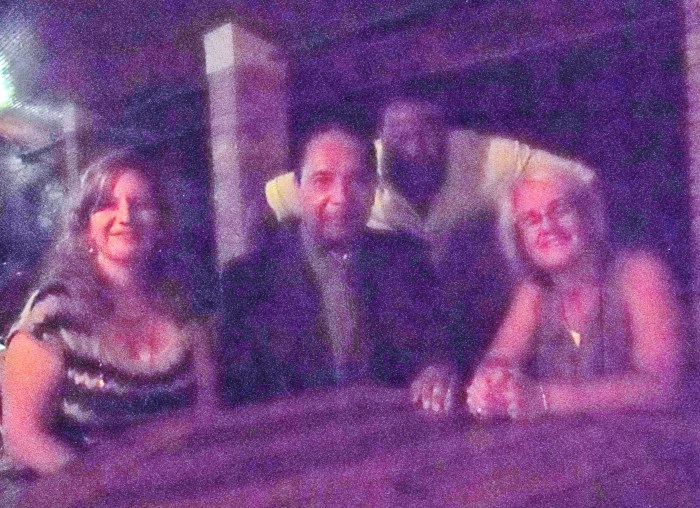
Kate, Jean-Claude Duvalier, Fito, and me

My friend Kate speculated with me, as we were driven up the winding mountain road.  What would we encounter once we arrived? Would we be searched? Kate removed a pocket knife from her purse and left it with the driver, just in case.  I had read that Baby Doc lived on Montagne Noir, but we were not headed in that direction.  Where were we going?

Along the way our Toyota SUV rendezvoused with our friend Richard and his friend Fito in a white pick-up truck for the final leg of the journey.  We passed the home of Rene Preval, current president of Haiti, and stopped just before Duvalier’s road, so Fito could call ahead to announce our imminent arrival.

Passing a rather grand-looking, well-lit house of the left, we continued down the street a bit, before turning around and circling back to that same stone house, now on our right.  This was it, we assumed, but there were a number of cars out front.  Was there a party in progress?

We were met at the gate and ushered in along the driveway, where two vehicles were parked, one an SUV, another a Haitian State Police pick-up truck, but no officer in sight.  As we approached the front door, we passed floor to ceiling windows that looked into the living room, where a number of people were gathered on two off-white couches that faced one another.  Duvalier’s Italian wife, Veronique Roy, cigarette in hand, answered the door when we knocked, welcomed us in, and escorted us out onto a covered patio to the left, where she offered us something to drink, and when we declined, promptly left.

We were seated at an octagonal, wooden table with white wrought iron chairs, when Baby Doc himself stepped out onto the patio, wearing a charcoal gray, double-breasted blazer over a cable knit, blue-gray sweater that zippered at the neck, seeming smaller, thinner, and more stiff-necked than I’d expected.

Once introductions were made and we were re-seated around the table, Richard did most of the talking and functioned as translator, explaining to Duvalier that I was intrigued by the former president and had hoped to meet him before leaving Port-au-Prince and moving back to the US on Monday.

Baby Doc, who spoke to us only in French, said that we all knew about the current political situation in Haiti, and that he didn’t want to talk about that. Instead he explained how happy he was to be back in Haiti, how saddened he was by the deplorable conditions his people were living in, and how surprised he was by the warm welcome he received, especially from young people who hadn’t even been alive when he was president.

I asked the former dictator what he thought the answer was for Haiti—how he thought the suffering could be alleviated.

Duvalier explained that there was not an easy answer, of course, but that “unity” was essential, unity between the rich and poor, between those who have much and those who have so little, that the government of Haiti needs to give the people what they want, and largely that involved not allowing them to live in such inhumane ways.

Clearly this was a vague and easy answer, a rhetoric few could disagree with, but I didn’t press the issue further.  I knew my question was overly broad and understood that his response would almost have to be equally sweeping in implication.  But I could feel myself being pulled in.  Baby Doc was feeding me what he knew I wanted to hear.  He and I both knew he was doing it, and I couldn’t help but respond to what seemed genuine care and concern in his tone, facial expressions, body language.  I could almost watch myself falling for this rhetoric, a seemingly circular logic, and I was reeling because of it.

I listened, still dizzied, and asked the former president what he thought made him unique, “Apart from your father having been president before you, when did you understand that you were unique in and of yourself, that you had something valuable to offer the country?”

Duvalier’s answer here surprised me, as he insisted that he was not “unique,” that he had come to the palace at age 6, that he had had a great education, that when his father told him at 18 he would eventually be president, he had said, “No thank you!”  He didn’t want to be president.  He didn’t want that job.

So Kate asked what he thought his biggest accomplishment was as president.  Baby Doc thought this was a good question, but said that, really, when you are president, you cannot have one accomplishment more significant than another, because everything you do is your job, your responsibility.  He went on to explain that he left the country in 1986 and went into exile willingly, to avoid bloodshed, that as he was leaving, he was more concerned about his people than he was about himself.

At this point, Richard turned to me and asked, “Don’t you have another question, you came here hoping to ask?”

“Yes,” I said looking intently at Duvalier across the table.  “A number of people have told me things were more stable in Haiti, when you were president, and things are decidedly unstable now.  I read in the media, that you have returned to Haiti not wanting to be president again, but if things were indeed more stable under your administration, why would you not want to be president again?  Don’t you think you would have something valuable to offer your people?”

To this Duvalier said simply and matter-of-factly, “We’ll have to see what the people want.”

And, what will the Haitian people want?

Another exiled former president, Jean-Betrand Aristide, is scheduled to return to Haiti today, the head of one Haitian political party, the OPL, was assassinated in his home yesterday, and the final round of presidential elections is set for Sunday?

So maybe, Richard was right. Maybe it didn’t matter at all what I wore that night.

Maybe all that matters is what the Haitian people want, what they hope, what they dream.

Will Haiti wear the cloak of democracy?

“We’ll have to see what the people want”—indeed!

(To read the third and final post on this interview, click here.)

What Does One Wear to Meet a Former Dictator?


Up until the last minute I didn’t believe it would happen. Even as we were on our way to Jean-Claude Duvalier’s home in the hills outside Port-au-Prince, my friend Kate (my ally in this effort) and I didn’t know what to expect or where we would rendezvous with Richard, who claimed to be Duvalier’s friend and had set up the “interview.”  The road was dark, as we wound our way up the mountain to encounter God only knew what.

It all started soon after Baby Doc’s unexpected return to Haiti in January.  I had asked Richard, who, in fact, directs the security operation in Haiti for Sara’s NGO, if I could go to the Karibe Hotel in Petion-ville, where Duvalier was staying, as we had to clear any out-of-the-ordinary outing with Richard’s team.  Security in Haiti is that precarious and risk-management is essential to the functioning of the NGO in potentially unsafe situations.   I wanted to attend a press conference Baby Doc was supposed to hold there on his second day back in the country.  Inevitably the event was delayed for a number of days first because the Karibe indicated it could not manage the number of press expected to attend and then by the eventual arrest of Duvalier on his third day back.

When I made the request, Richard, whose father had been a Haitian ambassador to France during the Duvalier era, surprised me, asking if I, in fact, wanted to meet Baby Doc.  At the time, I knew Richard’s father had been a diplomat, but I didn’t know when or for whom, and though I said I certainly I’d like to meet the man, I never expected it could or would happen.  Ultimately circumstances prevented me from attending the press conference which was held after the ex-dictator left the Karibe and was staying in a guest house on Montagne Noir.

I never again mentioned meeting Baby Doc to Richard, as, first, I had no real ambition of meeting a man who had allegedly committed crimes against humanity and, second, I knew Katie Couric herself would have loved to interview the former president.  I never expected it could be arranged for an unknown writer from Kentucky like me.

That is until this past Wednesday evening, when Richard approached me at my partner Sara’s going away party.  (We moved home to the US on Monday after a year in Haiti, where Sara directed the initial phase of an international NGO’s relief effort.)

“Would you still like to meet Baby Doc?” Richard asked at the barbeque, as I sat by the pool, minding my own business, admiring the setting’s breath-taking view of Port-au-Prince:

“Of course,” I stuttered, surprised by the question, imagining Richard was just making friendly conversation and couldn’t really make that happen.

“Then I’ll arrange it,” he asserted, turning to answer his phone.

He walked away.

And I laughed to Sara who was standing nearby, “Do you really think he can make that happen?”

“I don’t know, but I certainly don’t want to go,” she insisted.

She asserted the same, when Richard called the next day to announce the meeting had been arranged, “They’re expecting us Saturday evening.”

“Good God,” I said, having won the “Stylish Blogger” award, “What does one wear to meet a former dictator?”

(continued here)

My Old Kentucky Home


Having lived a year in post-earthquake Haiti and shipped 66 boxes worth of passion for Port-au-Prince ahead of our departure, my partner Sara and I, late last night, arrived home in Kentucky with 6 suitcases, 4 carry-ons, and two tired dogs in tow.

And today I am still too whip-lashed by re-entry (too shocked by easy access to electricity) to write much of substance, especially about my Saturday evening talk with Baby Doc, which in itself has left me dizzied with disbelief–clearly, the conversation of a life-time shaded by the half-light of infamy.

However, now that I’m back in the land of easy broadband, I can offer a few photographic highlights of our last days in Haiti:

Movers wrap everything, tables included, in cardboard

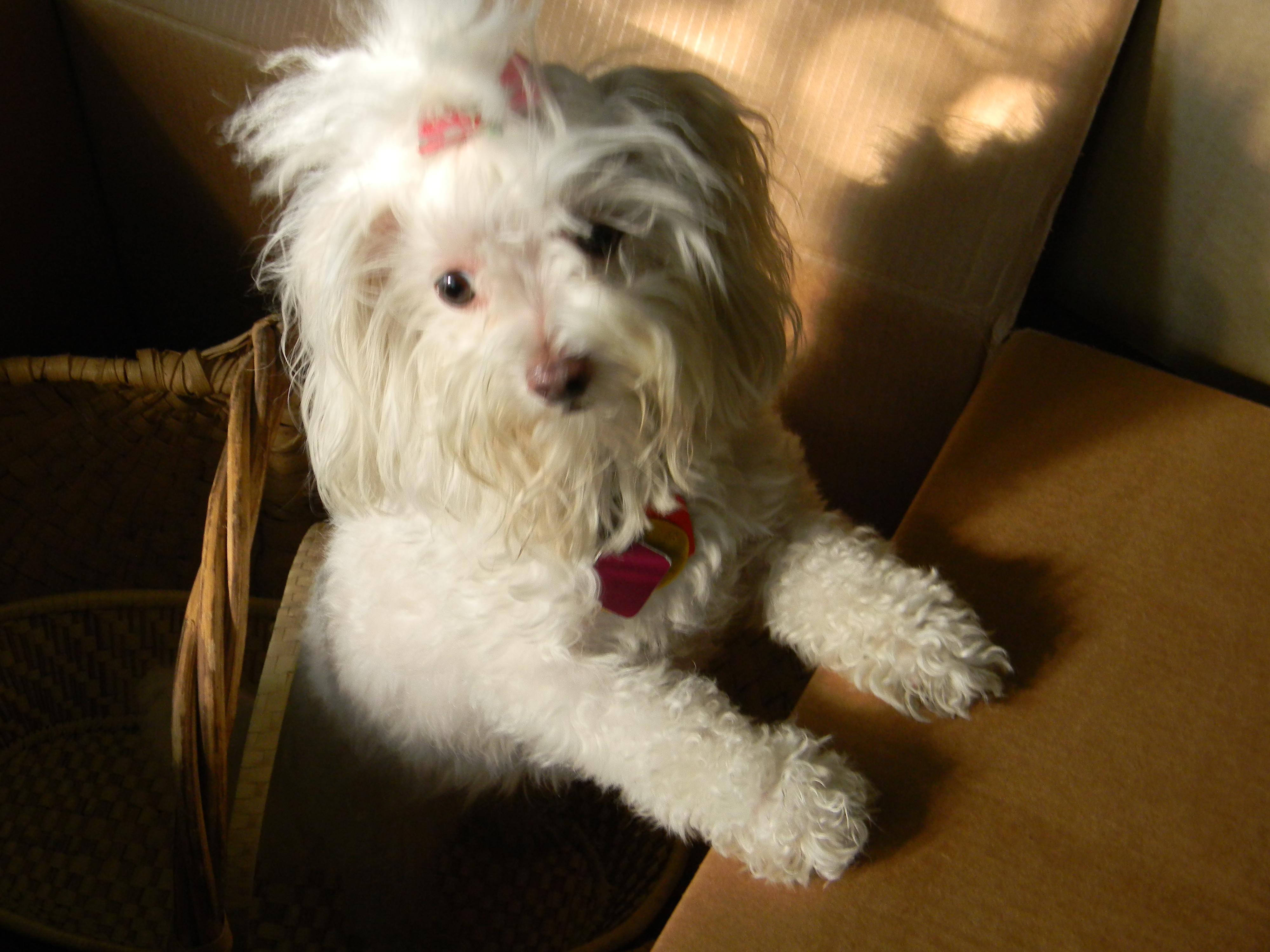
Lucy supervises shipping

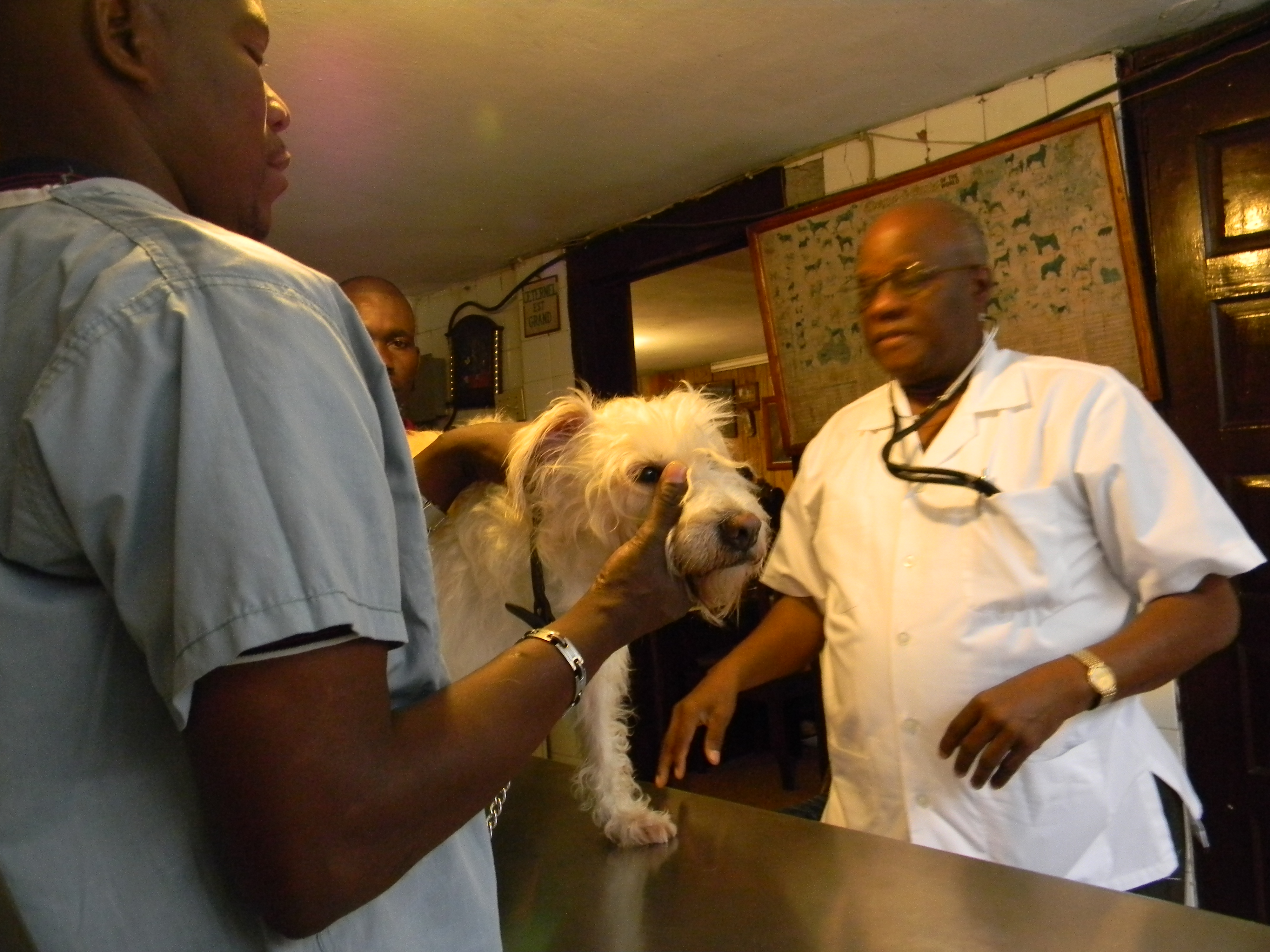
Ralph visits Haitian vet to avoid US quarantine

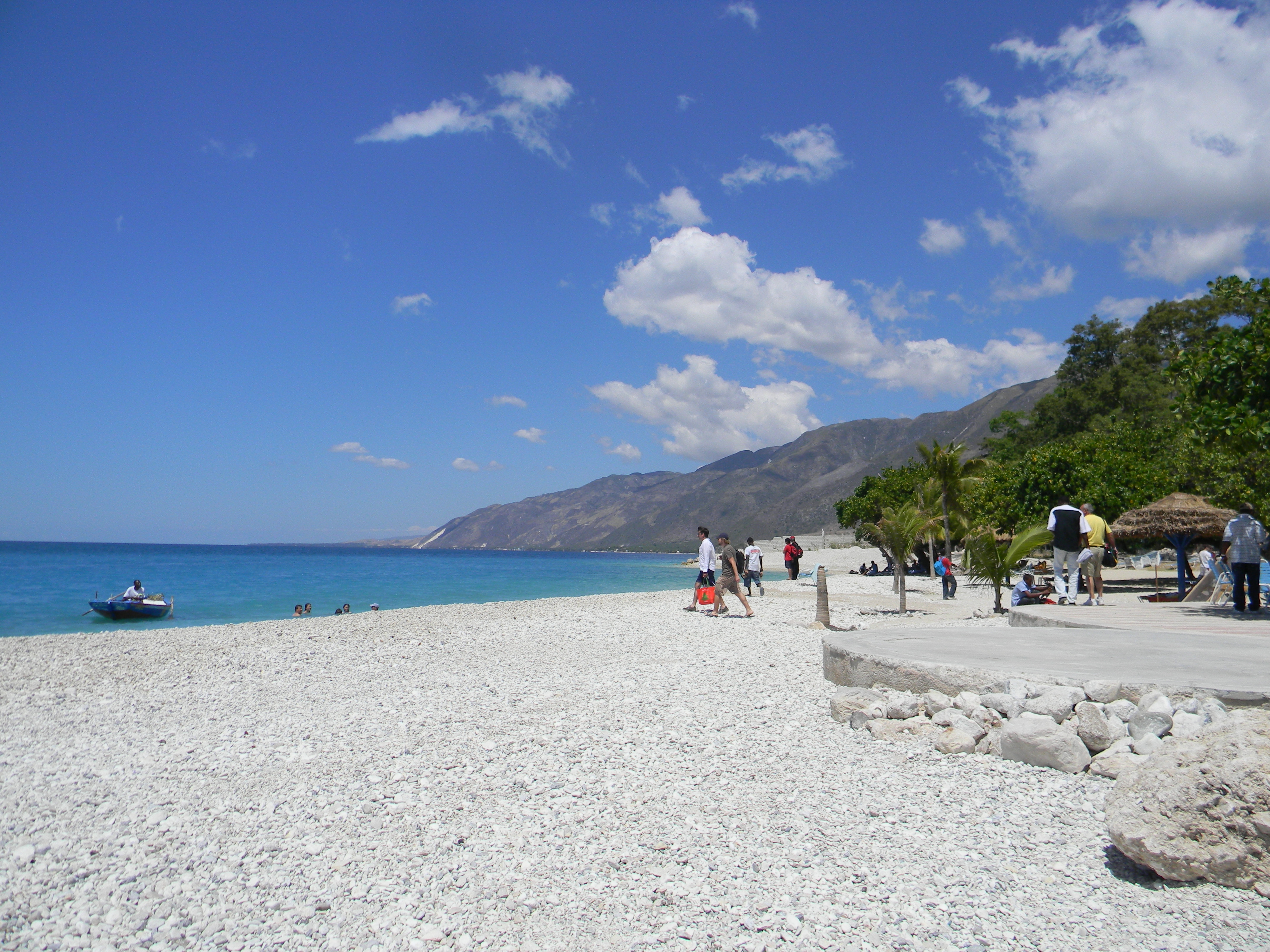
Good bye party hosted by Sara's staff at Kalico Beach (near Cabaret)

Lucy oversees our departure for the airport

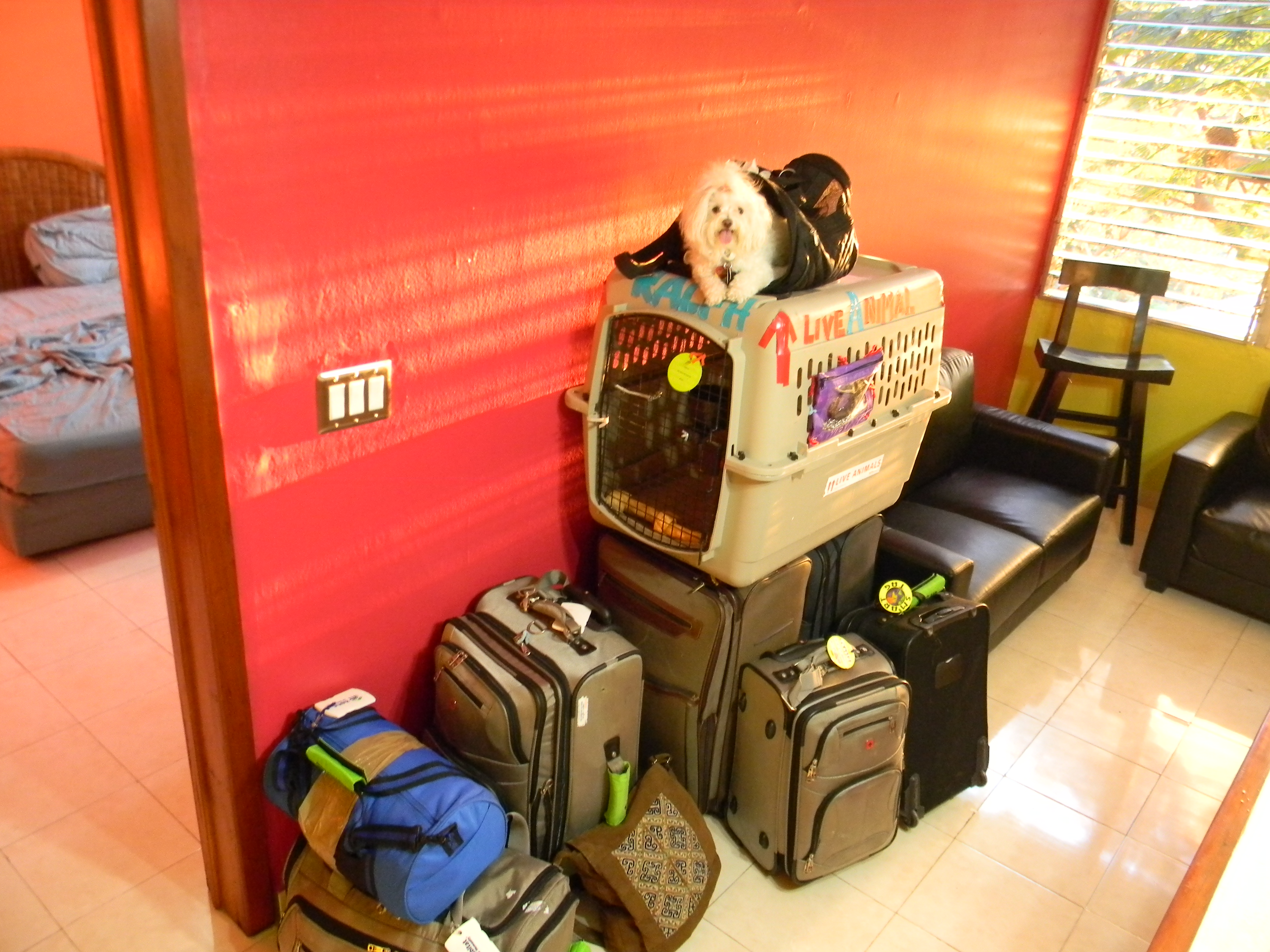
From atop Ralph's crate

Arrival at the Port-au-Prince airport

Lucy and Kathy wait at the gate

My talk with Baby Doc

Though I’m too tired to say much, I will add that, my 45 minute conversation with Baby Doc, would have been the coup of a life-time, were I a journalist in the traditional sense.  However, I was granted this access as a “friend of friend” and talked with Jean-Claude Duvalier, not about his recent arrest or allegations of wrong-doing, but about who he is as a man, as a president returned from exile, who sees his country suffering and is saddened by it.

I sat across the table and was stunned by the seeming humanity of an ex-dictator, some say committed crimes against humanity.   How could someone supposedly evil actually appear so warm, charming, and, above all else, humble?  I expected arrogance and experienced not one drop of it. 

Is this man maybe not what the world has judged him to be?  Are people capable of change, worthy of redemption?

Whoever Jean-Claude Duvalier is, he’s not what you’d expect.

Midnight, Give or Take an Hour


It’s been a wild and crazy weekend at our house here in Haiti, a weekend in the US when clocks have surreally sprung ahead an hour, dizzying me even at a time-bending distance in Port-au-Prince.

We’ve gotten 66 boxes of everything from fans to folding screens, pots and pans to patio furniture, shipped on a slow boat from Port-au-Prince to Baltimore, a boat so slow we’re hoping to have our lawn furniture in Lexington before the first snow falls next November and clocks again fall back an hour.

Saturday we spent at the beach, and Saturday evening I literally had a long talk with Baby Doc.  Even I find it hard to believe, but I have what may indeed be the worst photo taken this side of the 19th century to prove it.  For now the story will have to wait until we’re settled safely in Kentucky.

Kate, Jean Claude Duvalier, Fito, and me

Early in the morning we indeed leave on a day long trip from Haiti to home-sweet-home, one that will take us from Port-au-Prince to Miami, Miami to Dallas, and Dallas to Lexington, where we are scheduled to arrive an hour this side of midnight.

But in the meantime, I promise–

Sitting across the table talking to “Baby Doc” Duvalier, felt like an hour on the far side of midnight, an event horizon at my back.

(If you’d like to read a post about my past “adventures” at the Port-au-Prince airport, circumstances we are likely to encounter again on our way home from Haiti, click here.)

Pack Rat does it again!


Since Sara and I are continuing to box up our lives here in Haiti (all in an effort to move back to the US next week),  I couldn’t help but share a post I wrote some months back about the pack-rat affliction I suffer from, as well as two quick photos of our dog Lucy’s participation in the packing process:

I tend to over-pack. 

I admit it.  It’s a sickness.

It might even be a curse—who knows?

However, when you travel as much as I do, it becomes a problem—

A big problem.

This issue arises every time I go almost anywhere—the grocery store, the gym, even a restaurant or my mother’s house.  Heck, I even carry too much to the bathroom, if I think my stay there may be extended—a book, a notebook, a pen, a drink, a phone, sometimes 2 phones—maybe a magazine.  It all adds up.

Sara insists this calls for an intervention.  She thinks she’ll fix me.  That she can help me “edit”—her word.  And admittedly, she has a reasonable investment in my reform, as often she ends up carrying my stuff, lugging it all over the planet—quite literally.

This is why she bought me a Kindle—afraid when last  year we moved to Vietnam, where there’s not an abundance of reading material in English—that I would bring the inventory of a small university library along for the ride—that she would have to carry it.

Wise woman!

However, this week’s trip from Port-au-Prince home to Kentucky, has challenged even my advanced luggaging skills.  Even more so, since I was bringing Lucy back with me—a dog as carry-on baggage—a canine complication on top of my already dogged determination to carry too much stuff. 

When will I ever learn?

This complicating of already complicated carrying manifested itself most clearly yesterday morning in Miami.

I was running late—unusual for the chronically early like me.  I had to take Lucy outside the airport to use her version of public toilet.  She took too long. 

She wouldn’t pee!

Never did!

I was pissed!

So I loaded Lucy back into her black back-pack carrier, hurried back into the hotel to collect my 3 remaining bags—a yellow and brown messenger bag, a standard carry-on-sized suitcase, and another 55 pound monster—at least 100 kilos, if I’m doing the math right. (I’m not good at math.)

The woman at the hotel’s front desk mistakenly directed me to the American Airlines check-in in Concourse E, where the hotel is, rather than Concourse D—where I needed to be.  I stood in line for a good 15 minutes before an airport official indicated what no signage did, that this counter only handled check-in for passengers headed to Haiti—which two weeks from now will indeed be my destination.

For now—I was headed in the opposite direction—which meant trying to transport my abundant belongings outside for a 15 minute lumber to what could only be considered an outpost of the same airport.

It was far.

I was carrying a lot.

When I finally arrived at Concourse D, I tried to check in by swiping my passport.  

Didn’t work.

When I did succeed by typing in my name and destination city, the machine recognized but rejected me because of the pet, at which point an actual human being intervened, only to send me to yet another, though in the same terminal, distant location. 

Again I “luggaged.”

The clock was ticking.

Unbelievably, the third counter didn’t like me either, returned me, cursing the entire way, to location number 3.

There the slowest pet-check-in-specialist in aviation history had nearly completed the process, when I was reduced to begging, “Please hurry.  I’m going to miss my flight.”

“OOOOOOOOOOOh, you have plentyyyyyyyyyyy of tiiiiiiiiiime.”

“Not if you have anything to do with it.” I think.

However, her sloooooooowly articulated, cloooooooooosing words, were less than comforting, “Gate number 50.  Youuuuuuuuu have a longgggggg way to gooooooooo!”

No kidding!

Only after being rejected yet once more during the security check for, you guessed it, tooooooooooo many carry-on bags, did I finally persuade the less-than-friendly luggage Nazi, that I had paid 100 extra US dollars for the privilege of bringing my dog along.  I had to show the receipt.

You get the picture.

There’s ALWAYS a complication because of the bags, especially when Sara isn’t along to help carry!

Maybe she’s right.

Maybe there should be an intervention.

In the meantime, I’ll have to further sharpen my Sherpa skills—

Do they offer advanced degrees in “bag-lady?”

Saint Sara’s Celery and a Broth Debacle Averted


As Sara, the dogs and I struggle  to “suitcase”  a year’s worth of Haiti into a less-than-large shipping container (all in an effort to return to the US next week), please notice how our dog Lucy “assists” with the effort.  She has her paw in the sorting and boxing, packing and wrapping:

Lucy "helps" with the packing!

Lucy’s romp through our packing not withstanding, today, in the spirit of looking back and celebrating some of our biggest adventures  in Haiti, I bring you Part 2 of my Thanksgiving post.  (To read part 1 click here.)  Enjoy!

Yesterday, promising a series of posts this week about the difficulties Sara and I face trying to celebrate Thanksgiving from Port-au-Prince, I outlined what I called the “oven-related challenges” that could jeopardize our thankful feasting this Thursday.

Today, however, shopping-related issues take center stage—the consumer-driven hazards that could take down even the most well-intended and tradition-centered of holiday celebrations.  In fact, it may be that the more one tries to model any Thanksgiving feast in Haiti on the one Grandma would have catered, the larger the obstacles threatening it loom.

So, buyer beware.

Wisely, Sara and I anticipated some of these issues and brought back from the US several Thanksgiving menu items we thought might be needed—imagined we wouldn’t find here, even in the expat-oriented grocery stores in Petion-ville. 

But as you might expect (those of you who know my pathetic track record when it comes to poor packing), I anticipated incorrectly—finding here in Haiti what I did bring back but not bringing what I didn’t find.  Just my bad Thanksgiving luck!

Except for canned pumpkin—that is. 

Here I hit the pie-filling nail on its not-so-proverbial-pie-filling head.  I swear there’s not an ounce of Libby’s to be had on the whole of this damn island—cherry pie filling, yes—canned yams, yes—canned pumpkin in time for Thanksgiving pie-baking—no sir—none of it—anywhere.  And believe me, I have looked. 

But we need not worry.   I may not have a thermostatically controllable oven to bake the pie in, but I have a full 29 ounce can of “America’s Favorite Pumpkin” to put in it.

Now about the celery—

Here I should mention having a bit of scare yesterday morning trying to find this vegetable, almost as essential to stuffing as sage itself.  Standing in Giant Market (right here in Petion-ville), I came so close to a celery-induced heart attack, I was imagining, “What would Jesus do?”  What would the son of God himself (assuming he were a turkey-stuffing kind of carpenter) use in his stuffing were the stalks of stringy stuff not available?  If he turned water into wine, could he turn carrots into celery?

But, again, you need not fear, as Saint Sara herself performed the miracle, finally finding what she called a “not very robust” celery (but a celery-looking substance nonetheless) in the grocery store near her office. 

Catastrophe averted.  We are that much closer to a celery-ed stuffing inside our bird that’s to be roasted at a temperature the Father, Son, and Holy Spirit will themselves determine.

Then there’s the chicken broth—

Yesterday Sara sent me to the super market for some cans of it, among other things.   Actually, Giant carried the item in both the Swanson and Campbell’s variety—the Swanson, carton-ed with no added MSG and the Campbell’s, canned with all the blood-pressure-raising MSG one would ever want.  And being a health-conscious, not-wanting-to-consume-excessive-amounts-of-salt American, I selected the broth without MSG.  In fact, I tried to check out with three cartons of the stuff, since Thanksgiving dinner calls for broth in both the gravy and as a moistening agent in any well-celery-ed stuffing.

Here’s the hitch.  Though the store stocked the Swanson’s (over-stocked it, in fact)—they wouldn’t sell it to me.  And, if sheer quantity were any indication, wouldn’t sell to anybody, for that matter.  They couldn’ t figure out the price.  So, when, after thirty minutes of trying to determine one, no member of the sales or management staff could still settle on the number of Gourde to make me pay, I suggested they charge me anything. 

“Over-charge me,” I even offered—a concept they seemed not to grasp—though they seem to get it well enough when selling products on the street and doubling the price when any non-Haitian tries to buy.

But undeterred and unwilling to waste any more of my time-is-money American minutes, I gave up, bought the cans of Campbell’s, and headed home, risking ill-health all the way.

So the bottom line is this— the shopping obstacles, though they were multiple and at times bizarre, did not obstruct in any hugely significant way.  These were more imagined obstacles than obstacles of real substance—

So Saint Sara, the wise and proper packer, was (as she is in all things) probably right about this, as well–

—Since the anticipated shopping obstacle was, like the celery itself . . .

. . . “not a very robust” obstacle after all.

Have you had any strange, even borderline bizarre, shopping experiences?

The Butterball Challenge (Haitian Style)


As Sara and I continue to pack up our lives here in Haiti, and I continue to reflect and reminisce about some of Haiti-related “challenges” we’ve faced over the last year, I simply must share, for those of you who may have missed it, the following about our effort to prepare a sit-down Thanksgiving dinner for 24 under, shall we say, less-than-ideal conditions:

In honor of the upcoming holiday, I’ve decided to share, over the next several days, a few of the challenges we’re facing trying to prepare Thanksgiving dinner from Haiti.  So stay tuned all week for the sometimes amusing, sometimes maddening, sometimes mind-numbing complications that inevitably arise when celebrating this most American of holidays in the least American of locations.

Today I give you the oven-related challenges.


Is my Haitian oven up to the Butterball challenge?


I told Sara when we were looking for a house here in Haiti, that I simply had to have an oven.  Neither of the two homes we had in Vietnam had anything other than a cook top in the kitchen, which bothered me to no end, since I like to bake—cookies, cakes, biscuits, pies, muffins.  The only thing I like more than making them is eating them, but that’s another post for another day.

 So Sara did what any Tollhouse-cookie-loving partner would do.  She got us an oven—a real honest-to-goodness gas oven—minus the thermostat.

 I kid you not.  There’s no way to set any specific temperature on this most essential of kitchen appliances, any temperature either Fahrenheit or Celsius.

 Now, I love Sara more than anything, even more than my daily dose of cake and cookies, and those of you who know my inclination toward carb-consumption, know that’s saying quite a bit.  But sometimes she misses the most obvious of details.

 “Oh, that’s not that important.  You’ll figure that out.”

 Twelve attempts and twelve burnt batches of cookies later, I’m still figuring. 

 Which brings me to the matter of needing an oven this week, a temperature controlled oven, I might add.   In America we can’t celebrate Thanksgiving without pumpkin pie.  It’s the most Thanksgiving of Thanksgiving desserts—even when celebrating from here in Port-au-Prince—especially when celebrating from any far-away, cholera-sickened, earthquake-toppled part of the planet!

 A pumpkin pie likes to bake for the first 15 minutes at 425 degrees Fahrenheit and the final 45 to 50 minutes at 350, temperatures too precise even for the oven thermometer I brought back from the US.  It only seems to get me in the ballpark of a particular temperature, give or take 100 degrees. 

 But what about the turkey Sara plans to roast, what about the thermostatic requirements of the old Butterball?

 Oh, that’s not that important.  She’ll figure that out.

Have you had any memorable Thanksgiving dinner disasters?

Variations on Giving: a Friend’s Reflection on Lent


Disclaimer:   

Please know I do not allow Mindy to publish what she does below with any sense of comfort. In fact, I do so with fear and trembling, not wanting anyone to think, for a minute, that I believe the life Sara and I lead deserves Lenten comparison.   

Sara and I have chosen our path purposefully, but it, in fact, gives to us more that we give to others.  The sacrifice is reciprocal and then some, making our lives meaningful, challenging, sometimes even fun. 

 Please know the words below are those of a friend, a friend who has loved us for many years and may speak with a bit of bias—but a bias based in love.  As such, I am humbled and try to accept the gift with grace—acknowledging that though it may be too much, it’s a gift given from the heart.

 And the gift of love, the gift of grace, after all, is what the Lenten/Easter season is all about.  God only asks for our hearts and gives us grace in return.

 So thank you, my dear friend.  Thank you!

Dear Readers:
  
Kathy has taken the day off. 
  
While she finishes a myriad of tasks related to her move home to Kentucky, she let me talk her into publishing the following post I wrote about her and Sara.
 
This week Kathy is looking back and reevaluating the experience she and Sara have had in Haiti.  I hope this post will help them see how brave they’ve been.
  
I know I speak for many who have come to respect and admire these good people.  And though I speak about them in the context of Christianity, I believe good works are apparent in and of themselves, regardless of religion, creed or belief.
  
Kindest regards,
Mindy
 
_______________________________________________________________
 

As I reflect on Sara and Kathy and the lives they lead, I am reminded of the story in the Bible about the widow’s mite. “She gave extravagantly what she couldn’t afford…she gave her all.” (Luke 21-4)

 The Jews had been instructed to give to the Temple and to the poor as part of their service to God. One day Jesus sat at the Temple and watched people putting money into the offering boxes. Some were rich and gave lots of money. Some gave money, but were unhappy about it. Then a poor woman, a widow, came up to the boxes.

The poor woman put two small coins in the offering box. The disciples with Jesus weren’t very impressed, but Jesus said this woman had given more than any other that day. How could that be? Jesus said it was because it was all she had.

 I reflect on the selflessness of my friends because they inspire me on this first day of Lent to “give my all.”

 I’m Episcopalian and have always observed Lent by giving up something for the 40 days or so that lead up to Easter and the celebration of the risen Lord. When I was a child, I was instructed not to give up something I disliked, like spinach, but to give up something I loved, like chocolate.

 The physical act of fasting is meant to remind us to allow the Spirit of God to reshape the way we think, act and live. I know this as an adult. As a child, it was just something we were expected to do.

 It was a practice that was meant to become a habit and, then, a life lesson.

 The apostle Paul explained the lesson very neatly in his letter to the Philippians:

Think of yourselves the way Christ Jesus thought of himself. He had equal status with God but didn’t think so much of himself that he had to cling to the advantages of that status no matter what.  Not at all. When the time came, he set aside the privileges of deity and took on the status of a slave, became human! Having become human, he stayed human.  It was an incredibly humbling process. He didn’t claim special privileges.  Instead, he lived a selfless, obedient life and then died a selfless, obedient death – and the worst kind of death at that – a crucifixion. (Philippians 2:5-8 – The Message)

 This is how Sara and Kathy live. They go from disaster to disaster, at great expense – professionally, emotionally, physically, psychologically – giving extravagantly what they can’t afford…giving their all.

 Now, I want Kathy to run this blog post and if she does, you must know that it’s because I’ve asked her to do it on my behalf. 

 Because I thank her and Sara for reminding me, in this season of Lent, to allow the Spirit of God to reshape the way I think, act and live not only by giving up something I love, but by giving my all.