Top 4 Things about Christmas 2010


Though the photos aren’t fantastic, I can’t help sharing a  few of my favorite things about Christmas in Kentucky this year–a holiday away from Haiti with the most precious people on the planet this side of Port-au-Prince!

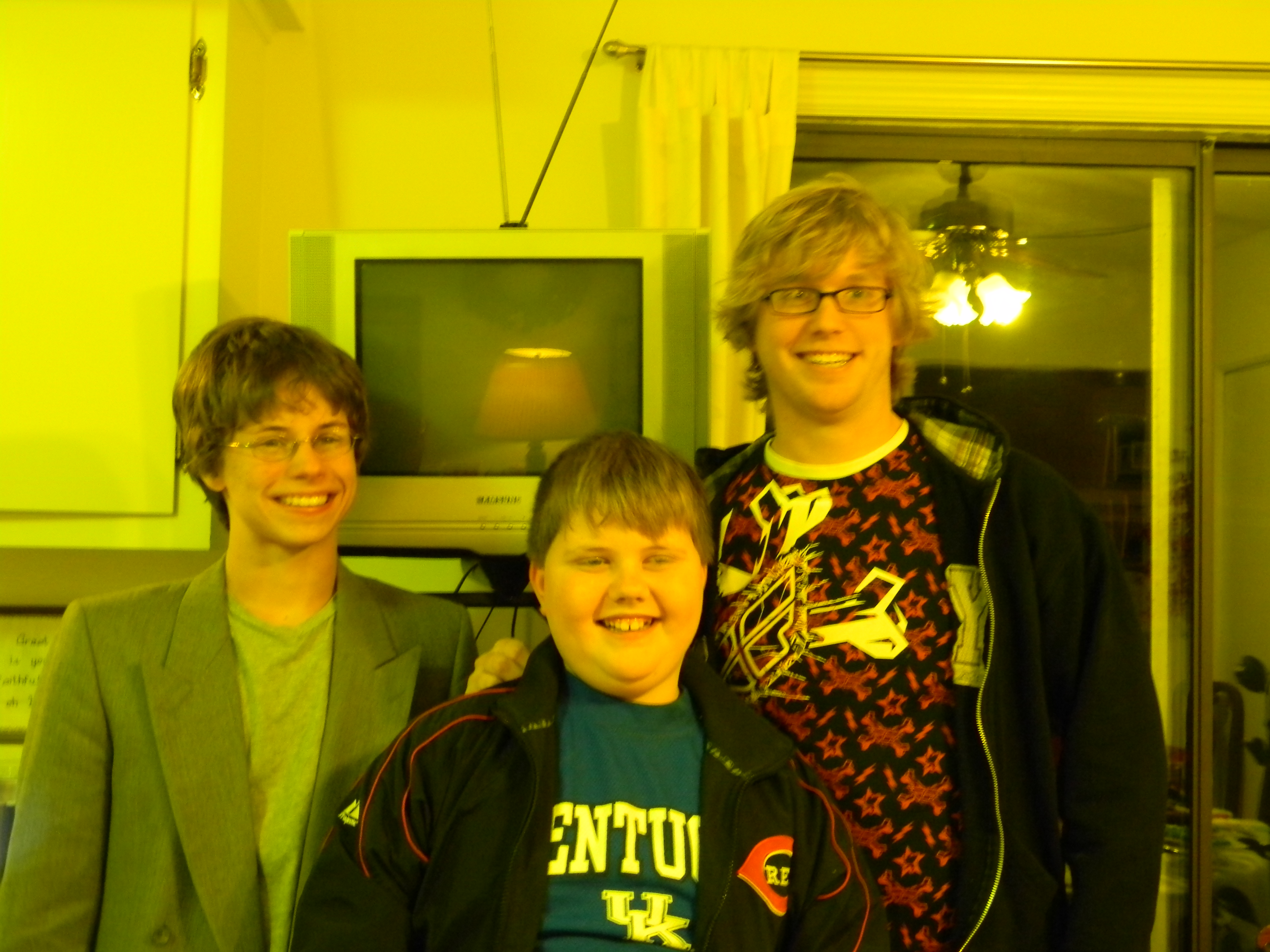
#4  Hanging out with handsome nephews 

Johnny, Sam and Drew

#3  Celebrating with sisters

Lynn, Susan and Kathy

#2  Seeing my brother’s stocking stuffed with coal a toilet seat–no joke!

Tyce holding holiday throne (still in the box)

#1  Having my Baby home from Haiti in time for the Holiday!

Sara on Christmas morning

Merry Christmas from my family to yours!  And don’t forget to pray for Haiti  this holiday!

Haiti’s Greatest Gift: notes on the nature of giving


It amazes me how often Haiti is a study in extremes, not only between the most obvious of oppositions: rich/poor, white/black, have’s/have-not’s—but also between the more subtle and insidious of extremes—the ones I notice once I’ve returned to the US and realized all over again just how much we as Americans have and just how much the people of Haiti don’t.

I understood this even more clearly yesterday when I thought about how well “we-with-the-leisure-to-read-blogs” have it, that one of our biggest anxieties during the Holiday Season is the worry over whether we’ve gotten Uncle Joe or Cousin Rita just the right gift—from perfect stocking stuffer to the most ideal of electronics—iPhone, iPad, iPod.  It’s i-ronic just how much “I” is in our gift-giving, how many “me’s.”

I realized that the leisure and disposable income gift-giving presumes suggest profound things about these two countries I now call home.  Namely, if we have the time and energy, not to mention the funds, to spend on gifts, then we obviously aren’t worrying about keeping our children safe from cholera, aren’t worrying where our next meal might come from, aren’t worrying how we’ll keep our babies dry during the rain at night, the torrential downpours that turn the floors of our tents into pools of liquid, dripping mud.

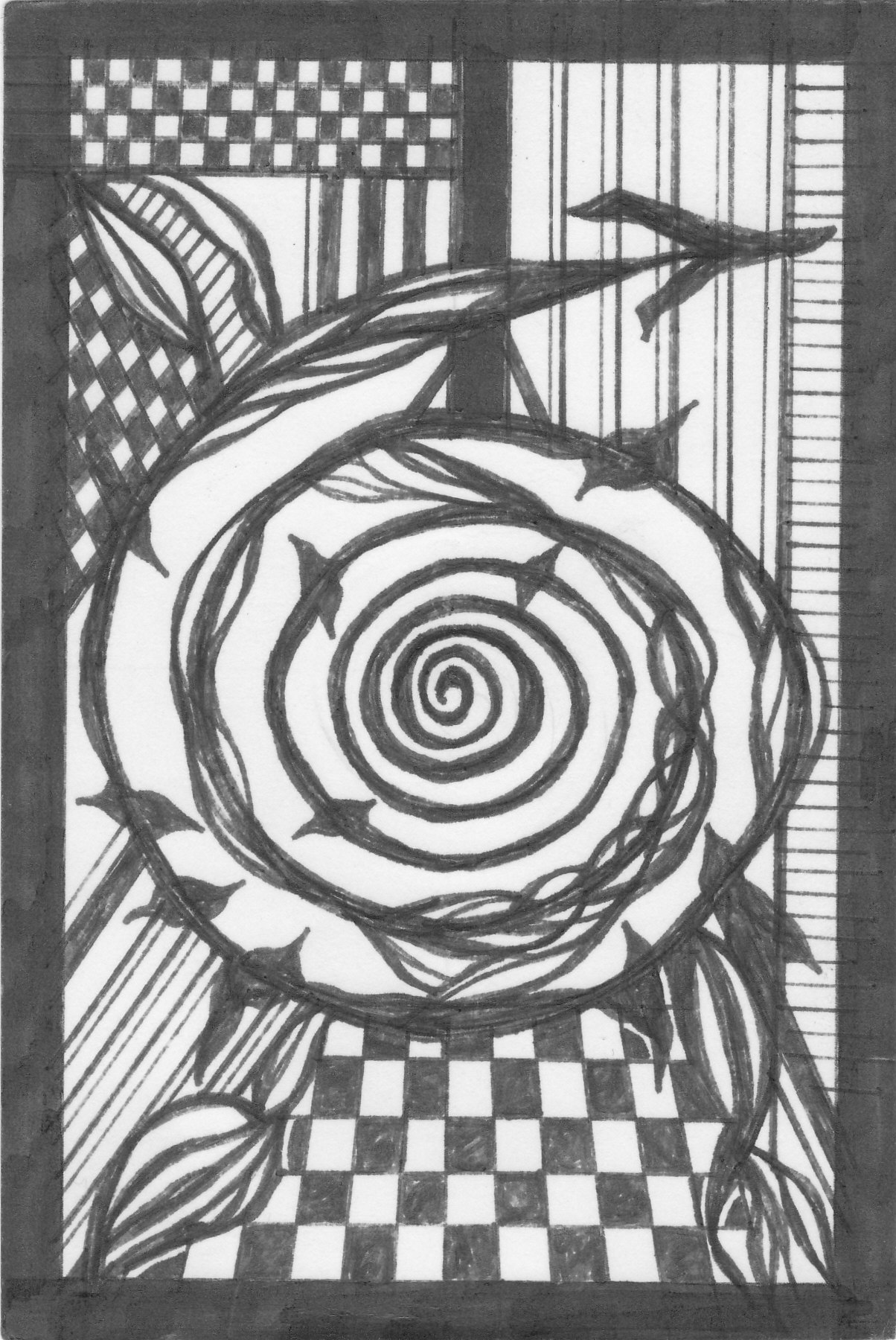
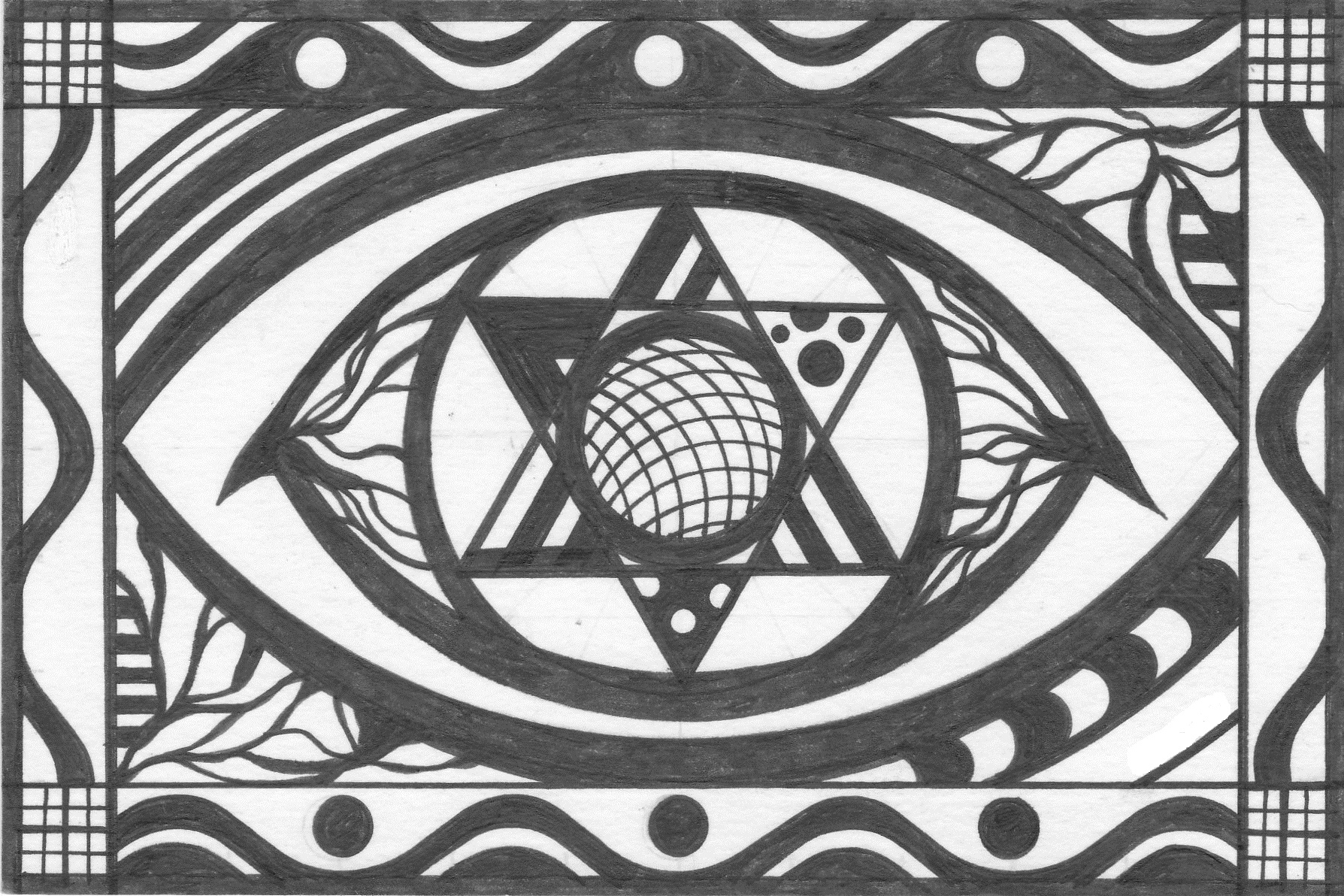
However, sometimes I think that my graphic, black and white drawings, even my poems, express something about the extremes of Haiti that these well-chosen words of explanation fail to communicate.  So in closing, I offer some recent, some not-so-recent drawings that try to articulate in ways these words do not—the kinds of graphic contrasts that keep me awake at night—not only in Haiti—but in other places, as well.  Below the images are used to punctuate a poem I wrote some years ago, one written in the voice of someone displaced, alienated, alone—someone struggling to climb up out of endlessly hopeless circumstances, someone not unlike the poorest of the poor in Haiti.

On Rattlesnake Mountain

At dusk we lock

                the iron gate 

                                                collecting bones

                bleached in tufts of matted grass

                scaffolding the bluff

I insist on picking them

                a carcassed bouquet

                                                of cow bone

                picketting our path

                back up the crooked slope

Eye sockets shape

                a separate ascent

                                                dead leaves

                thicken the air

                like smoke

The moths are tongueless

                it’s simple to blame

                                                the mothers

                their beaks vacant as stairs

                I climb a thicket ofdry sticks

(For a more light-hearted and truly hysterical look at the holiday, I suggest you read today’s post on “The Ramblings.”  Tori’s comment  helped me gain some of the insights I share here.)

Happy Holidays from Haiti: a Christmas letter


Dear Friends and Family,

Sara and I, along with our dogs Ralph and Lucy, would like to wish you a Merry Christmas and Happy Holidays both from our home-away-from-home in Port-au-Prince, Haiti and from our home in Lexington where Sara will join me on Christmas Eve. 

2010 has been a challenging year for us, as we have tried to settle in yet another international location, tried to create a home for ourselves away from the family and friends we hold so dear and miss so often.

Though last year we didn’t make it home for the holidays, Sara and I spent Christmas itself on a stunningly secluded beach in central Vietnam, playing in the sun and sea, eating food so delicious we salivate now even thinking about it. 

However, just two weeks after that lovely holiday in paradise, the January 12th earthquake in Haiti brought our life in Hanoi to a premature end.  By the first week of February Sara was on the ground in Port-au-Prince, having had a mere 18 hours at our home in Lexington to transition.   Since that time she has still not had more than 5 consecutive days in Kentucky, not more than a week in close to 2 years.  And though, of course, Sara loves her work and is passionate about providing homes for those displaced by the earthquake, she’s saddened that time away from her own home distances her from those she loves, forcing her to think about  from far away.

I, on the other hand, was fortunate to spend most of February, March, and April in Lexington, with only 1 week during March in Port-au-Prince and 2 weeks during May in the slums of New Delhi with 12 University of Kentucky students (completing in a service-learning project with Habitat for Humanity India).  It was not until June that I, along with our two dogs Ralph and Lucy, transitioned to Haiti more “full time” or at least as close to full time as risk management allow.  Security challenges abound in Port-au-Prince, where there is at least one kidnapping a day and we have two armed guards at our house around the clock.

However, we DO have a lovely, mountain-side home in the Port-au-Prince suburb of Petion-Ville—a home Sara’s left for only brief visits to the US and one longer trip to the Pacific Northwest, where we enjoyed 2 days in Seattle and a week with 12 other friends on Whidbey Island—a fabulous time of fun, feasting, and fellowship with a group of women we dearly love.

And though we feel fairly well-settled in Port-au-Prince by now, settled enough to have hosted a sit-down Thanksgiving dinner for 24, Haiti itself is far from peaceful this Holiday Season.  Not only did the earthquake last January kill close to a quarter of a million, but it has left, still 11 months later, more than 1.3 million people homeless in the city of Port-au-Prince alone.  Not only did the Haitian people suffer destruction again in the wake of Hurricane Tomas, but they are continuing to fight a cholera epidemic that has killed and sickened thousands more.  Not only did they face fraudulent presidential elections last month—they have dealt with the resulting social unrest, especially in the form of rioting by people who have suffered unimaginable losses in the last year, people who feel disenfranchised not only by the international community, but also by their own political leaders who would steal their right to a free and fair election.  It’s sad for us to see so much loss and suffering in such close proximity to our own lives of comfort, surplus, and blessing.

Despite all of this, however, the Haitian people are strong.  They are resilient.  They persevere.  Sara and I are proud to call the beautiful people of this tiny island our neighbors, our friends, our family, and we would ask you to not only pray for us this Christmas, but more importantly to keep our new Haitian brothers and sisters in your hearts and prayers, as well.

As the mountains that circle Port-au-Prince brighten on Christmas morning, the Haitian people will be left with little to do but pray—

But we ask that you too pray for peace in Port-au-Prince streets—for peace in those mountains beyond—those mountains beyond mountains—

Please pray those hills would be alive with the sound of peaceful music–

A peace that passes understanding–

May God bring peace to you and your family this Holiday Season!

May God bring peace to Haiti!

With blessings from Port-au-Prince,

Sara and Kathy

A Holiday Match Made in Doggy Heaven


With Christmas only a few days away, I thought it might be a fitting time to reminisce romantically about how Sara and I met—not only because this is a part of our history I don’t think I’ve shared even in the Vietnam part of this blog—but also because I’m missing Sara, who has not yet returned from Haiti for the holiday, and writing about our shared past helps her feel closer—or at least helps Port-au-Prince feel a little less far away.

Sara and Kathy, October 2006

(If you’ve only just begun reading “reinventing the event horizon”—Sara is my partner.  We live together in Haiti, where Sara works in disaster response and I’m a writer/artist.  We also own a home in Kentucky—a house that’s more than 100 years old in downtown Lexington.  I have come back to the US a week ahead of Sara, who won’t arrive here herself until Christmas Eve.)

In 2006, however, Sara was still directing her NGO’s response to the 2004 tsunami that killed hundreds of thousands in Southeast Asia, while I was working in Lexington as an artist-in-residence, facilitating creative learning opportunities for disabled adults.  These employment realities brought us together, my needing to supplement my measly artist’s income by pet sitting and Sara’s needing to travel internationally while at the same time caring for her dog. 

One afternoon that summer my writer friend Kristy called to say her new neighbor Sara was looking for a dog-sittter and wondering if I could take on another client—something I was willing to do, since I was preparing to purchase my first home— was a starving, soon-to-be-home-owning-artist fighting for every dollar she could get.

So when Sara called several days later and we met a few days after that, I eagerly agreed to care for Ralph.  And ours was ultimately a match made, for all intents and purposes, in doggy heaven.

Sara, Kathy, and Ralph in October 2006

However, I didn’t fall for Sara immediately.  Though I found her voice intriguing, the first time I heard it on my voice mail, and though I recognized when she brought Ralph to me the morning she returned to Asia, how terribly attractive she actually was, I wasn’t looking for a relationship at the time and simply filed these sensual details away for later romantic retrieval.

Retrieval that came by way of a dream.

When Sara returned from Asia a month later, I was already in love with her dog, so much so that it pained me to give him up for the few weeks she would be home—that is, until a week or so later I dreamed I was in love with Sara and woke up the next morning with a passion for her that has yet to wane.

The realization was as profound as it was simple—that I not only loved this woman but also that I would spend the rest of my life with her.  Period.  End of Story.

Kathy and Sara in Thailand, March 2007

Sometimes things are meant to be, and though I’ll save the particulars of our romantic story to share in future posts, I will pass along now one surprising and seemingly important detail neither of us was aware of when we first met.

That our mothers had been dear friends for a number of years before either of us knew anything about  the other—had been friends until Sara’s mother died more than 10 years ago.  Both were elementary school teachers at Lexington Christian Academy.  My mother taught third grade; Sara’s mother taught fourth in a classroom across the hall.

In fact, I remember Sara’s mother being ill and my mother’s grief surrounding her eventual death.  My mother even spoke at Sara’s mother’s memorial service.  During the years our mothers were friends, Sara and I were adult women living outside the state, so we never met in the context of that friendship.

However, sometimes lives are linked in profound ways.  Sometimes lives are linked and love is forged against all odds, even with matches made in doggy heaven.  Sometimes there’s a cosmic rightness about a relationship in which lovers are not only star-crossed but mother-blessed, something precious to remember, especially during this sacred time of year.

Silent night.

Holy night.

All is calm.

All is bright.

May the brightness Sara and I share be yours, as well, this Holiday Season.

Kathy and Sara in Vietnam, Christmas 2009

The long journey: Haiti to “home”


Well, it feels that way! 

But, gosh, I’m grateful that Lucy, my dog, and I are in Miami, still in the cozy hotel room where we spent the night.  We leave a bit later this morning to travel to Kentucky by way of Chicago.  It is an enormous relief to be this much closer to “home”–in this case the place where my family still lives.  I miss them!

In the meantime–a few more photos of Haiti, my other home.  Hope you enjoy!

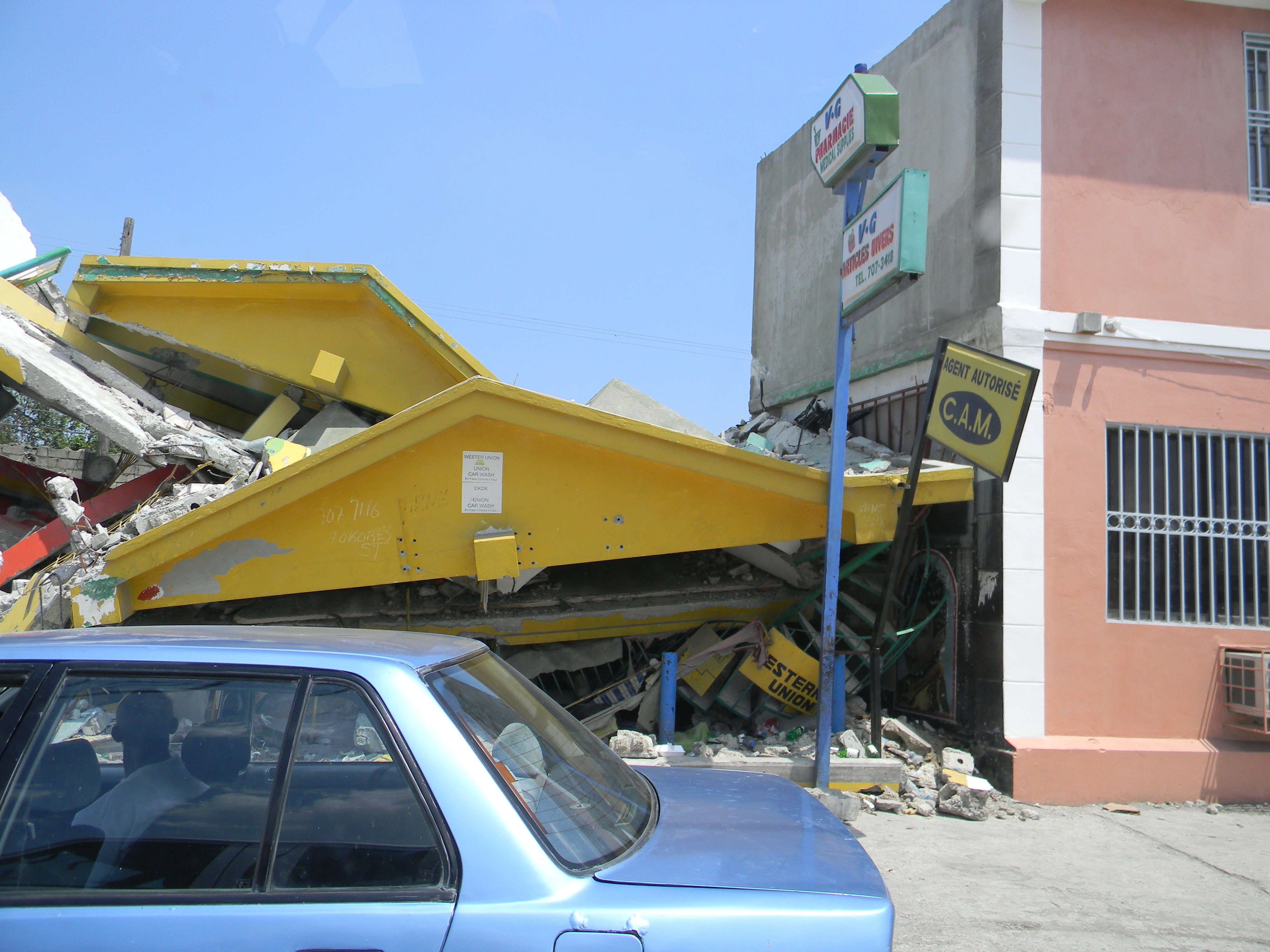
"Pancaked" buildings are still a common sight in Port-au-Prince.

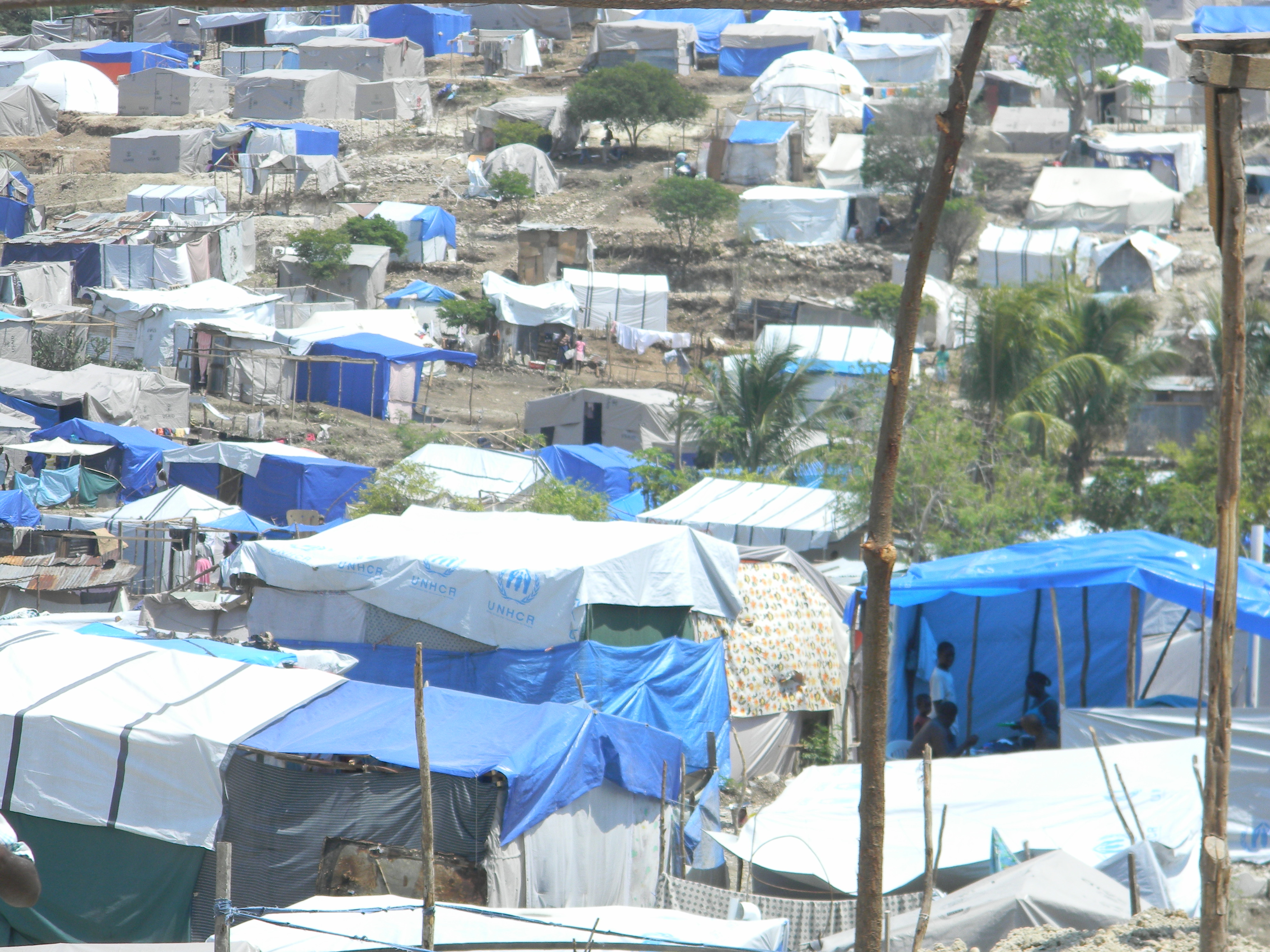
Camps of "internally displaced persons" are equally common. 1.3 million people are still homeless in Port-au-Prince.

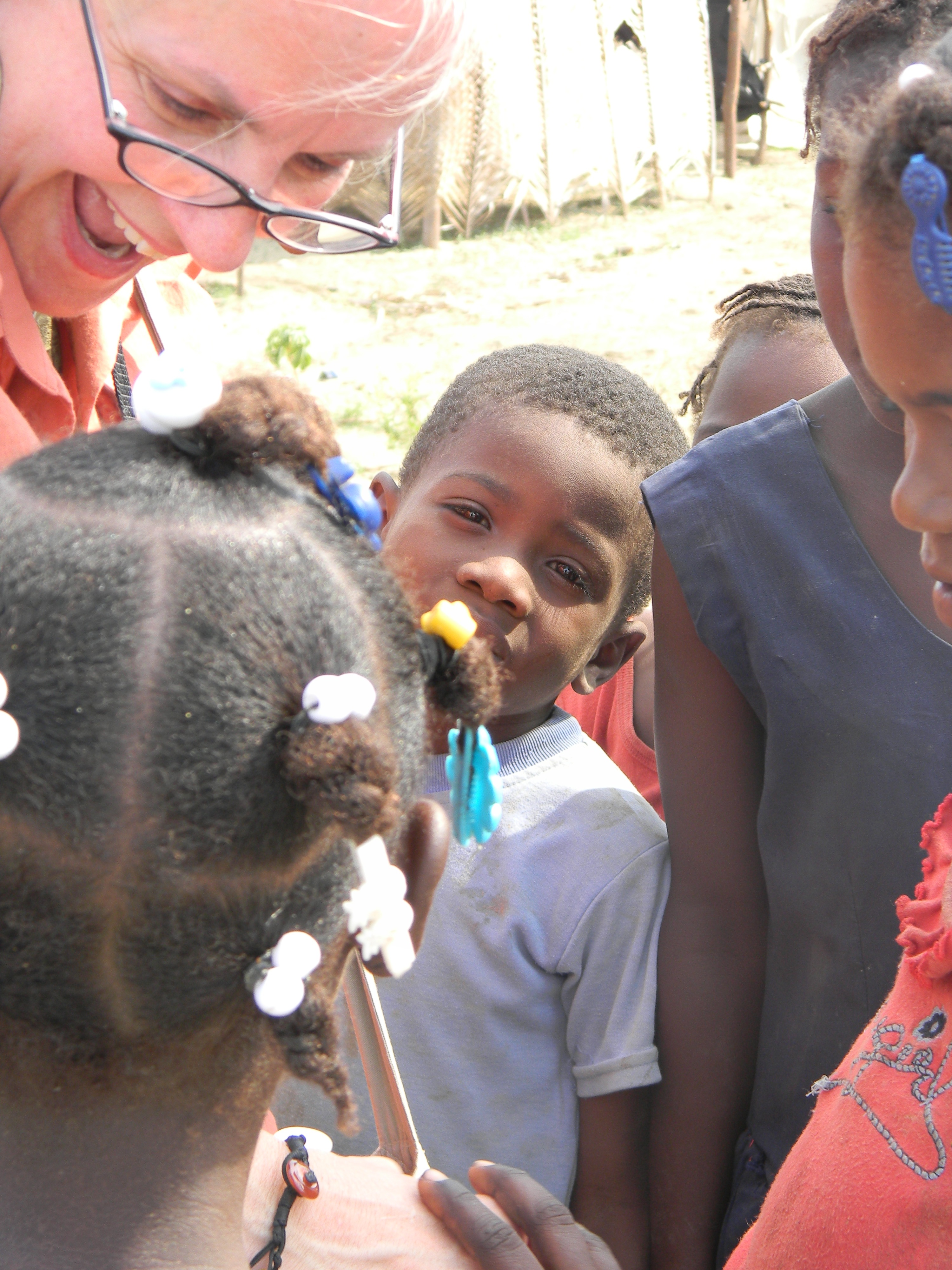
Kathy with children in Cabaret, so excited by images of themselves displayed on the back of the digital camera, they knocked me to the ground at one point in the midst of their enthusiasm.

The view of Port-au-Prince from my other home in Haiti.

Hopefully, Sara will join me soon—home for the Holidays!

Haiti’s Feast or Famine: the good, the bad, and an etiquette of greed


I got out of the house Saturday, in fact made it all the way to the grocery store, where I saw people—an assortment of real, honest-to-goodness, up-right-walking, human beings.  They were people on a mission—a singular mission, I might add—the search for sustenance.  Members of this group—more hunter than gatherer—were out for the kill—the thrill of stalking and slaying.  They were ruthless.

Blood was shed.

But, before I proceed with these graphic details of gut and gore, let me remind you how I got myself into this mess, in the first place.  To make a long story short, I came to Haiti with my partner Sara, who directs earthquake recovery efforts for a major, international, NGO.  I am an artist/writer/former-academic.  Since our arrival in Port-au-Prince, our two dogs in tow, we have survived a number of dangers that have included Hurricane Tomas, a cholera epidemic, and the ongoing threat of kid-napping.  In the past week things have worsened considerably, however, as in the aftermath of fraudulent presidential elections the country, Port-au-Prince especially, has been paralyzed by protesters rioting in the streets against a myriad of misdeeds on the part of the ruling political party, crimes that included blatant stuffing of ballot boxes and intimidation of voters at the polls.  It is this rioting that kept us house-bound for much of last week—housebound as all around us the city descended into chaos—buildings burned, people killed.   And it is this confinement that made us more than just a little merry to be out this weekend—even as far as the supermarket on Saturday—

—Where, indeed, blood was shed—

—Almost—

Okay, there may not have been literal blood in the aisles—but it was bloody in every metaphoric sense imaginable.  It was desperate.  It was deadly.  There should have been medical intervention, at the very least.

These human beings were hungry, as only housebound-for-days-with-pantries-depleted aid workers can be—a singularly ravenous group—I now know.

So here’s how it all went down:

Sara and I, wisely arrive at the super market early. Giant, as it’s called, opens at 8.  But we arrive around 7:50 with a strategy mapped out—divide and conquer.  By this time a small group has already gathered.  By 8 our number has grown.  By 8:10 we’re a small crowd.  By 8:15 we’re a ravenous herd thronging the gates of super market heaven, as Giant’s own Peter, raises the barrier.

This, I would argue, is what happens to humans accustomed to the food surplus that is America, Canada, Denmark, Kuwait—suddenly threatened—where anything short of feast is experienced as famine. Ironically, many of these aid workers feed the hungry by day, have degrees in food security, advanced degrees in hunger studies These food-spoiled-food-specialists have been housebound for days and know now that more isolation is inevitable, maybe even imminent.  These are the real survivalist, the professionally-programmed to gather, to stock pile, to horde.

Unfortunately, I participate in this parody.

Willingly—

Isles clog with carts— the meat department is particularly intense—shoppers grabbing chickens to roast, t-bones to grill, pork chops to fry.  These are carnivores galore, consuming the store.

I am no different—but I crave the carbs, have been on a diet for weeks.  And even during good times diets increase my cravings.  So when the few foods I’ve been eating for more than a month aren’t stocked by the store, I start to stress.  My anxiety soars—is still soaring two days later. 

On Saturday I do finally find a few favorite foods—pretzels, almonds, raisins, dates—the carbs I crave even on a diet.  This stockpile, however, doesn’t satisfy.  Sara and I still argue.  I know I’m over-reacting.

There’s too much uncertainty.  The airport has finally reopened, though American Airlines won’t resume flights before Wednesday—the very afternoon I’m scheduled to fly home for the holidays.  Almost daily for the past week American has promised to start flying again on a given day, only to announce the following morning the need to prolong their Port-au-Prince closure.  The only way I’ll get out with my dog Lucy on Wednesday, is if the airline does not delay again.

On top of this uncertainty, we’re not at all confident Sara will be able to leave Haiti on the 23rd—the date of her scheduled holiday departure.  The airports are expected to close again after the final results in the presidential election are announced on December 20th.  Many believe the country will slip into a chaos even more intense.

I know I should be mourning these facts on behalf of Haiti, when, actually, my grief is grounded in fear that neither Sara nor I will get home for the holiday, or even worse—that I will, but Sara won’t, and we’ll be apart on December 25th

It’s an ugly, selfish sadness. 

In fact, I am what I find most deplorable in citizens of rich countries.

Driven.

Greedy.

Vain.

I come from ugly America, a Mecca of meals with an etiquette of greed.   Am I an ugly American, ashamed but not changed?

Or maybe Alexander from Judith Viorst childrens’ book got it right after all.  Maybe it’s just

                “a terrible, horrible, no good, very bad day.”

A Holiday Prayer for Haiti


This morning Sara’s office is closed for a second day in a row, as announced results in the Haitian presidential election, have thrown much of the country into chaos.

Yesterday hundreds of protesters rioted past out house in the Port-au-Prince suburb of Petion-ville, and shots rang out across the city.  Throughout the day we could hear explosions and smell tires burning.  The toxic fumes of burnt rubber and tear gas left me with a near blinding headache and induced an allergic reaction in Sara, her eyes watering, face swollen from irritants in the air.

Given the seemingly insurmountable series of obstacles the country has faced since the January 12th earthquake leveled most of Port-au-Prince—hurricane Tomas, cholera, and now election fraud—I’m reminded of the Haitian proverb, “dye mon, gen mon,” which roughly translates into English as “beyond the mountains, more mountains.” 

Here the expression images topographically the never-ending struggle of the Haitian people, outlining a belief shared by many, that conquering one challenge only brings the next one into focus—a belief mapped in the furrowed brows of many who fight the good fight one day, only to see the sun rise the following morning on the summit of the next.

As the mountains that circle Port-au-Prince are brightening today, those of us holed up in our houses are left with little to do but pray—

Pray for peace on these angry streets—

And in the mountains—the mountains beyond mountains—

May the hills be alive with a sound of peaceful music–

A peace that passes understanding–

May God bring peace to Haiti this holiday season!

Surviving the Port-au-Prince Airport: a shining example!


Two days ago I promised and am here today to deliver a post about the Port-au-Prince airport—so here we go.

First a bit of background—

Just before my first trip to Haiti during the last week of March 2010, 8 months ago, Toussant Louverture International Airport had only recently begun operating in any remotely routine way since the January 12th earthquake.  Before March the only real way to get to Port-au-Prince from outside the country, if you weren’t a plane carrying emergency relief supplies, was to fly into the Dominican Republic and  endure an 8 hour drive across the island of Hispaniola to the Haitian capital—a route Sara took a few too many times.

So—in March when my plane landed in Port-au-Prince, things were, shall we say—chaotic.  Though a band played Caribbean steel drums for the passengers deplaning, what I discovered inside the warehouse-like building that was then, and is still, being used for immigration and baggage claim was more akin to an episode of Survivor than anything remotely resembling an airport in any nation’s capital in the entire Western Hemisphere. 

The passing glance immigration “officials” gave my passport and travel documents, moving me on with a stamp and a wave, though disconcerting, was nothing compared to the pandemonium I discovered beyond immigration—utter and complete pandemonium in a cavernous space mountained with luggage we were meant to ultimately “claim,” without any apparent procedure, without any remotely organized way for passengers to examine and sort out which suitcases belonged to them.

This masqueraded as “Baggage Claim.”

However—there was what initially seemed one saving grace—namely an assortment of limp-along luggage carts—costing a mere arm or leg—though they may have settled for a finger or toe had we gotten down to the anatomical nitty-gritty.  Initially this seemed a hopeful development—hopeful until I realized there was no way—literally no way in hell—one could wheel a luggage cart anywhere in that room so strewn with bags it looked like the contents of a small Samsonite store room had been turned upside down and emptied on the spot.

Then it hit me—the only conceivable escape—meant asking for help.  I considered tears but decided in the interest of minimizing the look of vulnerability that is the American way in the face of Haiti’s seeming systemlessness—a more proactive assault of an airport employee was in order.  I didn’t care what it cost, I was willing to pay any and all “special fees” in the ultimate interest of baggage possession.

And thanks to one heroic airport employee, I ended up not having to assault after all—I got my bags.  For apparently, underneath the mountains of seeming disorder, there existed a system, invisible to me, but some protocol for baggage retrieval that worked for my new Haitian friend.  Because, I promise, in not more than 5 Port-au-Prince minutes he returned with my VERY over-weight bags— 88 and 89 pounds respectively.  The suitcases were full of household items, including an entire set of butcher knives—since Sara, when purchasing her first kitchen tool in Port-au-Prince (a manual can opener that would have cost less than 2 dollars in the US) had paid a grand total of 22 dollars and 66 cents!   Inevitably fearing that the most basic of kitchen utensils were going to cost at least a month’s salary, if not a small life-savings, I hauled nearly half the inventory of William Sonoma in with me.

Ultimately, I exited the airport that day into a desperate crowd of newly-homeless Haitians, needing nearly everything, from dinner to a warm bed and a roof over their heads. But I found Sara—I survived!

Survived, only to return to the scene of the crime a week later—the first of anyone remotely associated with Sara’s NGO to leave the country through the newly-opened airport. 

Since no one knew what to expect, I arrived an optimistic 2 ½ hours before departure—seemingly plenty of time.  Until 2 ½ hours later, I still hadn’t made it into the terminal itself, crowds of needy people were thronging the facility so intensely.

I called Sara a number of times from outside the airport that morning, convinced I would miss my flight.  She assumed I was over-reacting—until— I called after finally making it inside—terrified.

“Listen, this is not a workable way to leave the country—someone needs to come get me—I’ll get out of the country some other day, some other way—any other way.  I swear, Baby, this is not an option.”

“But what line are you in?”

“Line!”  I screeched.  “You assume there’s anything remotely resembling a ‘LINE!’  This is more swarm than line, more stampede than queue!”

Quickly gathering her wits, recognizing my psychotic break was imminent, Sara, disaster response specialist that she is, yelled at me over the cacophony and clamor, “Listen!  Remember!  You always do best when things are really, really bad.  You do bad really well!”

“Yeah.  Okay.  You’re right.  I’ll call you when I get to the gate.” Click.

And though it may have been foolish to assume I would EVER get to ANYTHING remotely resembling a “gate”—I knew—I knew in that moment that I would be fine—that I would survive.

I knew in that moment that I could do Haiti.

I knew—

Yeah—I DO do bad really well!

And though Haiti IS really bad—it’s getting better.

Though it’s still the poorest nation in the Western Hemisphere, the airport in Port-au-Prince has improved since March. 

Though it’s still chaotic and dangerous because of that chaos, though “baggage claim” still doesn’t resemble that of Miami or Houston, we now know it helps enormously to have Samuel’s escort through the chaos (see post from several days ago).

Though, since March, Haiti has suffered a hurricane, cholera, and a fraudulent presidential election, the Haitian people carry on.

They are resilient.

They shine—

Tiny lights twinkling from the darkest corner of the Caribbean!

So remember, like the Haitian people, to shine this Christmas—shine!

Mud-Wrestling with God: Holiday Thoughts from Haiti


I know I should be bringing you important updates about current events in Haiti—about the cholera epidemic that’s killing folks by the thousands and about the obvious fraud in Sunday’s presidential elections.  But I need a bit of a break from such serious matters today.  So it’s in this spirit of departure from the muck and mire of disease and politics, that I bring you a story about my recent up-close and personal encounter with, well, muck and mire.

(Now, I must confess that the idea for this post—the reminder that meditating on mud can make for marvelous writing, came yesterday from a blog I’m newly in love with called “Sunshine in London.”  I discovered this blog from another site I REALLY like called “Notes from Africa,” and I’m learning lots about being grateful, thankful for even these muddiest of matters, from a series of posts at “Grandeur Vision.”  These three blogs are all well worth reading!)

At any rate, I realized yesterday I had not shared my own adventure with what we might call, for lack of a better term, “mud-wrestling.”

This encounter with the muck and mire that can be Haiti toward the end of the rainy season happened several weeks ago—just days before Hurricane Tomas actually brought that season to an official, if no less muddy, end.  I was returning from a two week trip to the US for an honest-to-goodness American vacation.  Sara and I don’t get many of them.  Though we travel a lot, traveling for pleasure is not usually part of the package.

So I was returning to Haiti feeling somewhat rested—ready to get down and dirty, though not exactly knee deep, in the challenges ahead.

Or so I thought—

I should have known it didn’t bode well when our security folks didn’t meet my plane and I had to make it through the Port-au-Prince airport without the special assistance Samuel provides.

But, I wasn’t terribly worried.  I survived the fight for my baggage.  I fought the good fight, the get-out-of-my-way-or-I-may-have-to-kill-you challenge that is getting one’s bags and getting away with one’s life.

I had not only gotten my bags, I had survived my driver surviving the traffic, gotten my groceries, gotten my dog, gotten inside my gate, gotten beyond my front door and down a few steps—

Before falling flat on my ass in a river of mud.

Not just a little mud, I might add—much mud, deep mud, muddy mud.

Muddy facts:

1.  My neighbor on the mountain above had been digging a new drive.

2.  It had rained a lot on that newly dug drive.

3.  The newly dug drive in its now liquid form had flooded my floor with a good inch of mud.

4.  I was not entirely pleased with his development.

Until I thought of something Sara says when it rains here in Haiti—something she thinks about when it seems the torrents of wet will never stop falling—especially at night when damp dark soaks the soul of a person—

Especially a mother, holding her baby, in a make shift tent—barely a tarp over a mud slick floor—

I thought of that mother.

that baby.

that floor.

I thanked God for my mud.

I thanked God for my floor.

What are you thankful for this holiday season?