Dancing the Event Horizon


Blogging a memoir is almost, for sure, slow suicide.  And I swear to God— if it’s not the death of me, it will, at the very least, make me old, make me crazy crazier, make me something I don’t want to be.

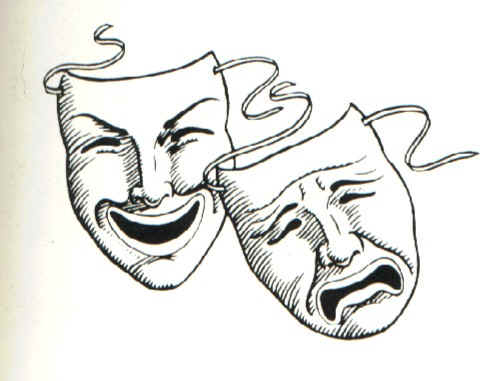
graphic by Patrick Spence at http://www.stopthesanity.com

It’s gonna drive me to the brink, beyond that delicate barrier between “then” and “now”—which I guess it’s meant to do—has to do.

But I’ve decided I don’t like to go there—go “then”—peer into the muck and mire of my sometimes depressed, sometimes manic past.

Do these memoirs really help people in the present, anyway?  Do readers really benefit?  Is it really worth the effort?

My partner Sara and I have been discussing these issues over the past several days—discussing my potential book about recovery from bipolar disorder—and this blog, in which I’m testing the waters—tip-toe-ing around the edges of the story, trying not to get my feet wet—

Or so Sara insists.

She says that I’m not trying hard enough—not doing the dirty work of delving deeper than the surface—not forcing myself to swim in darker waters.

And I suppose she’s right. I’m practicing the fine art of avoidance, and this post is a prime example of that maneuver.

So forgive me, folks—

I’m guilty as charged.

I don’t want to deal with the drama that was my past.  I want a story to tell that is less personal, less intimately exhausting—maybe another international assignment for Sara—maybe a story about our efforts to settle again in another crazy place on an equally insane planet—a place different from the madness that was then, from the boredom that is here—that is now.

However, my partner does disaster response—so it’s always tricky wanting work for her—dilly dallying around the edge of dire and all that.  But dire is dramatic.  And sometimes I fear drama feeds my dysfunctional self—as long as it’s not my personal drama—memoir-related—bipolar-driven drama.
However, craving adventure for adventure’s sake is a god-awful motivation—especially when one knows that drama might mean disaster-related misery for someone else.

But maybe it’s not adventure I crave as much as a simple break from memoir—maybe I don’t so much desire drama, as I desire less personal drama.

Whichever it is, I’m far from loving this aspect of myself.

Whether I’m too lazy to do the difficult work of memoir, too weak to relive a painful past, or too in love with the drama-driven life to simply settle for the here and now—none of it is good.  None paints a pretty picture of who I happen to be.

So what I’m wondering is this—

What dysfunction do you like least about yourself?

What behavioral event horizon do you dare dance around or near?

Writing Round the Vertigo


At the beginning of Mental Health Awareness Month, I posted a piece called “Leaving the Seclusion Room  (some not-so-crazy notes on recoverying from mental illness)” about my stay at an Oklahoma psychiatric facility.  In that post I wrote about the voices I heard—an echo of children’s chatter—a description that prompted a question from my friend Sarah, who asked if I had ever explored those voices poetically—exploited their poetic potential, so to speak.

It turns out, I had.

Sort of.

The poem I’ll share below is written in several voices that interrupt one another—echoing—overlapping—dizzying.  Though there’s only one child’s voice in the mix of layered sing-song, this poem reminds me of the voices I still sometimes hear during times of vertigo-inducing stress–a surreal “reality” that looks a bit like this:

(photo by John Drysdale, " High Living Crocodile," 1976)

So–I hope you’ll wind these stairs with me–

And take a listen—


Vertigo


My head is killing

     me and he is talking

     about the etiquette

          of date rape


     cassette in the player

     cassette in the player


          indigo

          girls

          indigo


Where have you been?


The staircase is winding

     off the edges of the lawn

     and I am here

                                  lavender


     lilies of the valley

     lilies

               of

                     the

                             valley


I’ve told you not to

     go there


     you

     you


There you

                     daughter in the photograph

                     age three in front

                     of an antique typewriter

Kathy--already a writer--age 3

Why can’t you be more like . . .


    lilies of the valley

     lilies

              of

                    the

                            valley


The world according to cats

     is not a crazy sphere

     of influence

                                 spinning

                                 spinning


          in my


     cassette in the player

     cassette in the player


          head


“Brainwashed” for Sanity’s Sake? (Sheltering Crazy in America)


As, I suggested yesterday, mental illness for me meant an ever-evolving sense of place.  It meant, more specifically, my middle class experience of home quickly degenerated, as I found myself in the most secure and restricted units of state-run psychiatric facilities. 

And what was most strange about this already bizarre devolving was the feeling that I belonged there—that I was safe.  I not only felt secure, I felt contained nowhere else, believed I belonged in those narrowed limits of opportunity and options. 

Tell me where to go; tell me when to eat.  I was fine with all of that.  Just don’t make me face a time-is-money world where feelings mattered less than what one earned and the kind of car one drove.  This all drove me to the brink and back, and I wanted to be nowhere near the edge where “me” met world, where folks felt fine that I was on the edge of nowhere and falling off.

At Parkside Hospital in Oklahoma, I wrote about feeling okay with my incarceration, recording on March 19, 1990:

. . . I worry a lot about the outside.  This place feels so safe and secure—except for the fact that my animals are not here.  They’re really the only thing I miss . . . .

I remember that the hospital, ironically, allowed me a feel a glimmer of hope—less like a complete failure, since I didn’t have to face the fact that I couldn’t function—that I couldn’t complete the tasks of daily living.  In the outside world I faced my inadequacies on every front.  Since even brushing my teeth felt like an over-whelming task, I couldn’t manage to do much else, let alone cook or clean.  In the hospital, however, I only had to brush my teeth—nothing else was expected of me.  So I was free to feel success even on these very limited terms.  Once I’d showered or combed my hair, I didn’t then have to face fixing myself something to eat, seeing that the dishes were done, the floor was swept. 

In the hospital’s shelter I could actually luxuriate in having accomplished a shower and change of clothes, since sanity was a huge enough task in and of itself.  I lived moment by less-than-sane moment, reaching for some semblance of sanity—some semblance of safe, if only in the ritual of bathing.  The hospital was where I managed to literally bathe, so that my thinking, as well, could be baptized in the basics of sanity.  Here shelter meant washing (brainwashing even), a sacrament of clean.

 (to be continued)

Note:  We just found out that our 20 foot container from Haiti should be delivered to our home in Lexington on Thursday or Friday.  This could impact my ability to post later in the week, as we will have 66 boxes to unpack in an already full house.

Also, I forgot to mention yesterday that my post “Leaving the Seclusion Room” was published as an op-ed in this past Sunday’s Lexington Herald Leader.  Editors at the paper changed my title and a few sentences here and there, but if you’d like to take a look, click here.