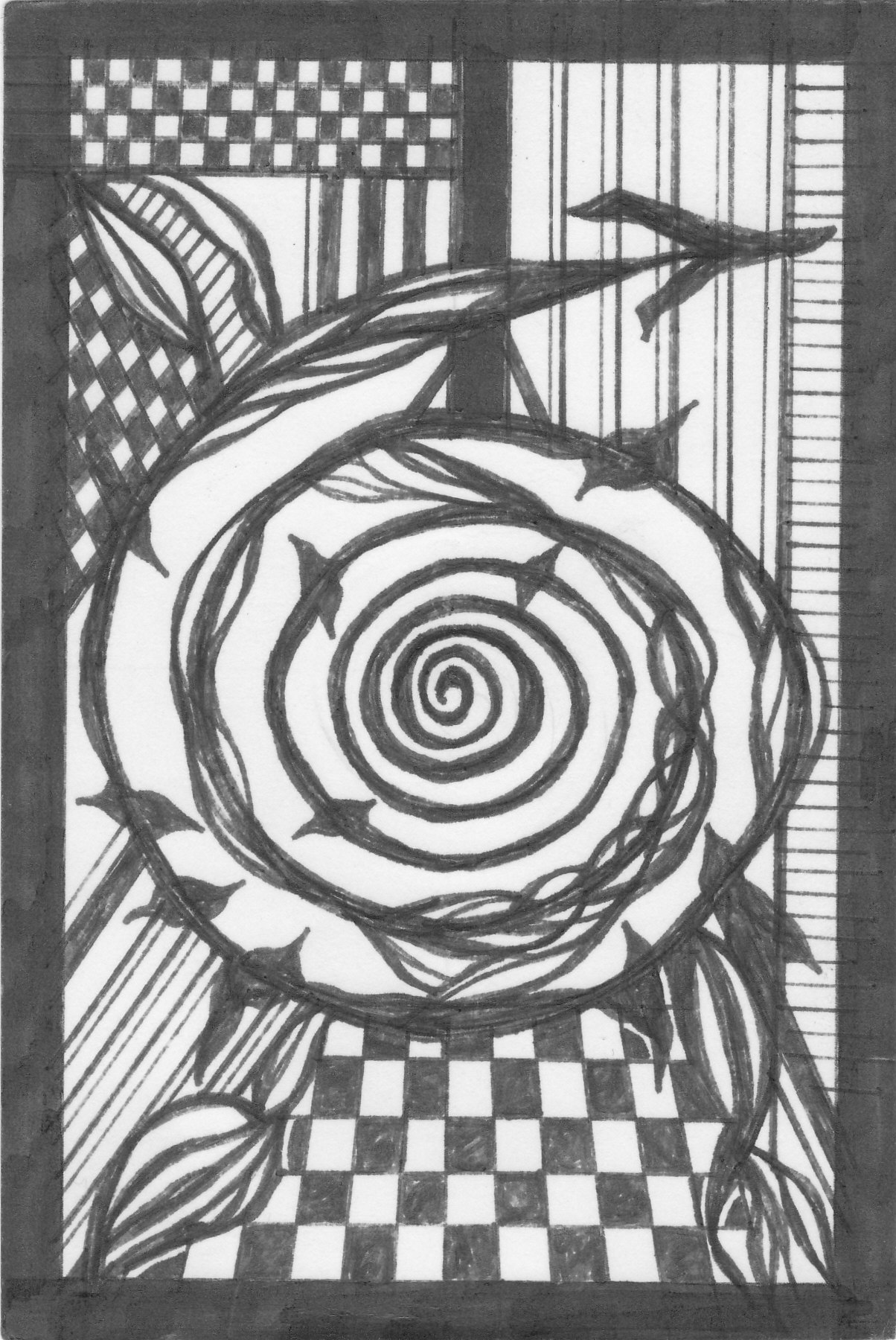
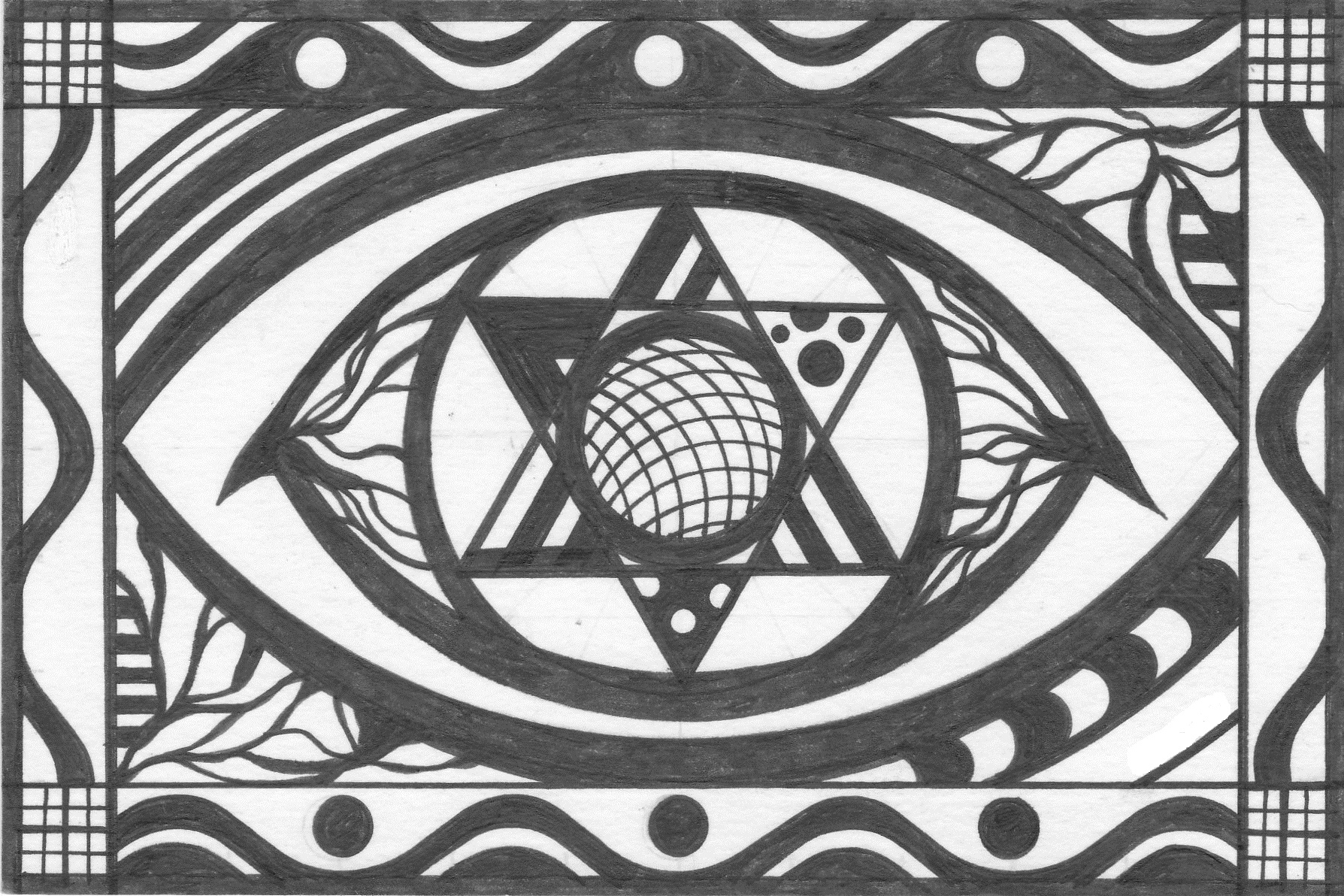
This is what my head says . . .


 Today I thought I’d share a poem I wrote when my bipolar symptoms were in evidence–one that, I think, illustrates the chatter that, even now, I push aside but hear vaguely in the background–a whisper that back-drops and wall papers my expereince of almost everything–every bowl of cereal I eat, every peice of paper I pick up,  every book,  every door I close or open or slam shut, hoping to silence the sing-song.

This is what my head says . . .

The back of the truck
     is let down and I am
     in the street again
                lines down
          the center of the roadway
                yellow voices
 
The color of a dress I had
     age three
                yellow roses on the bodice
                yellow roses on the table
          where the place is set
                for us to eat zucchini
                and avocado and other vegetables
          with green skin that must be peeled
                away before consuming
 
Before comes earlier than after
               as does the obvious
              preacher talk
     of Jesus saving other people
                from their sin
 
Sin is always in the third person


on leaving Haiti: an elegy


on leaving Haiti:  an elegy

this is a country we come to
          only in grieving
 
            only in leaving
 
            cheek of child
                left open
               to the rain
 
           Port-au-Prince
           a city of edges
 
all middle America thinking
     all forms of ceremony
        and white cheese
                 gone
 
        with the dying
               lilacs


(un)Sunday’s (un)poem post


The poem below is about an (un) family–one that appears to be something that it’s not–a family where things seem to be order–but are, in fact, far, far from ordinary.  It’s about family dysfuntion on a massively deceptive scale. 

We wear nice clothes.  We drive nice cars.  We go to church, to school.

But–we are, in fact, none of those things. 

We are the inversion of family.

(un)poem

everything begins and ends
     with appetite
                                the edge
 
of the photograph
     where the girl’s
     arm ends
                                and the tablecloth
 
begins again its
     grammar of red
                and white
                                diagramming
 
father / mother
     sister
     sister
                                plates
 
in their places
     knives to the right
     spoons
     roast chicken
                                relics of
 
10,000 family dinners
                                that swim
 
     white cat
     cadmium yellow
 
to the windowsill
     on the east side
               of the house
                                where we
 
have set blue mason jars
     absorbing particles
                of spring
                                the early
     face of april growing
                in the yard
 
seeming untime
                unspace
 
work room
wood floor
 
tangle of limbs
     jungled
     wet
 
always never
     arriving


In the Shelter of One Another (Part 1)


“It is in the shelter of each other that the people live.”
— Irish proverb


If we don’t shelter one another, we are lost.  If we don’t shelter one another none of us has a home; none of us has heart, has peace, has rest.  If we don’t shelter one another, we are alone, alienated, adrift.

Believing this to be true, struggling to understand community and what it meant to care for one another, I wrote the prose poem below some years ago, wrote it in the voice of a woman who had the experience described:

 My apartment has a view of the city skyline

 A street lady keeps coming to visit me.  She’s looking for her son, leaves me notes.  I called the police.  They said to call if she comes again.  She hasn’t come again, but when she does come, she tries to get in.  

Of course, she can’t get in. 

She only rattles the door.

Would you have responded differently to the woman’s visitor?  What would you have said or done?

Tomorrow, in the spirit of these questions, I’ll bring you a guest post, written by my dear friend and fellow writer, Mindy Shannon Phelps.  Mindy’s post will further address this issue of “sheltering”–offering another voice of witness.

Hope you will come back tomorrow and listen to Mindy.  Let’s help her feel welcome!

Losing time, a . . . gain


Wall to wall
                memory is platformed
                into rows
 
Now asleep
Now awake
Now a place not namable
                (asleep)
                                a jagged interlude
                                of spine
 
                rock
                tooth
                decay
 
I am here, I remind myself
                this bed
I am now
                                two faucets
                                one sink
 
I count
                lose count
                forget
 
Begin again
                                stripped

poem about a table?


“Tell all the Truth but tell it slant—“
                –Emily Dickinson
 
in the center where the people
should be is a red and white
checked cloth which covers the
dining room table where the
parent is working.  the parent
has cut up the picture in order
to save space in the sticky
plastic-covered pages of the
family photograph album.
 
i want to write a poem about
this picture with a hole in the
center where the family should
be, but the parent says i should
write about something else.
 
perhaps then this is not a poem
about the picture.  perhaps it’s
not the picture that’s important.
perhaps it’s the table.
 
think about the table.

Writing Angst: Take Two


Still struggling to create, still struggling over all.  So, I’ll share another poem I wrote a while back.  Thank God I have this stuff to pass along on off days.   My apologies for this deviation from the normal fare.  I hope this gives you another sense of who I am as a writer.


Meditation

 Summers I plant petunias

                arrange them on porches

                and watch from front windows


The burrowing of cats

                                             kneading

                the almost gray

                of almost morning


The lawn is mowed

The hedges trimmed and

                                                still

                I am haunted


By the rose which is not a rose

By the rose which is not a rose


Silence

                      Breath

                                            Scent


                call it yellow


                                            elbow

                                            below

                                            itself

                                            sinking


                paying homage to palms


I do not know you

I do not know myself


We are in ruin among the apple seeds


A holy yes?


I’m one of those people who, for better or worse, can only write what’s true.  And the  truth for today is ugly:

I’m overwhelmed.

I’m tired.

I’m disappointed by my seeming inability to cope.

I need a massive infusion of grace.

A holy yes.

So I offer this poem about my struggle to even write:

Country we come to only by leaving 

There are no words

            with weight and

            density

                        only a limp

                        phrase which

                        sags in the

                        center like

                        wet clay

            dampening the tips of

                        fingers

            moistening the verbs

the hinges are in place

            but there is only

            the low blank

            noise of sentences

                 (alone)

I remind myself though that writing is never a solitary  act. 

That is the holy yes!

Yes?

Haiti’s Greatest Gift: notes on the nature of giving


It amazes me how often Haiti is a study in extremes, not only between the most obvious of oppositions: rich/poor, white/black, have’s/have-not’s—but also between the more subtle and insidious of extremes—the ones I notice once I’ve returned to the US and realized all over again just how much we as Americans have and just how much the people of Haiti don’t.

I understood this even more clearly yesterday when I thought about how well “we-with-the-leisure-to-read-blogs” have it, that one of our biggest anxieties during the Holiday Season is the worry over whether we’ve gotten Uncle Joe or Cousin Rita just the right gift—from perfect stocking stuffer to the most ideal of electronics—iPhone, iPad, iPod.  It’s i-ronic just how much “I” is in our gift-giving, how many “me’s.”

I realized that the leisure and disposable income gift-giving presumes suggest profound things about these two countries I now call home.  Namely, if we have the time and energy, not to mention the funds, to spend on gifts, then we obviously aren’t worrying about keeping our children safe from cholera, aren’t worrying where our next meal might come from, aren’t worrying how we’ll keep our babies dry during the rain at night, the torrential downpours that turn the floors of our tents into pools of liquid, dripping mud.

However, sometimes I think that my graphic, black and white drawings, even my poems, express something about the extremes of Haiti that these well-chosen words of explanation fail to communicate.  So in closing, I offer some recent, some not-so-recent drawings that try to articulate in ways these words do not—the kinds of graphic contrasts that keep me awake at night—not only in Haiti—but in other places, as well.  Below the images are used to punctuate a poem I wrote some years ago, one written in the voice of someone displaced, alienated, alone—someone struggling to climb up out of endlessly hopeless circumstances, someone not unlike the poorest of the poor in Haiti.

On Rattlesnake Mountain

At dusk we lock

                the iron gate 

                                                collecting bones

                bleached in tufts of matted grass

                scaffolding the bluff
I insist on picking them

                a carcassed bouquet

                                                of cow bone

                picketting our path

                back up the crooked slope
Eye sockets shape

                a separate ascent

                                                dead leaves

                thicken the air

                like smoke
The moths are tongueless

                it’s simple to blame

                                                the mothers

                their beaks vacant as stairs

                I climb a thicket ofdry sticks
(For a more light-hearted and truly hysterical look at the holiday, I suggest you read today’s post on “The Ramblings.”  Tori’s comment  helped me gain some of the insights I share here.)