Lexington, Kentucky may be known as the “Horse Capital of the World,” but I’m proud to announce that the lovely and amazingly lazy town where I live has also made the Colbert Report.
Recently, Men’s Health Magazine ranked Lexington the most sedentary city in America, inspiring Colbert to award this city-of-sloth the highly coveted “Reacher-Grabber Award.”
So, kick back, grab yourself a big ol’ bag of Lays, and allow Colbert to laugh you into the long, holiday weekend the right way, the lazy Lexington way:
Whether or not you, like Lexingtonians, avoid sweat at-all-costs, tell me–what lazy-ass thing will you do to save yourself a few steps this 4th of July?
My partner Sara and I visited Southern Georgia last week—a town called Americus–a place that’s stereotypically small town America–America in miniature–a place that, for me, is about friendship, service, and fabulous feasting!
For many years Sara’s belonged to a group of female friends who call themselves the Breakfast Club—an assortment of bright and talented women who at one time or another worked in the world of international NGOs but originally met for breakfast on Saturday mornings at a place in Americus, Georgia called Kings Restaurant.
When Sara and I got together 5 years ago, I was inducted into this group of omeletpancakebacon-eating women, whether I wanted to be or not. And, I must admit, I’ve never laughed harder or louder than I have with these funny and fun-loving female friends.
Though I’d gathered with members of the Breakfast Club in a number semi-exotic locations, before last week I’d never visited Americus, the group’s original home—something Sara and I refused to tolerate any longer.
But Americus, Georgia’s bigger claim to fame is Habitat for Humanity—an international NGO founded 35 years ago by Millard Fuller, an organization that builds decent, affordable homes in close to 100 countries around the world—an organization I’ve worked with closely: having my university students help build houses locally in Lexington; volunteering personally with the Jimmy and Rosalynn Carter Work Project in the Mekong; taking another group of writers to the slums of New Delhi where we worked with Habitat for Humanity India.
Habitat is an organization I’ve worked with around the globe, but one whose US home I’d also never seen—until last week.
(But I don’t want you to miss Americus either.)
So, today I offer a pictorial tour of Americus as I experienced it—a sleepy, Southern town of 17,000 near Plains, Georgia, still the home of former US president Jimmy Carter— in many ways a tour of stereotypical America in miniature.
First, the charming Victorian hotel, the 53 room Windsor, where we stayed, an image of Main Street, USA:
The Breakfast Club’s Saturday morning meal is now eaten at Granny’s Kitchen:
There a group of strong American women gather around one big table:
Later that evening we had dinner at Donna’s, a small ranch home common in American suburbs–something my non-American readers may never have visited. Notice the mailbox:
We had a ball:
I also got to hug the famous peanut in Plains. Remember, Jimmy Carter, who still lives there came from a family of peanut famers:
I discovered that one of the many buildings in Americus that houses Habitat for Humanity, the Rylander, used to be a car dealership. Is there anything more stereotypically American than baseball, apple pie, and Chevrolet?
I also learned that Habitat for Humanity industriously and ecomically prints all of its own publications—a massive work ethic in operation at the Sheffield Center:
We extended out stay in Southern Georgia by visiting Savannah and the seashore on Tybee Island:
But the best part of visiting Georgia remains returning to Kentucky.
So–as Sara’s sabbatical at home will soon be ending and we will soon be moving on to another (yet unknown) international location, I’m reminded that the best part about being away always involves returning home.
Though I know my America is not the America of many, for me, home remains American— as narrow as that America may be.
So, please excuse the stereotypes; I’m just enjoying home.
The transfer of power is complete in one Kentucky living room, as, indeed, a pair of Lexington lesbians took control of one Haitian shipping container, an over-sized metal box that moved in Friday morning, coughed its content on the lawn, and quickly left the scene.
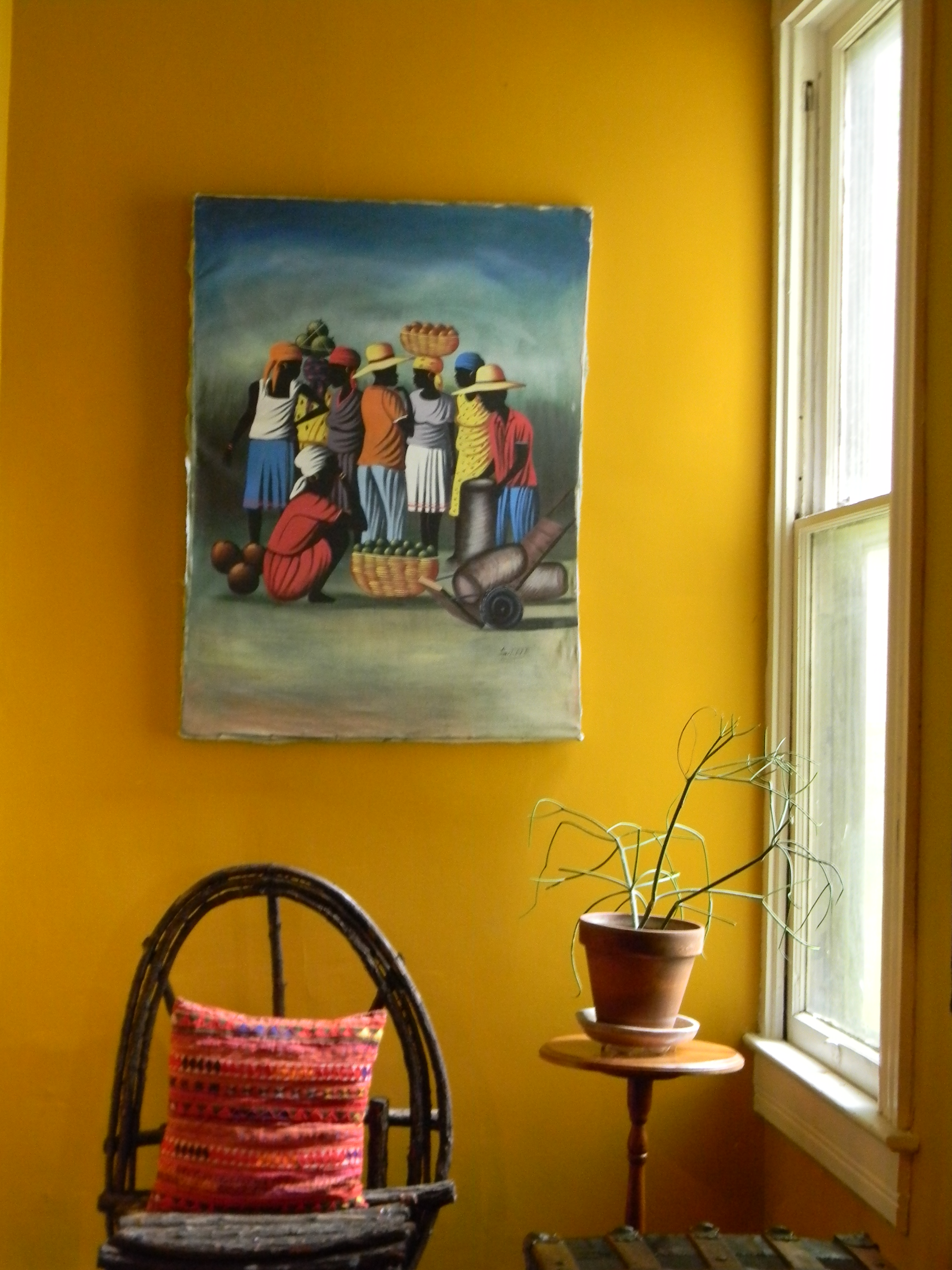
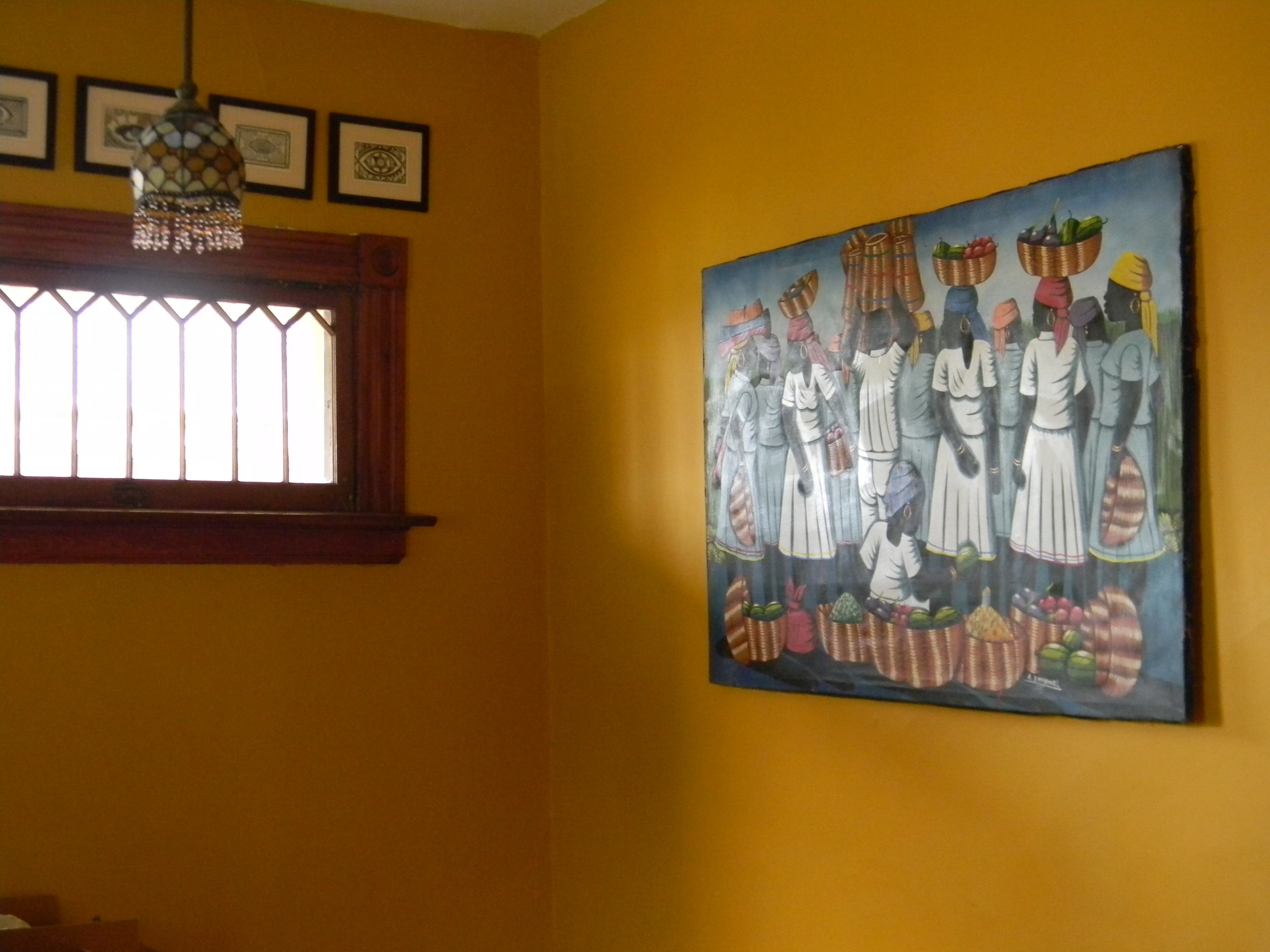
Ultimately dishes, pots and pans were put away; paintings and iron sculptures made their way onto walls.
An incredible scene of order and international diplomacy, as Lexington welcomed Haiti to its old Kentucky Home. Even Donald Trump tried to take credit for this display of cooperation among the Americas.
Today a photographic tour of the event—
First, our house on 4th Street where the container arrived—my old Kentucky home:
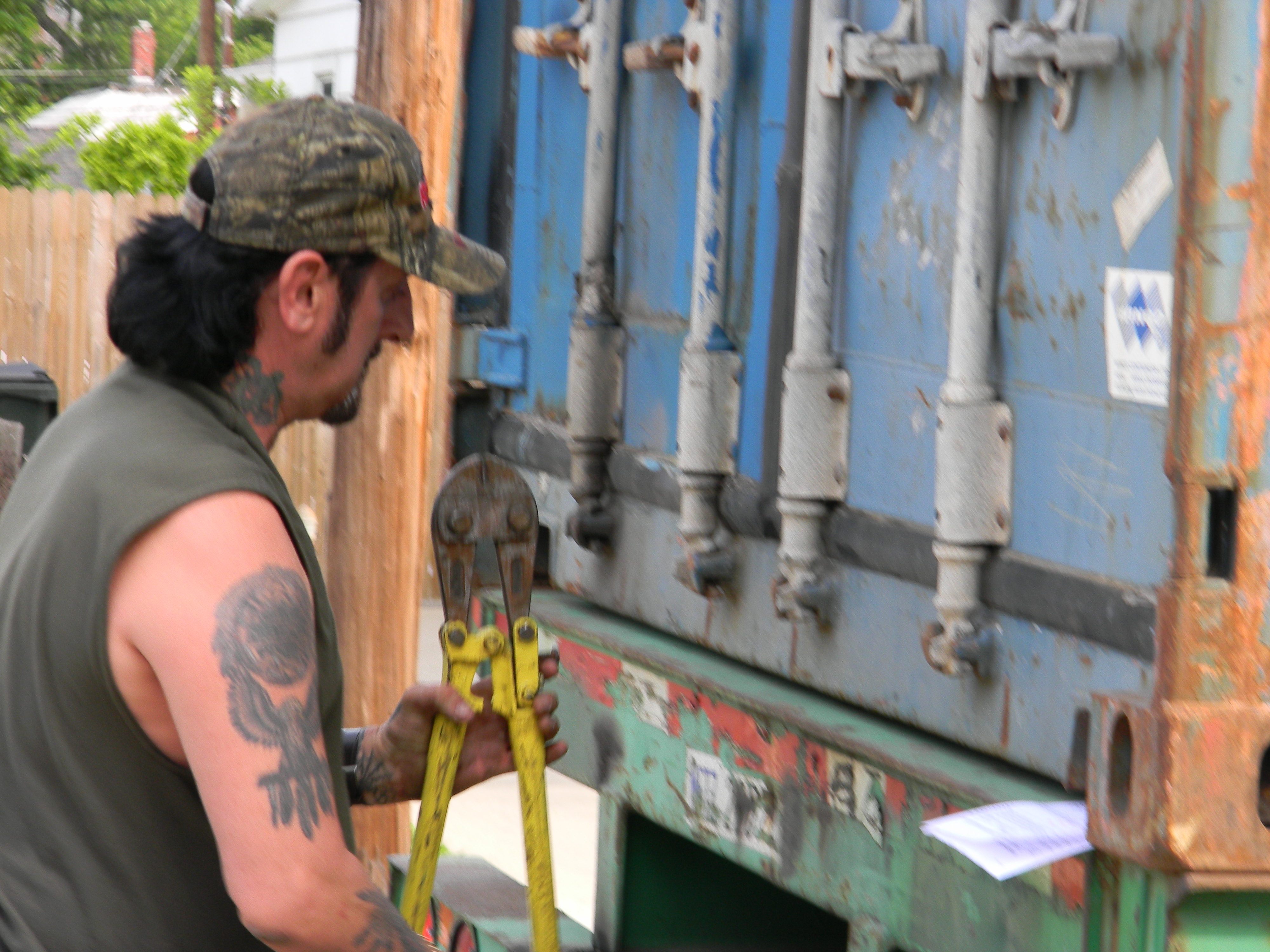
The container lock is broken:
Sara and Ralph prepare for the unpacking:
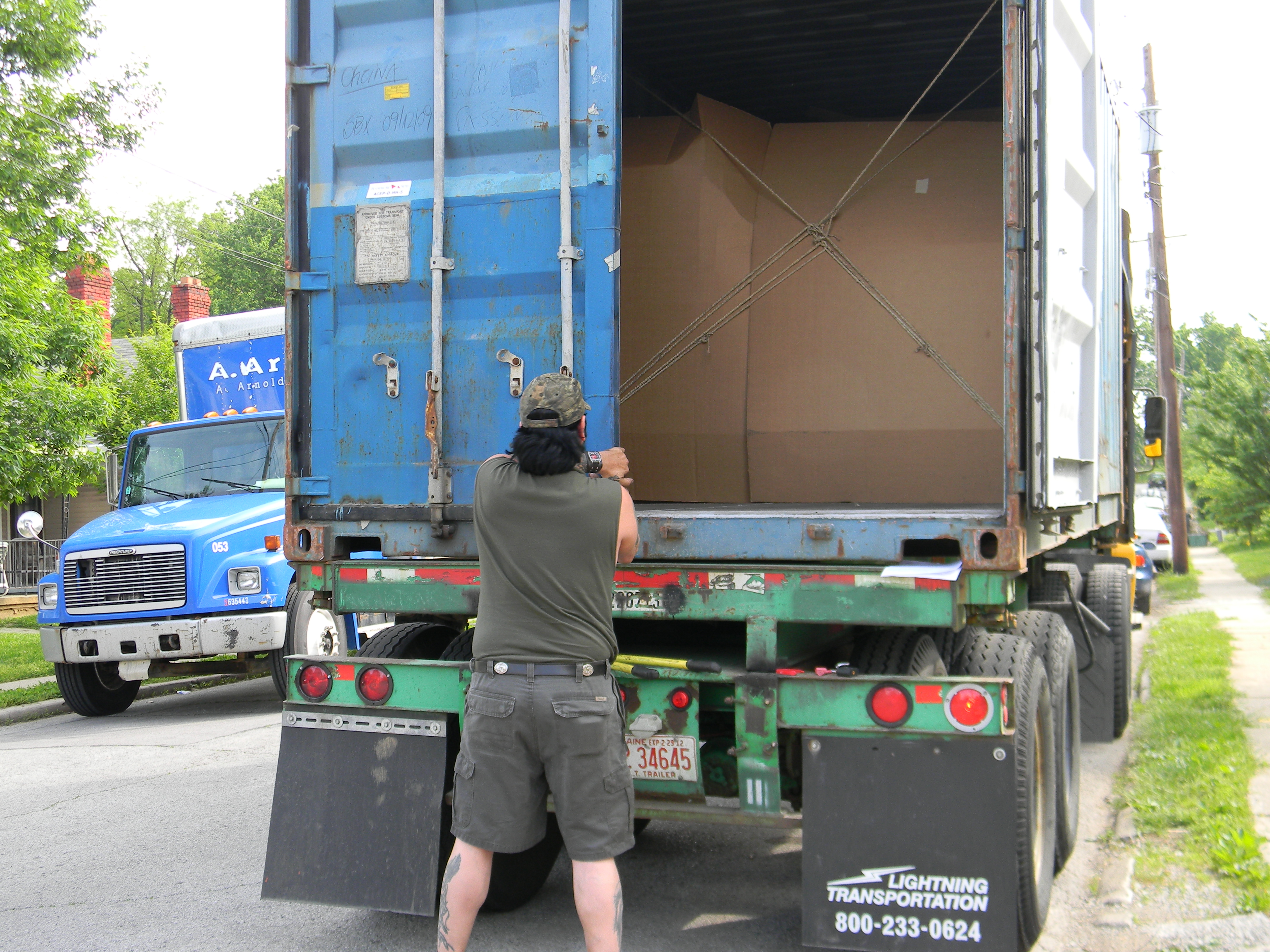
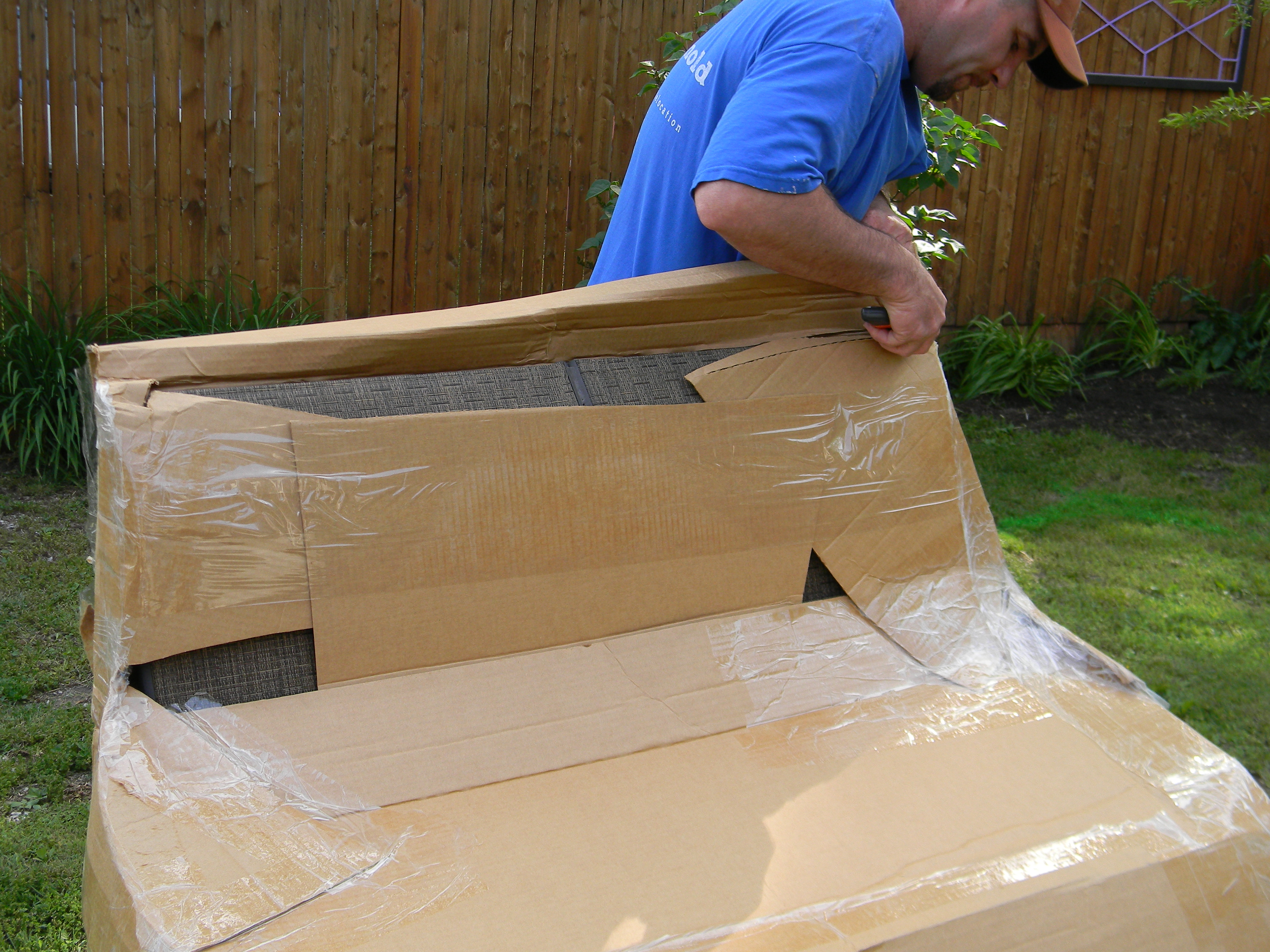
The doors open:
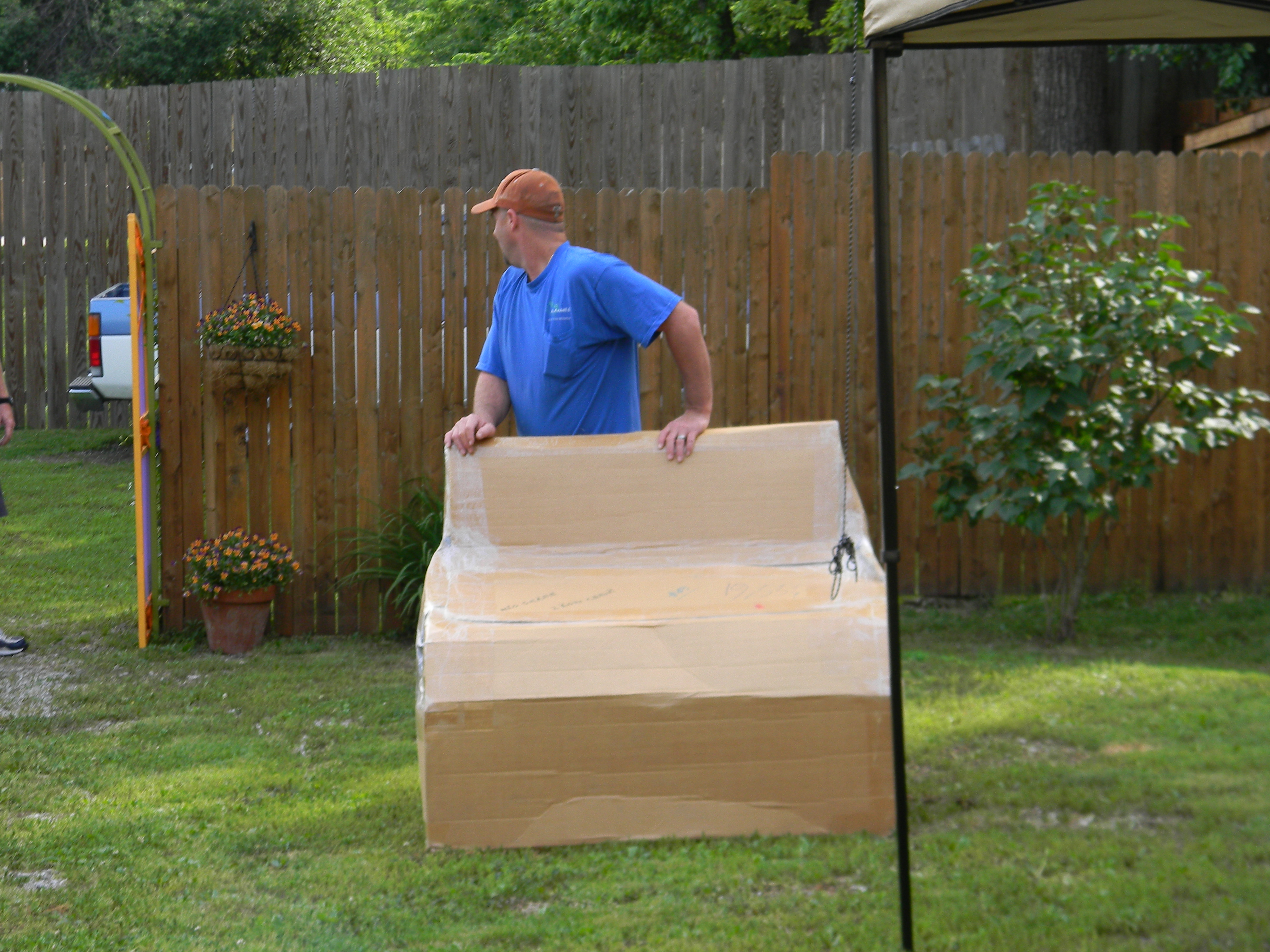
The first box arrives on Sara and Kathy’s Lexington lawn:
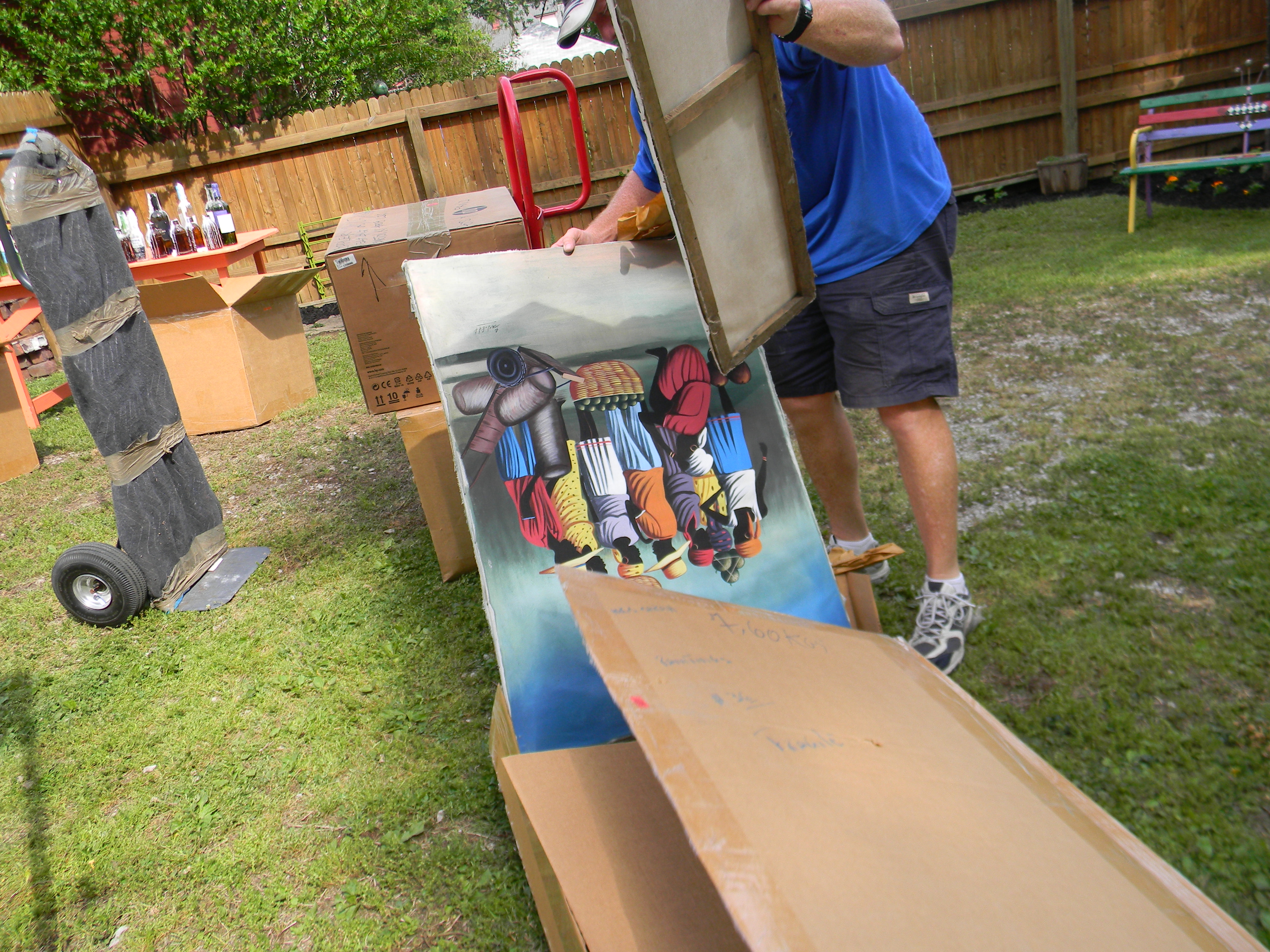
It’s like Christmas as each box in unwrapped:
More and more boxes:
Eventually, art is unboxed:
Ralph gets in on the action–emphasis on action:
Lucy helps:
With the dogs’ help, eventually, it all gets moved indoors. And art makes it up on walls:
More art on another wall:
Above the fireplace:
In the dining room, as well:
And even in the entrance way:
Now that we’ve about got things put away and in order, Sara will soon be reassigned to another international location, and we’ll start the process all over again in another month.
(To read Part 1 of this post click here, to read Part 2 click here.)
It’s been six days since I interviewed Baby Doc and I am still reeling—whirl-winded by the sheer size of the experience, the weight, the scope of opportunity that came so unexpectedly.
And, frankly, I’ve not digested the experience yet— it seems to have exhausted me; I feel depleted–confused by having almost “liked” the version of Duvalier I met that night. What does one do with that realization?
Quite frankly I wish I were back in Haiti now.
Certainly, I love our home in Lexington and enjoy seeing Sara’s happiness at being here, but I would do anything to be in Port-au-Prince when Aristide arrives. The plane to return him from exile has already left South Africa; he’s expected to arrive in Haiti within hours.
But if I had to identify one overwhelming response to meeting Jean-Claude Duvalier, it would be this—a bit of dismay at how intrigued I still am by him—not Baby Doc the dictator, but Baby Doc the man, the details of ordinary around him.
The fact that his house, though perhaps the grandest on his street, was not as spectacular as I had suspected it would be. The couches in the living room seemed old and worn. There were no fancy fixtures. The wrought iron chairs on the patio needed paint.
But then again, that’s what we all amount to in the end—the peeling paint, the nicks, the scars. The couches need recovering.
The bottom line is this: the story of Haiti is largely one of exile and variations on that theme—coerced comings and goings, arriving unwillingly on a tiny island, you then don’t want to leave.
So it was for the slaves the Europeans brought from Africa, and so it was for Jean-Claude Duvalier, made president for life at age 19 when his father died, a job he didn’t want, a role he didn’t want to play. He ruled for 15 years, was exiled for 25, and has finally come home to Haiti again.
And in some ways, so it is for Sara and me. Though we came willingly to Haiti, we were not at all ready to leave, and having left feels like a loss, an amputation. Haiti is the phantom limb, the one I dream about, the one that calls to me at night.
Eventually we all get kicked off one island or another. A tribal council is convened. The votes are cast.
It’s been a wild and crazy weekend at our house here in Haiti, a weekend in the US when clocks have surreally sprung ahead an hour, dizzying me even at a time-bending distance in Port-au-Prince.
We’ve gotten 66 boxes of everything from fans to folding screens, pots and pans to patio furniture, shipped on a slow boat from Port-au-Prince to Baltimore, a boat so slow we’re hoping to have our lawn furniture in Lexington before the first snow falls next November and clocks again fall back an hour.
Saturday we spent at the beach, and Saturday evening I literally had a long talk with Baby Doc. Even I find it hard to believe, but I have what may indeed be the worst photo taken this side of the 19th century to prove it. For now the story will have to wait until we’re settled safely in Kentucky.
Kate, Jean Claude Duvalier, Fito, and me
Early in the morning we indeed leave on a day long trip from Haiti to home-sweet-home, one that will take us from Port-au-Prince to Miami, Miami to Dallas, and Dallas to Lexington, where we are scheduled to arrive an hour this side of midnight.
But in the meantime, I promise–
Sitting across the table talking to “Baby Doc” Duvalier, felt like an hour on the far side of midnight, an event horizon at my back.
(If you’d like to read a post about my past “adventures” at the Port-au-Prince airport, circumstances we are likely to encounter again on our way home from Haiti, click here.)
Guest post today from my friend and fellow writer Mindy Shannon Phelps.
A journalist by training, Mindy is a project management and communications specialist.
How remarkably we humans are made, that once a child reaches a certain age, she is able to say goodbye to all that is known and familiar to her – parents, mother, father, sister, cousin, close friends – and her bedroom, her house, the only home she has ever known –and, just, move on.
Remarkable that the human child willingly and even longingly leaves the familiar – the scents, the sounds, the comforts – 19 years of cuddling and coddling – pancakes for breakfast and tea in bed – I will admit the first 12 years were more fun for both of us than the next seven – but she is just so ready to be an adult daughter and I can’t see beyond her beautiful little hands and sweet, expressive, perfect face. She will always be my little Liz. My baby.
I had just said goodbye to Lizzie. I’d hoped it would be a warmer parting, even though she was eager to get to her dormitory and the small space we created together for her yesterday and just settle in. But, at the end, she seemed tired and ill at ease from the days we had spent together. Uncomfortable, and in need of privacy. I noticed that she had not read her Bible or written in her journal – had only captured her thoughts and emotions in the emails she had written and sent each evening to people she did not identify for me.
It’s hard to read Liz – often difficult clearing the fog off the hard glass she surrounds herself with. Her glass is not brittle but it is breakable and I try not to shatter the shield when she has it up and in place. It is her safe enclosure and there is no need to breach it.
We had been traveling together for three days, from Kentucky to Colorado in her tiny Volkswagen Beetle. Our travels were glorious—the billboard-sized copy of Van Gogh’s “Sunflowers” in the middle of a Kansas wheat field, the vivid blue September skies and the rain we could see a hundred miles away that never touched us. So peaceful and fun and adventurous, even blessed.
And now, the end.
Liz would keep her car at the school where she would begin training as a missionary with an international NGO. I would fly home after helping her settle in.
A quick ride to the airport and, suddenly, Lizzie seems as if she doesn’t want me to go. She wants to park and come in with me. I think this is what she wants to do, but, again, her glass is up and I can only peer in, bringing my nose and eyes and face up to the enclosure, trying not to cloud the view with a sudden exhalation.
I decide a quick goodbye is for the best because my prayer this morning had been for a bit of grace and a letting go with joy. This is what I’m supposed to do, I think.
So I quickly hug her and say too loudly, “I’ll call you when I get home.” “Yes, do that,” she replies.
And I turn and go, denying Liz the tears and sorrow of saying goodbye – an emotional farewell we might have shared but did not. It’s for the best, I think.
I turn and walk a few steps and begin weeping as I enter the terminal.
I still weep when I think about the time I let Lizzie go.
Now 27, Liz is married and expecting her first child.
(Note: When Lizzie was born, Mindy was an evening news anchor for the NBC affiliate in Lexington, Ky. Viewers (about 250,000 at the time) avidly followed Mindy’s pregnancy and loved Lizzie from the moment they saw her.)
My partner Sara and I are beginning to lose touch—
Lose touch with what it means to be an even remotely “normal” American couple. Some might say that’s not such a bad thing, but I promise you, we have gotten so far from the center of the bell curve, we can’t find the bell any more. We can’t even hear it ringing in the distance.
So–in light of this loss, today, I bring you the top 10 ways you too can be the most un-American of American couples:
#10. Station armed guards outside your house.
This is sure to eliminate any and all illusions of privacy.
(If you are new to the blog, my partner Sara and I live in Haiti where threats to security are common. Click here to read a post about this.)
#9. Argue frequently about how you will generate electricity.
Sara and I have been known to have some of our hottest arguments around just how long we can safely run our generator, especially on days when we have no or very little electricity from the city. I don’t like to be hot. Heat makes me irritable, bitchy, and stressed. So during the hottest nights here in Haiti, I’ve wanted to keep the air conditioning on, or at the very least, a fan running—neither of which are possible without electricity or our generator running.
(To read an entire post dedicated to Haiti’s infrastructure issues click here.)
#8. Do without television.
Instead watch DVDs of “30-Something” for evening entertainment. I knew things were getting bad when over the weekend Sara and I watched back to back episodes of the show’s first season and felt like we were enjoying a special treat, hovering around Sara’s laptop like kids in front of Saturday morning cartoons.
“Oh, boy!” we exclaimed elbowing one another. “Isn’t this great!” We would have broken out the popcorn, if we had a microwave to pop it in.
#7. Go to bed before dinner.
Not out of passion, but because you’ve become dreadfully boring and tire easily.
#6. Have no hot water in your kitchen sink.
Not to mention no dish-washer.
#5. Develop an active fear of kidnapping.
On average—there’s a kidnapping a day in Port-au-Prince—usually of foreigners, often of ex-pats working for NGOs on earthquake reconstruction. And in fact, a number of these kidnappings actually happen in Petion-ville, where we live, since most NGOs have set up their operations from this location.
Many ex-pats are kidnapped from their cars. To alleviate that risk we drive with seatbelts on, windows up, doors locked. It’s harder to be pulled from a vehicle that way.
#4. Stage incidents of international canine trafficking.
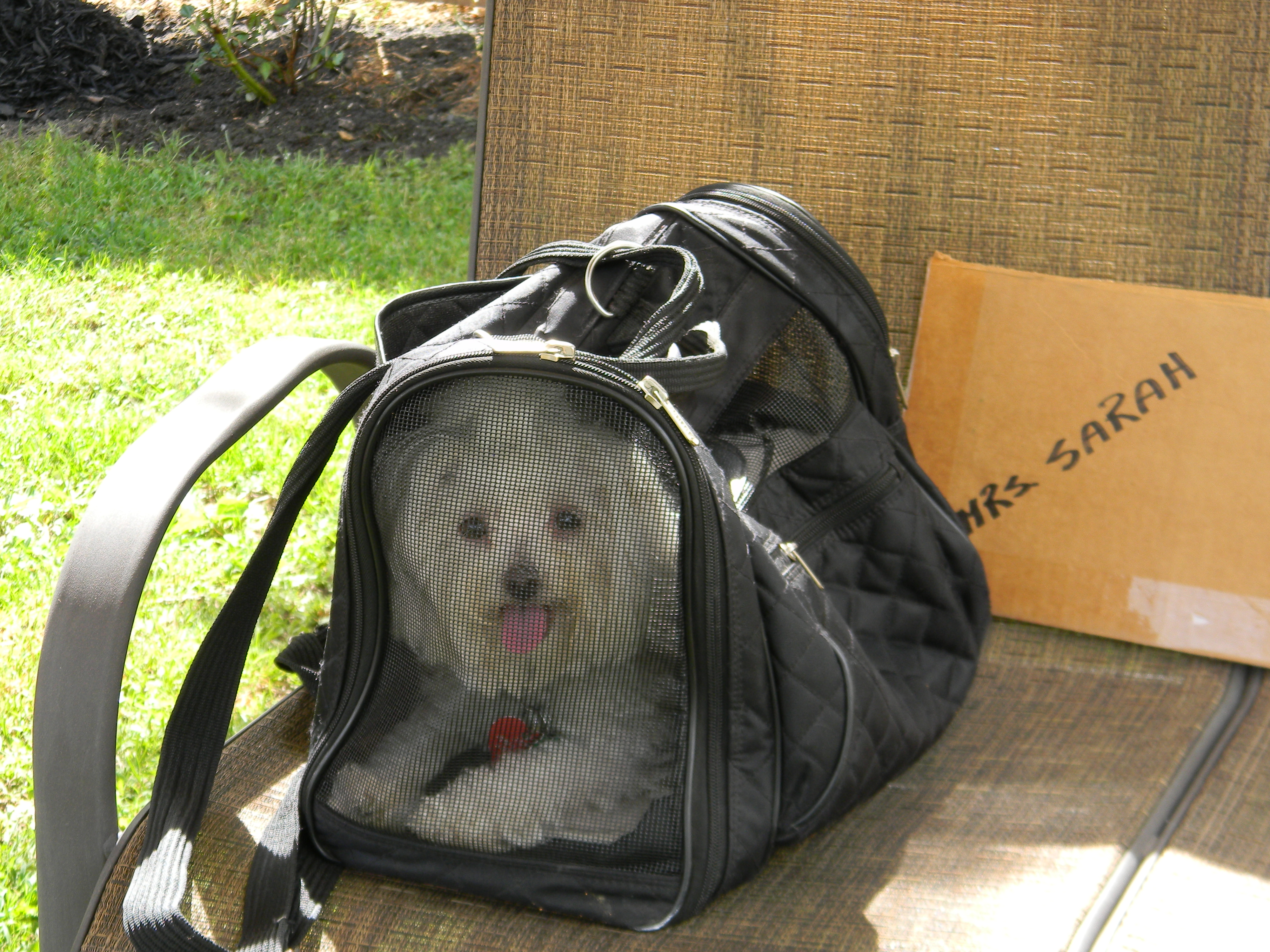
I know most folks don’t traipse the planet, canine companions in tow, but Sara and I, for whatever reason, see fit to move our mutts to whichever corner of the globe is hosting the latest in earth-shaking disasters.
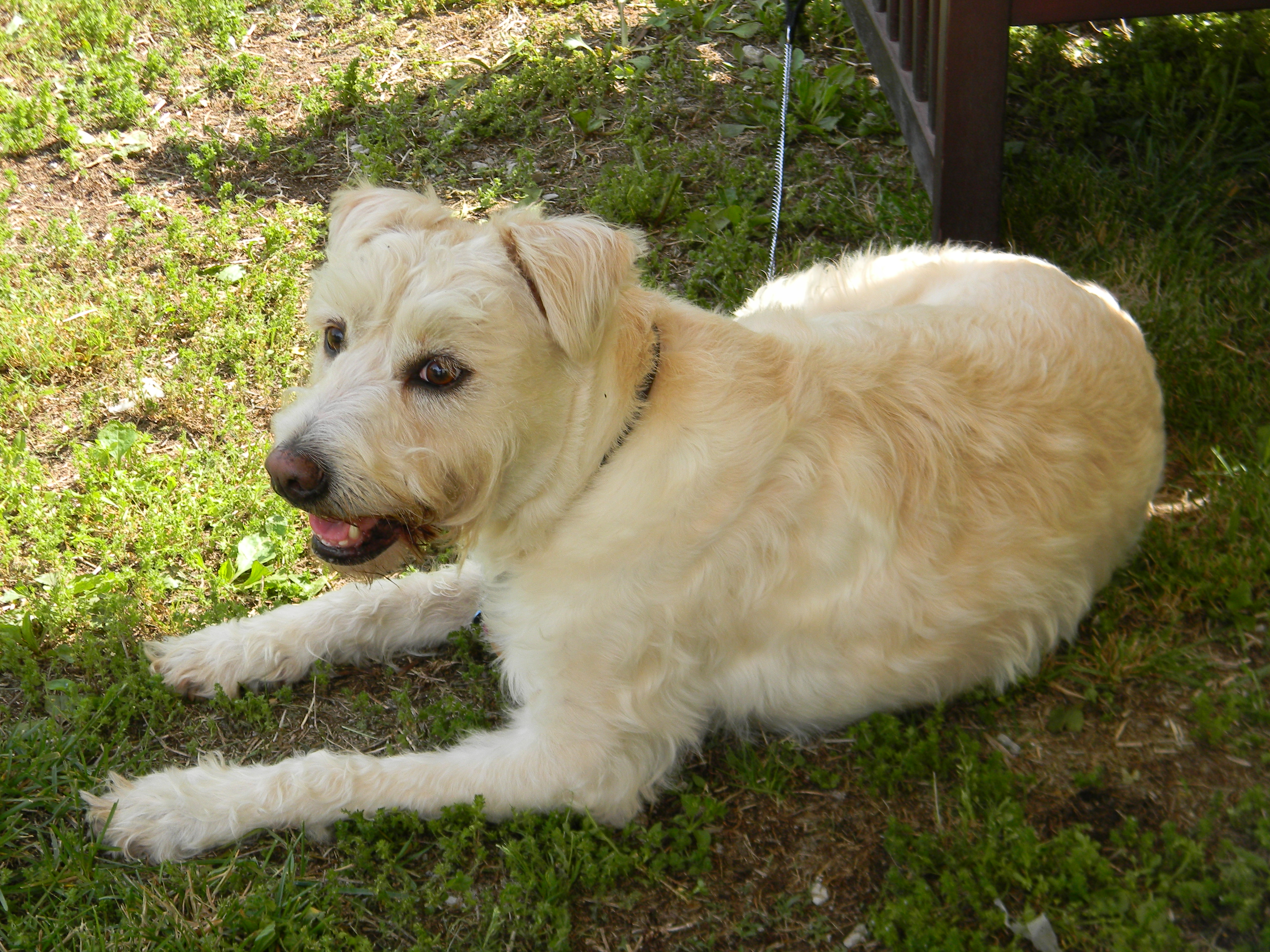
For example, it was challenging to take a 40 pound, blonde terrier to Vietnam, where the meat of medium sized, light skinned canines is still considered a delicacy. And though it ended well, concluded with Ralph arriving uneaten in Hanoi, it proved so crazy-making along the way, we “sanely” decided to bring him here to Haiti this past summer.
However, that trip proved less eventful—except for his traveling companions on the flight from Miami to Port-au-Prince—the 10,000 chicks he still hasn’t stopped chirping about.
(For an entire post on pet-transport mishaps click here.)
#3. Appreciate the difference between “trash” and “stash.”
Sara has “placement issues”—a problem she blames on her training as an architect and which she insists I knew about prior to our partnering and simply can not change. Bottom line—Sara likes to arrange things: drawers, cupboards, closets, the contents of the refrigerator, mayonnaise, mustard, ketchup arranged in tidy rows—like items lined up together—like soldiers—an army of condiments ready for edible action. If an object doesn’t fall neatly into rank, the solution for Sara is simple—throw it in the trash.
I, on the other hand, tend to collect things—and not the kinds of things most would consider collectables, but which I gather in the name of “potential art”—items I prefer to call “collagables”—buttons, beads, ribbons, rocks, shells, business cards, bottle caps, maps, matchboxes, newspaper clippings, play bills, and, among other things, sales receipts—in my mind the most under-rated and readily available of all the collagables—a free gift with each purchase, so to speak.
Sara insists my stash is trash!
#2. Agree on only one thing.
That there are too many white people in America.
On one of our recent trips back to the US what stood out to both of us most, even though our home is in an ethically-mixed neighborhood, was the overwhelming huge number of Caucasian in the city where we live. At one point Sara turned to me in the grocery store produce isle and asked: “What do you notice about being home?” My response was immediate, “There are so many white people in America! I had forgotten.” It surprised us how quickly we both had become conditioned to what seems an appropriate ethnic mix. We had made a shift that we noticed only when coming “home.” If this can happen for us, it can happen for others. Come join us. Make the switch.
#1. Be denied the right to marry.
This one I think speaks for itself, but if not please watch this video:
Sara reminds me, that though we don’t have the right to marry in Kentucky, we at least now have an openly gay mayor in Lexington, so that’s a step in the right direction. (To read about Jim Gray click here.)
However, Sara also insists that, by far, the weirdest thing about us as couple is that I asked her to brainstorm with me about “what makes us weird as a couple.” I’m not exactly sure what’s so weird about that, but Sara says my not recognizing the strangeness of that request makes it even weirder. I don’t know. You be the judge.
At any rate, remember that “normal” is a difficult to define category. I appreciate that. But if you recall the 1960s television sitcom, “The Odd Couple,” you’ll see that I’m not talking so much about individual issues that separate us from the crowd. I’m looking at the entire constellation of individual quirks that combine to make a couple what most others would consider strange. I’m looking at the “Odd Couple” factor, if you will.
Felix Unger and Oscar Madison epitomized for a generation of Americans just what it meant to be uniquely coupled in the 1960s.
But If Felix and Oscar were the not-so-average pair of heterosexual bachelors in the 60s, I would argue that Sara and I are the same for this decade’s no-where-near-single lesbian couple—a uniqueness not related in the least to the reality of sexual preference.
In fact, Sara and I give whole new meaning to the notion of “odd couple”—sexual orientation not withstanding.
We may be weird–
But we do want to wed!
What sets you and your partner apart from the crowd? What makes a couple “weird” in the country you call home? Do gay and lesbian couple have the right to wed where you live?
I miss Sara terribly when we’re apart, but now that it’s been four days since she’s returned to Haiti, I’m experiencing the separation more intensely. I tend to isolate when Sara’s gone. I want to be alone. I want to sleep. I can barely tie my shoe or utter a coherent sentence—let alone clean the house, cook a meal, or walk the dog. It’s a sad state of affairs.
Yes, yes—I know I exaggerate, but I did have one small victory yesterday afternoon, having managed to extricate myself from the green chair I’ve been living in for days and drag myself kicking and screaming to the grocery store. But then again, hunger’s a pretty strong motivator, and the only thing I want to do more than absolutely nothing is eat—eat everything—eat any and all things unhealthy and heart-attack inducing— I could so Twinkie and Ho-Ho myself to an early grave, it isn’t funny.
It doesn’t help that I’m on a diet. It doesn’t help that the date I return to Haiti has yet to be determined and will depend on security in Port-au-Prince over the next several days. It doesn’t help that Kentucky, besides being famous for its fried chicken, is in fact one of the most boring places on the planet—no rioting, no cholera, no real election fraud to speak of. Things are so comfortably tedious and middle class, that even the excitement phobic find themselves twiddling their thumbs and begging to be mugged, praying to be clubbed by a decent natural disaster. Even a blizzard would do.
Obviously though, I shouldn’t tease about these things. Obviously I should change this ornery desire to be anywhere I’m not—and never where I am—never in the here and now, in this city, in this state, on this day.
Please help me, God, to be content in the coming year—grateful for today, in this house with warm meals and clean water to drink. Please teach me to be grateful for the little things and thankful always for the heart-pounding passion that makes me miss Sara when she’s away. Please keep her close. Please keep her safe. Please take me to her soon.
How do you handle separation from the ones you love? Does humor help? Writing? Prayer or mediation?
(And thanks for the fabulous feedback and comments on my previous post. Please share your thoughts and feelings on this one, as well. My readers rock!)


















 Kathryn M. McCullough